Home Battery Storage: What Do You Really Need?
Table of Contents
If you wish to maintain power to critical appliances during a power cut, or save excess solar power generated during the day for use at night, domestic energy storage is definitely worth adding to your shortlist. Home battery storage involves storing electricity for use when needed. Before making a purchase, first clarify which appliances you intend to power and for how many hours, then compare battery capacity with the inverter. If you simply wish to save on your electricity bills but have not yet analysed your day-and-night electricity consumption or tariff rates, we recommend gathering this data first.
Even without a solar panel system, you can still evaluate energy storage systems that support charging from the grid. However, the ability to charge does not necessarily mean it is cost-effective: you need to confirm whether this operating mode is permitted in your area, and whether the difference between low-cost charging and high-cost consumption can cover the losses and initial investment. Check your electricity contract and the system’s features before deciding whether to purchase.
What Do You Want to Keep Running When the Power Goes Out?
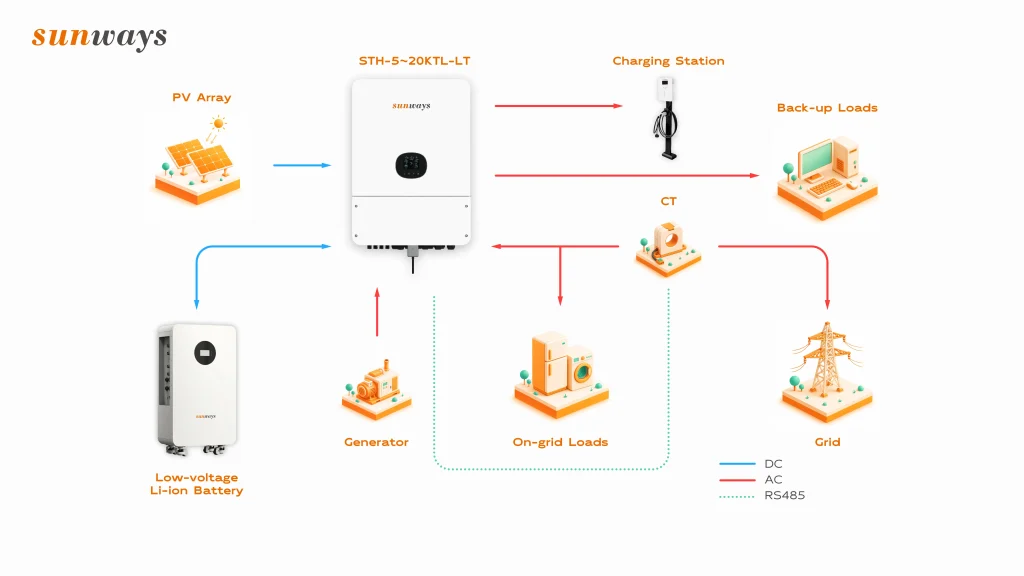
If you’re on a tight budget, I recommend prioritising critical equipment before considering a whole-house backup power system. The term ‘load’ here refers to electrical appliances that require power from the system. Make a list of items that must be used during a power cut, such as fridges, lighting, fans or network equipment, and then highlight equipment such as air conditioners and water pumps separately; the installation contractor will need to verify the start-up and operating requirements for these based on their specific models.
| Your objective | What to record first | What to check first |
|---|---|---|
| To keep critical equipment running during a power cut | List of equipment, whether used simultaneously, target number of hours | Backup power output capacity, equipment start-up requirements, which circuits have backup power |
| Store energy during the day, use it at night | Unused PV electricity during the day, night-time electricity consumption | Whether the battery can be fully charged, whether the stored electricity can be utilised |
| Maintain power throughout the house as much as possible during a power cut | Equipment operating simultaneously and their power ratings, whether the household uses single-phase or three-phase supply | Continuous output, short-term start-up capacity, limitations of each power supply circuit |
A Battery Does Not Automatically Mean Backup Power
Even with a battery, you must confirm which sockets and appliances will remain operational during a power cut. The inverter is responsible for converting electrical energy; a system supporting backup power also requires appropriate control, isolation and switching configurations. Ask the installer to mark the backup power circuits on the plan – that is, the power lines supported by the backup power source – and to specify whether the photovoltaic system can continue to supply power or charge the battery after a power cut.
If you require your computer, network or other equipment to remain operational without interruption during the switchover, ask specifically, ‘How long does the switchover take, and can the equipment withstand this?’ A UPS, or Uninterruptible Power Supply, is designed to ensure short-term power continuity.
How Much Battery Storage Do You Need to Get Through the Night?
First, work out how much electricity you need during your target period, then choose your battery. kW (kilowatts) represents power, which can be understood as the rate at which a device consumes electricity; kWh (kilowatt-hours) represents the amount of electricity, commonly referred to as ‘units of electricity’. When selecting a battery, you need to check both of these separately: the battery’s capacity determines how long it can last, whilst the system’s output power determines which devices it can power simultaneously.
Start with Your Loads and Running Hours
You can first estimate the energy required using the formula ‘average power × operating time’. The two rows below are hypothetical examples provided to illustrate the method; they do not represent typical household statistics, Sunways product specifications or actual test results. Please substitute your actual figures for the average power and duration shown in the table.
| Hypothetical Scenario | Average Load | Operating Time | Energy Required to Power Appliances |
|---|---|---|---|
| Short-term backup power for a set of essential appliances | 0.5 kW | 4 hours | 0.5 × 4 = 2 kWh |
| Higher overnight electricity demand | 1.5 kW | 8 hours | 1.5 × 8 = 12 kWh |
The fact that 2 kWh is required does not mean that purchasing a battery with a rated capacity of 2 kWh will suffice. The rated capacity is the amount of electricity stated on the product label, whilst the amount you can actually utilise is further affected by the permissible discharge range, reserve capacity for standby power, conversion losses and operating conditions. Ask the supplier to list the ‘rated battery capacity’ and the ‘amount of electricity that can be supplied to the load under your specific conditions’ separately; do not double-count deductions that are already included in the available capacity.
Check Power and Recharging Before You Buy
If you wish to run an air conditioner throughout the night, first obtain its power consumption records under actual operating conditions, then verify the start-up and continuous power ratings. Do not use cooling capacity as a direct substitute for power consumption, nor should you rely solely on battery capacity. For equipment that cycles on and off, estimate the runtime based on power consumption during the target period, then have the installer check the output requirements when multiple units are running simultaneously.
Finally, check whether the battery can be recharged in a timely manner. Assuming you intend to supply 12 kWh to the load each night, there must be sufficient available charging capacity the following day, allowing for losses; if there is insufficient surplus electricity during the day, you must also confirm the permitted sources and times for supplementary charging. Before placing an order, work out clearly both ‘how to recharge’ and ‘how long it will last’.
Can You Add a Battery Without Replacing Your Solar Inverter?
It is possible to retain your existing inverter, but you must first confirm the installation route. If your photovoltaic system is operating normally, start by taking a photograph of the inverter’s nameplate to identify the model, check the existing wiring details and monitor the system’s performance records, then ask an installer to compare the total costs of retaining the existing equipment versus carrying out a full retrofit. Do not purchase a battery before checking compatibility.
a. AC-Coupled vs DC-Coupled Battery Storage
AC stands for alternating current, whilst DC stands for direct current. A common AC-coupled retrofit solution involves connecting the battery via an inverter to the household’s AC side; a common DC-coupled solution connects the battery to a compatible DC-side system, such as a hybrid inverter. You can first use the project criteria below to determine which approach to evaluate, then ask the supplier to provide a detailed system diagram.
| Project Conditions | Recommended Initial Assessment | Essential Checks |
|---|---|---|
| Existing, fully operational PV system that you wish to retain | AC-coupled retrofit, as well as other suitable modification solutions | How the new and old equipment will work together; whether the original PV system can continue to contribute to power supply during a power cut |
| New installation of PV and energy storage together | Compatible hybrid inverter and battery combination | PV input, battery matching, backup power configuration and a quotation for the complete installation |
| Existing hybrid inverter, no battery installed yet | Manufacturer-approved battery combination | Whether firmware (internal software) updates, feature activation or additional accessories are required |
b. Check Compatibility Beyond the Voltage Label
Voltage compatibility is only the beginning of the check. The BMS (Battery Management System) is responsible for monitoring the battery’s status and limiting charging and discharging when necessary; how it interfaces with the inverter will affect whether the system operates as designed. Please request compatibility documentation specific to the model and version, rather than simply accepting a verbal assurance that ‘they’re both lithium-ion batteries, so they should work’.
- Verify that the battery’s operating voltage range matches the inverter’s requirements.
- Verify the battery type, BMS communication protocol and firmware version.
- Verify the permitted charge and discharge currents, power limits and standby power configuration.
- If you plan to expand capacity in the future, confirm in advance the permitted battery combinations and conditions for adding new units.
We recommend that existing systems undergo a compatibility check first, whilst new installations should be assessed against the recommended inverter and battery combinations. When consulting Sunways, please provide the model numbers of your existing equipment and your backup power requirements; this is more likely to yield useful selection advice than simply asking “which battery is best?”.
Lithium or Tubular Batteries: Which Fits the Way You Use Power?
If you intend to use a battery to store and draw on solar power on a daily basis, we recommend first obtaining a quotation for a compatible LFP solution, and then comparing it with other solutions based on the same requirements. LFP stands for lithium iron phosphate, a type of lithium-ion battery; ‘tubular battery’ usually refers to a lead-acid battery that uses tubular plates. Do not place an order based solely on the category names ‘lithium-ion’ or ‘lead-acid’; request that the quotation specifies the exact model and operating conditions.
| Comparison Criteria | Points to Check for LFP Solutions | Points to Check for Tubular Lead-Acid Solutions | How to Assess |
|---|---|---|---|
| Available capacity | Permissible discharge range, management system restrictions | Capacity and permissible discharge range under specified discharge conditions | Compare based on whether they can meet the same load and duration |
| Maintenance | Monitoring, temperature and installation requirements | Whether specific models require maintenance such as top-up of electrolyte, and ventilation requirements | Select maintenance conditions you can meet in the long term |
| Service life | Test conditions and capacity end-point corresponding to the number of cycles | Similarly, verify the cycle conditions and capacity end-point | Do not directly compare service life figures under different conditions |
| Compatibility | BMS and inverter compatibility requirements | Whether the inverter supports the corresponding charging configuration | Obtain compatibility confirmation before replacement |
| Long-term costs | Installation, replacement and warranty coverage | Installation, maintenance, replacement and warranty coverage | Ensure both quotations cover the same usage objectives |
When examining cycle life, first enquire about the test conditions. DoD (Depth of Discharge) indicates what proportion of the battery’s capacity is used in a single cycle; for example, 80% means eight-tenths of the corresponding capacity has been utilised. This is not equivalent to the recommended settings applicable to all batteries. Temperature and depth of discharge affect lifespan performance, so please request these conditions simultaneously; do not directly equate ‘more cycles’ with how many extra years of use you can expect at home.
Read the Capacity Warranty, Not Just the Years
In their 2026 study, HTW Berlin and aquu reviewed the warranty terms of 20 manufacturers, with capacity retention commitments ranging from 60 per cent to 85 per cent of the initial capacity. This highlights the need to examine not only the warranty period but also the capacity retention percentage, applicable conditions and who bears the cost of replacement.
Source: Energy Storage Inspection 2026
If you only require backup power occasionally, and your existing system still meets your equipment and duration requirements, I would not recommend replacing it immediately simply because the battery type is different. First, check the current condition of your battery, your future usage frequency and the full cost of the upgrade before deciding whether it is worth upgrading.
Is Home Battery Storage Worth the Cost for Your Home?
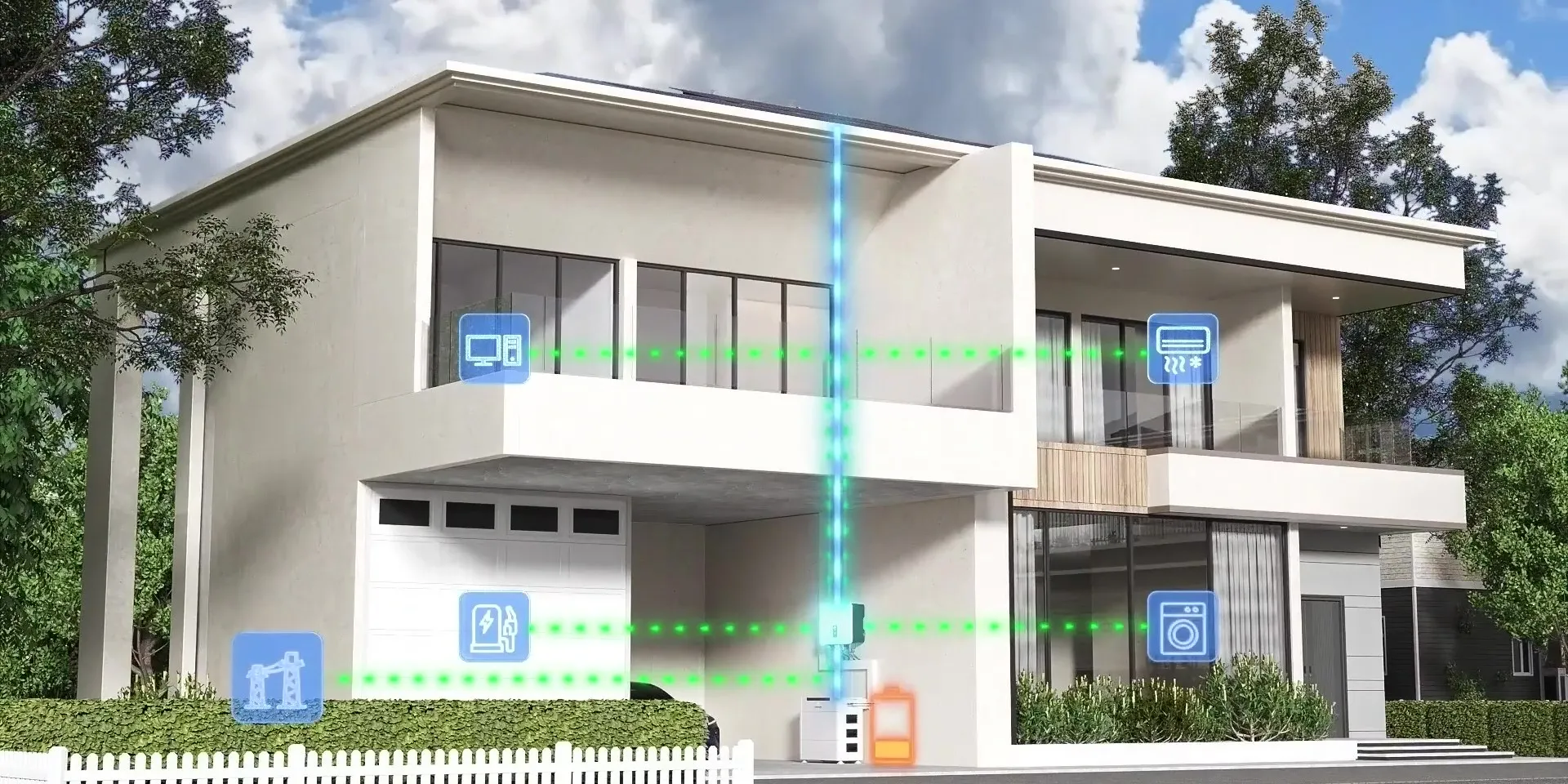
If your aim is to save on electricity bills, first check ‘how much can be stored, how much can be used, and how much each kilowatt-hour costs’; if your aim is to ensure a backup power supply, first set a budget for critical loads. These two objectives can coexist, but do not equate the convenience during a power cut directly with savings on your electricity bill. When comparing options, ask suppliers to itemise changes in electricity costs separately from backup power capacity.
Compare the Full Installed Cost
When comparing two quotations, first check that the following five items are included. The price of the battery alone and the price for the full system installation are not comparable; a lower quotation may still result in additional costs later if it lacks the backup power equipment you require. Ask the supplier to mark each item as ‘included’ or ‘charged separately’.
| Quotation Item | What You Should Ask |
|---|---|
| Batteries | What are the nominal and usable capacities respectively, and what are the warranty limitations? |
| Inverters and Retrofitting | Will the existing equipment be retained? Which items will be added or replaced? |
| Backup Power and Protection Configuration | Are transfer switches, protection devices, metering and any necessary power distribution modifications included? |
| Installation and Commissioning | Are cabling, installation, commissioning, taxes and work required for final acceptance included? |
| After-sales Service and Replacement | Who bears the costs of fault diagnosis, labour, transport and replacement? |
Count Losses Before Counting Savings
Another figure to consider when comparing costs is how much electricity the system consumes whilst in standby mode. A 2026 study by HTW Berlin highlights a difference in standby power consumption of 4 W versus 64 W among the systems evaluated. These figures relate to specific equipment assessed in the study; they are not Sunways specifications and cannot be directly converted into your household’s annual costs. You should request the standby power consumption and low-load efficiency of your shortlisted systems and calculate the costs based on actual operating times.
Source: HTW Berlin 2026 study page
If you are storing surplus solar power, you must also factor in the income you would otherwise have received from selling that surplus; if you are charging using low-cost grid electricity, you must account for charging and discharging losses. Compare the annual electricity costs and surplus electricity income ‘before and after installing energy storage’ based on equivalent household electricity requirements, and factor in installation, maintenance and replacement costs separately. Do not simply multiply the battery capacity by the electricity price and treat this as a daily return.
For projects in India, Pakistan, Sri Lanka, Bangladesh, Italy, Poland and Spain, please use the electricity prices and installation quotes applicable to the project location and the relevant date. If your sole objective is to save money, but you have neither a significant surplus of electricity to feed into the grid nor a verified price differential, I recommend postponing the purchase for the time being; instead, review your electricity consumption records or shift the operation of appliances that can be flexibly scheduled to coincide with periods when solar power is available.
What Can a Real Installation Tell You Before You Buy?
Real-world case studies can help you verify equipment configurations, but they cannot replace a load calculation for your home. Sunways’ official project portfolio includes projects in Gujarat, India, and Riccione, Italy.
| Projects in Official Documentation | Clearly Documented Information | How You Can Use This Information |
|---|---|---|
| Gujarat, India |
Project capacity: 6 kW; Completion date: May 2026 |
Identify the relevant installation details by location and date, then ask the supplier for specific design conditions |
| Riccione, Italy | Project capacity: 6 kW | Use as a reference for existing installations, whilst continuing to verify load, equipment compatibility and local conditions |
If a supplier claims that a particular system ‘can run all night’, you can ask four follow-up questions: what equipment was used for the test, how much residual charge was available at the start, how much remained at the end, and whether the system was topped up by solar or the grid during the test. Only by comparing these conditions with your own requirements can you determine whether the results are relevant to your situation.
Your Next Step: Choose the System Around Your Home
You can now take the next step based on your specific project requirements, without having to select a battery capacity first. The four suggestions below correspond to the needs for emergency power, new installations, retrofits and saving on electricity bills; start by completing the one most relevant to you, then request a proposal or quote.
When enquiring with Sunways, please specify your country or region, whether you already have a solar installation, and which devices you wish to protect. If you are an installer or an EPC (an engineering service provider responsible for project design, procurement and construction), please also provide the existing system configuration and the customer’s operational objectives; this will allow us to move the discussion directly to system selection, rather than merely comparing capacity and prices.
Explore Sunways Residential Solar Solutions
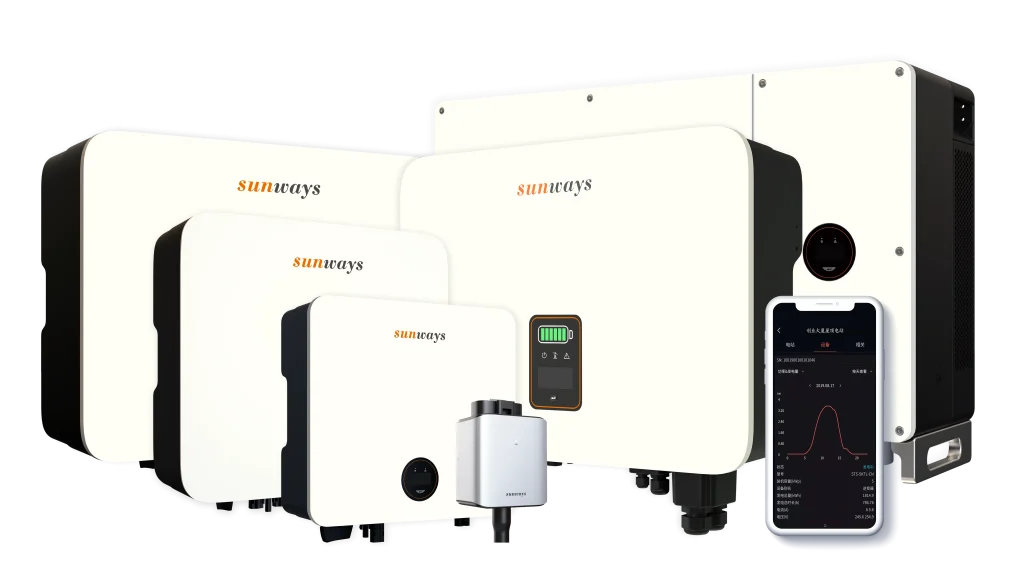
Start by reviewing Sunways’ residential solar and storage solutions, then discuss the inverter and storage package best suited to your needs, taking into account the project location, existing equipment, target load and operating hours. If you have this information to hand, you can submit your specification request directly; it is more helpful to clearly outline the tasks the battery needs to perform than simply asking about capacity and price.
Start Your Project