What Is an MPPT Solar Inverter and How Does It Work?
Table of Contents
An MPPT solar inverter is a solar inverter that incorporates maximum power point tracking technology. It continuously monitors the voltage and current of photovoltaic modules and adjusts the operating point based on changes in sunlight, temperature, and shading, thereby maximizing the amount of usable solar energy. This article will explain the role of MPPT in solar inverters, how it works, and how to select the right inverter for different photovoltaic systems.
What Is MPPT in a Solar Inverter?
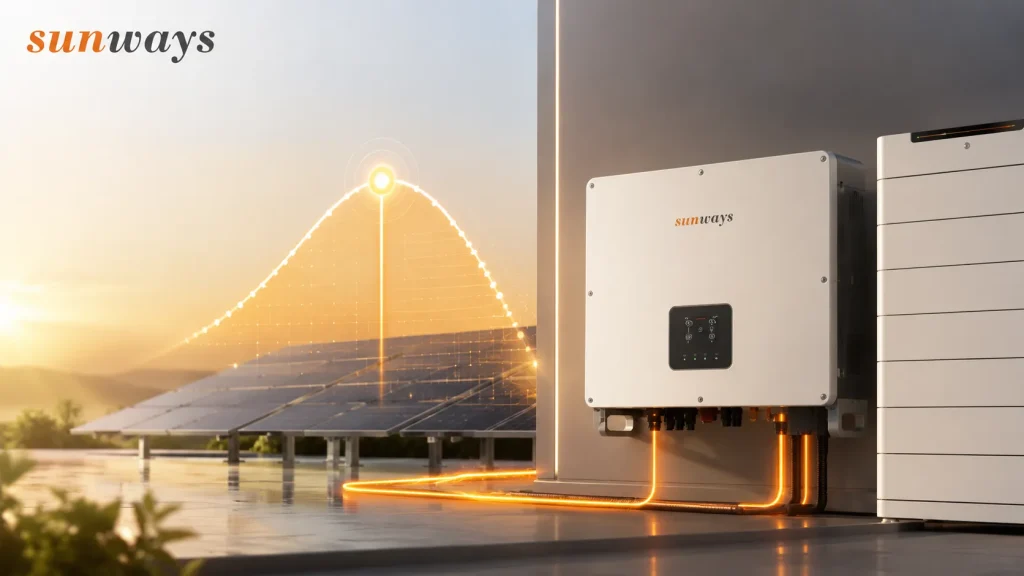
MPPT in a solar inverter is a control technology used to extract the maximum available power from a photovoltaic array. It continuously monitors the voltage and current of the modules and adjusts the operating voltage at the PV input to ensure the system operates as close as possible to the optimal power point under current conditions.
MPPT stands for Maximum Power Point Tracking. Here, MPP refers to the Maximum Power Point. At this operating point, the combination of voltage and current output by the PV modules generates the highest power under current conditions. The maximum power point is not fixed. Solar irradiance, module temperature, cloud movement, and local shading all alter the output characteristics of the modules. Therefore, MPPT must continuously search for and track new maximum power points, rather than making a one-time adjustment.
MPPT primarily operates on the PV DC input side of the inverter. The optimized DC power is then converted into AC power by the inverter. The AC power can be used to power residential or commercial loads, or fed into the public grid. In hybrid energy storage systems, solar energy can also be used to charge batteries according to control strategies. Grid-tied inverters, hybrid inverters, and some off-grid inverters can all integrate MPPT. Therefore, an MPPT solar inverter is not a completely distinct category of inverter. It typically refers to a solar inverter with built-in MPPT functionality.
How Does MPPT Work in a Solar Inverter?
MPPT continuously monitors the voltage and current of the PV array to identify the maximum power point under current conditions. The inverter then adjusts the operating voltage at the PV input to maximize the usable DC power output from the modules. This process repeats continuously to adapt to changes in sunlight, temperature, and shading conditions.
Measure voltage and current → Calculate power → Adjust operating voltage → Compare power changes → Track the maximum power point → Convert to AC power.
Step 1: The PV Array Produces Variable DC Power
Photovoltaic modules generate direct current (DC), but their output power is not constant. Solar irradiance, module temperature, cloud movement, and local shading all affect voltage and current. Typically, as sunlight intensifies, the module’s output current increases. As the module temperature rises, the operating voltage generally decreases. Therefore, the maximum power point of solar modules changes continuously throughout the day. This is the primary reason why photovoltaic systems require MPPT.
Step 2: The Inverter Measures Voltage and Current
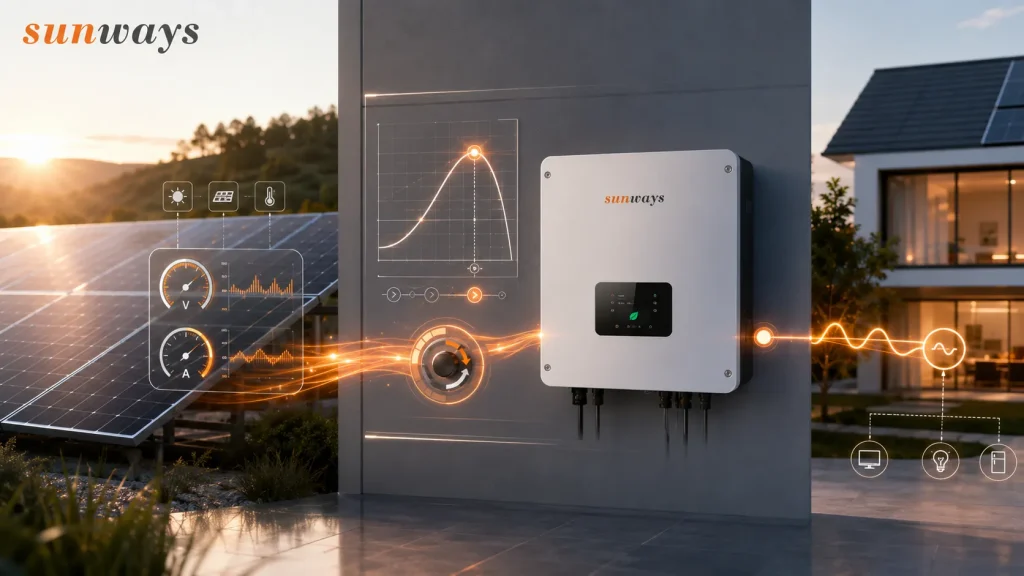
The inverter continuously collects voltage and current data from the PV input. Each independent MPPT channel can monitor the PV string connected to it. This real-time data helps the controller determine the current operating status of the PV array. For multi-MPPT inverters, different areas of the roof can be tracked separately. For example, east-facing and west-facing modules experience different lighting conditions. Connecting them to separate MPPT channels allows each array to find its own optimal operating point.
Step 3: The MPPT Controller Calculates Power
The MPPT controller calculates the current input power based on the collected voltage and current data:
Power = Voltage × Current
P = V × I
For example, when the PV input voltage is 400 V and the current is 10 A, the current DC power is approximately 4,000 W. However, this operating point is not necessarily the maximum power point. The MPPT controller must continue to adjust the voltage and compare the change in power before and after each adjustment.
Step 4: The Operating Voltage Is Adjusted
The MPPT algorithm makes small adjustments to the operating voltage of the PV array. If the power increases after an adjustment, the controller continues to adjust in the same direction. If the power decreases, the controller typically changes the direction of the adjustment. Through continuous measurement, calculation, and comparison, the system can gradually approach the current maximum power point of the solar modules.
Common MPPT algorithms include:
- Perturb and Observe (P&O): By slightly altering the operating voltage, the algorithm observes whether the output power increases or decreases.
- Incremental Conductance: Based on the relationship between voltage and current changes, the algorithm determines the direction toward the maximum power point.
Different manufacturers may use different algorithms and control strategies. Regardless of the method used, the core of the MPPT working principle is to continuously adjust the operating point, rather than allowing the PV array to operate at a fixed voltage for extended periods.
Step 5: The Inverter Converts Optimized DC Power into AC Power
Once the MPPT has identified the optimal operating point, the inverter converts the optimized DC power into AC power. In grid-connected PV systems, the AC power is prioritized for on-site loads. Excess power can be fed into the public grid according to local grid-connection regulations. In hybrid energy storage systems, energy can also flow to the battery. The inverter distributes power among the PV array, loads, battery, and grid based on load demand, battery status, and energy management strategies. It is important to note that MPPT is primarily responsible for optimizing the PV input. Battery charging and discharging, emergency power switching, and grid-connection control are other functions of the hybrid inverter.
Why Is MPPT Important in a Solar Power System?
MPPT is very important because the optimal operating point of photovoltaic modules constantly changes with environmental conditions. MPPT allows the inverter to continuously adjust the operating voltage of the photovoltaic array, thereby extracting more available power under current conditions. Its core value is not to “create extra energy,” but to reduce losses caused when modules operate at points other than their optimal power point.
a. Adapts to Changing Sunlight
Solar irradiance is not constant. Light intensity varies in the morning, at noon, and in the evening. Shading from clouds, dust, buildings, and trees also alters the amount of sunlight received by the modules.
As light conditions change, the current, power, and maximum power point of the photovoltaic modules also change. MPPT continuously monitors these changes and seeks out a more suitable operating point. This helps the inverter adapt to the constantly changing power generation conditions throughout the day. The U.S. Department of Energy notes that photovoltaic power generation is affected by factors such as time of day, season, cloud cover, dust, and shading.
b. Responds to Module Temperature
The operating temperature of photovoltaic modules also affects their output characteristics.
As module temperature rises, current typically increases only slightly, but output voltage drops more significantly. Therefore, the optimal operating voltage for modules during a hot midday may differ from that during a cool morning. The U.S. Department of Energy’s photovoltaic performance data also indicates that high temperatures typically cause a more pronounced drop in voltage.
MPPT adjusts the operating point based on changes in voltage and current, ensuring that the PV array remains as close as possible to the maximum power point under current temperature conditions.
c. Reduces Operating-Point Losses
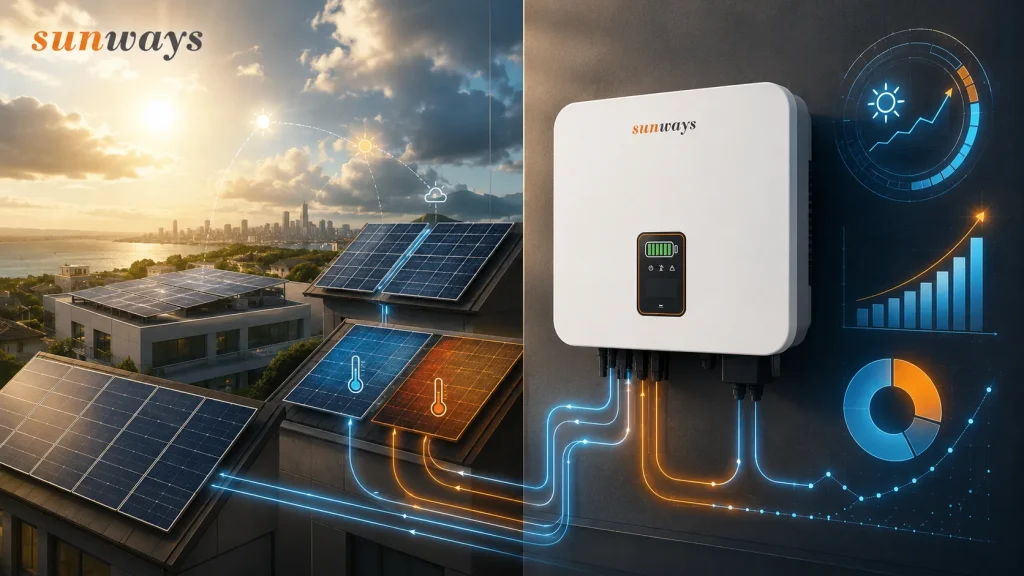
For each PV array, there is an operating point under specific irradiance and temperature conditions that produces the highest available power. If an inverter allows the modules to operate at excessively high or low voltages for extended periods, the system may fail to fully utilize the power the modules are currently capable of delivering—even if the solar resource remains unchanged. MPPT reduces energy losses caused by this operating-point mismatch through continuous measurement, calculation, and adjustment.
Therefore, the benefits of an MPPT solar inverter primarily lie in improving the ability to capture available solar energy, rather than pushing modules beyond their physical power-generation capacity. The actual benefits of MPPT vary depending on module configuration, irradiance, temperature, shading, and string design. Statements such as “MPPT consistently increases power generation by 30%” should not be used in this article, as they lack supporting conditions.
d. Supports Flexible PV Array Design
Multi-channel MPPT also enhances the design flexibility of PV systems.
For example, east-facing modules have better power generation conditions in the morning, while west-facing modules may output more power in the afternoon. If the two sets of modules are connected to different MPPT units, they can each track their respective optimal operating points.
Multi-channel MPPT is typically suitable for:
- Different roof orientations;
- Different module tilt angles;
- Multiple building sections;
- Varying degrees of local shading;
- Commercial and industrial projects with a large number of strings.
However, multi-channel MPPT primarily reduces the impact of mismatch between different array or string sections. It cannot completely eliminate module-level shading losses within the same string. NREL research indicates that local shading can cause both solar irradiance losses and module mismatch, resulting in a disproportionate impact on the PV system’s power output.
e. MPPT Efficiency and Solar Energy Yield
MPPT efficiency measures an inverter’s ability to track the maximum power point. It is not the same metric as the inverter’s conversion efficiency in converting direct current (DC) to alternating current (AC).
IEC 62891 defines separate measurement methods for static MPPT efficiency and dynamic MPPT efficiency. Static efficiency reflects tracking capability under stable conditions. Dynamic efficiency reflects tracking performance during rapid changes in irradiance. The overall operational performance of an inverter must also be evaluated in conjunction with DC-to-AC conversion efficiency.
Please note: MPPT Does Not
- MPPT does not generate additional solar energy.
- MPPT cannot eliminate all losses from partial shading.
- MPPT cannot correct incorrect string voltage or current designs.
- MPPT cannot replace proper module and inverter selection.
- MPPT efficiency is not the same as inverter conversion efficiency.
- Multiple MPPT channels do not mean that any modules can be mixed and matched at will.
The importance of MPPT lies in its ability to help photovoltaic arrays adapt to ever-changing operating conditions. A proper MPPT configuration can reduce operating point losses and enhance the system’s adaptability under various roof and string conditions. However, the final power generation performance still depends on a complete and correct photovoltaic system design.
Single MPPT vs. Dual MPPT vs. Multi-MPPT Solar Inverters
The main difference between single MPPT, dual MPPT, and multi-MPPT inverters lies in the number of PV arrays they can track independently. The greater the number of MPPTs, the better the inverter can manage modules with different orientations, tilt angles, or shading conditions. However, this does not mean that more MPPTs are always better. The appropriate number of MPP trackers should be determined based on the roof structure, the number of strings, and the operating conditions of the PV array.
| MPPT Configuration | Suitable Application | Typical Roof Condition | Main Benefit |
|---|---|---|---|
| Single MPPT | Small residential system | One orientation and similar shading | Simple and cost-effective |
| Dual MPPT | Most residential rooftops | East-west or two roof sections | Independent tracking for two arrays |
| 4 MPPTs | Medium C&I projects | Multiple roof orientations or zones | Greater string design flexibility |
| 6–10 MPPTs | Large C&I projects | Many strings and complex layouts | Reduced mismatch between array sections |
What Is a Single MPPT Solar Inverter?
Single MPPT means the inverter has only one independent maximum power point tracking channel. All modules or strings connected to this MPPT share the same operating voltage. This configuration is typically suitable for simpler residential PV systems, such as:
- All modules are installed on the same roof;
- Modules have the same orientation and tilt angle;
- Modules are of the same model and each string contains the same number of modules;
- Shading conditions for each string are similar.
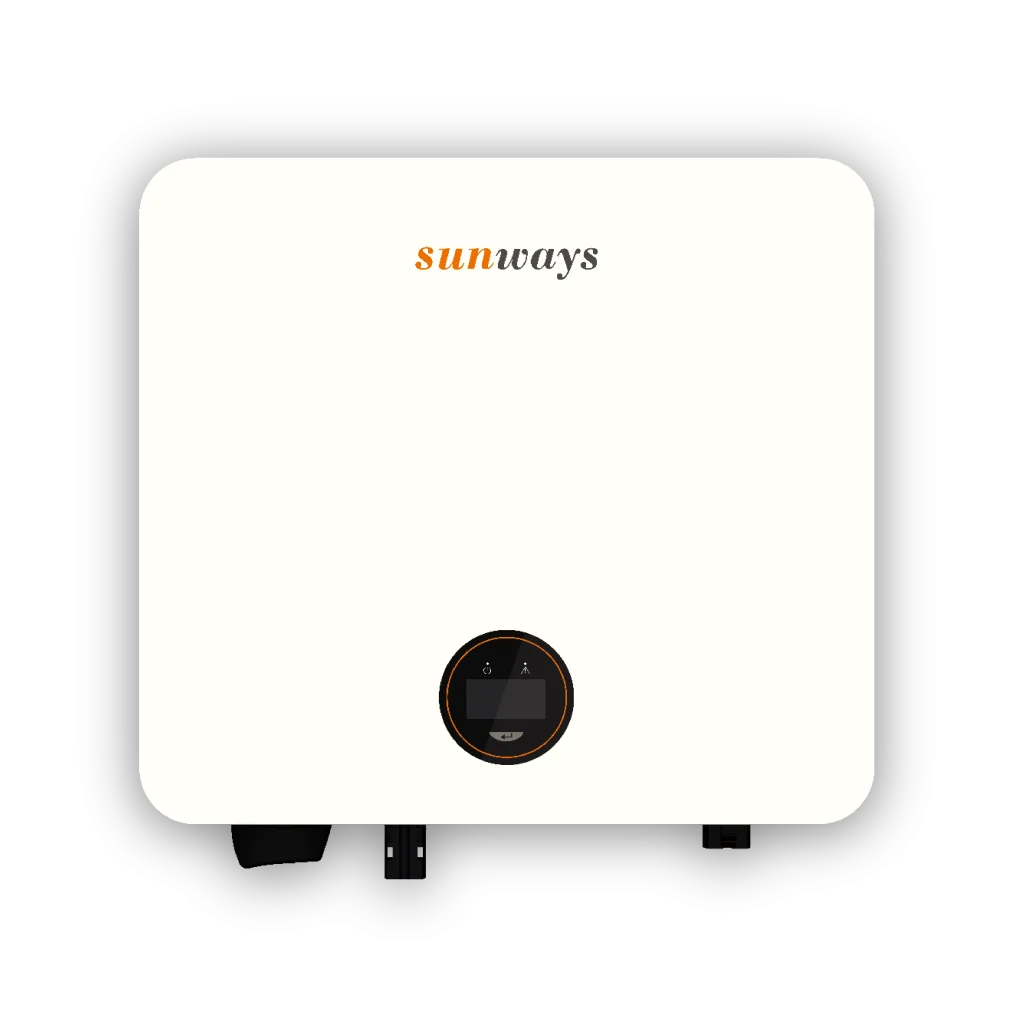
Single MPPT inverters typically have a simpler design and are relatively lower in cost. If the installation conditions of the PV array are consistent, adding more MPPT channels may not necessarily provide significant benefits. For example, some low-power single-phase grid-tied inverters from Sunways feature one MPPT channel and one DC input, making them suitable for small, simple residential rooftop installations.
What Is a Dual MPPT Solar Inverter?
A dual MPPT solar inverter is equipped with two independent maximum power point tracking channels. Two sets of PV arrays can operate at different working voltages. This configuration is commonly used for:
- East-west-facing roofs;
- Roofs with two different tilt angles;
- Two separate module areas;
- Two sets of PV arrays with different shading conditions.
For example, east-facing panels typically receive stronger solar irradiance in the morning, while west-facing panels may achieve higher output in the afternoon. If the two sets of panels are connected to different MPPT channels, the inverter can track their maximum power points separately. This is also the most significant difference when comparing single MPPT vs. dual MPPT. The value of dual MPPT lies not merely in increasing the number of interfaces, but in providing each array with independent power tracking capability.
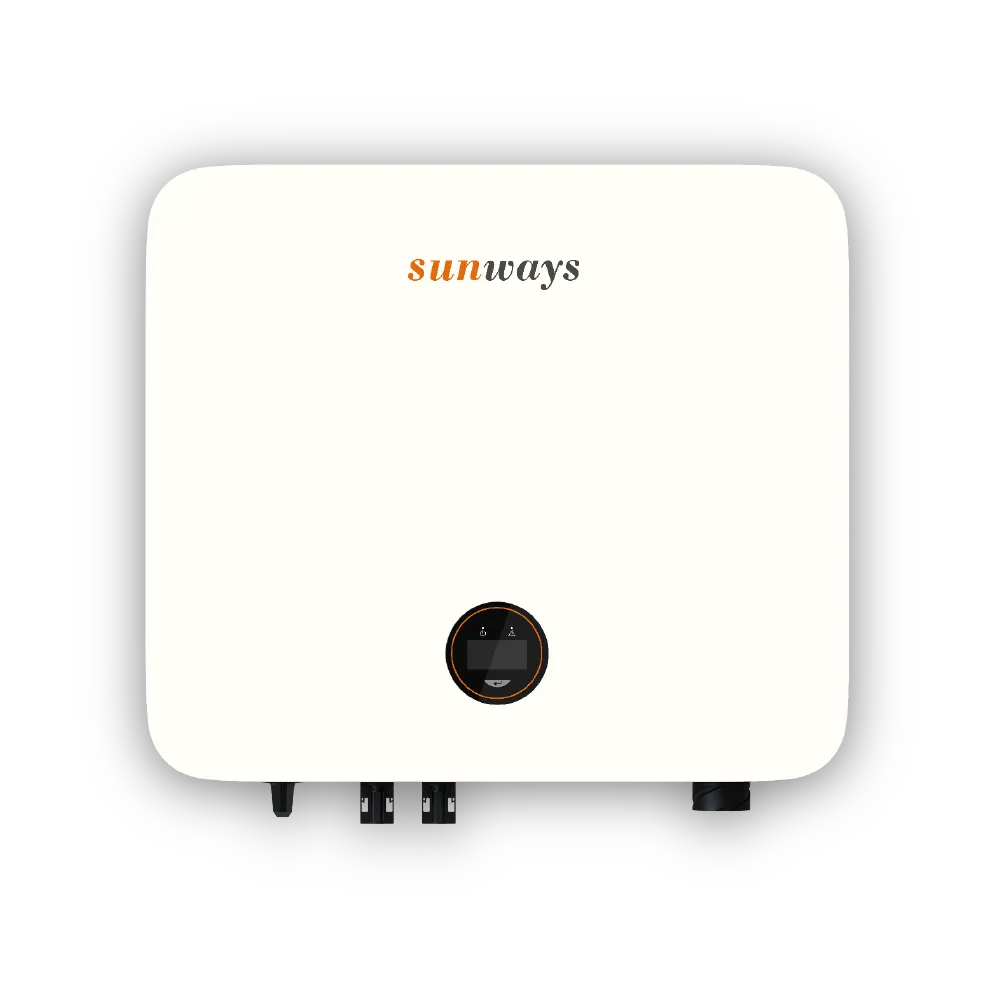
The Sunways STS 3–6kW series features two independent MPPT channels. Each MPPT channel has one DC input, with an MPPT voltage range of 100–550V. This configuration is suitable for residential PV arrays with two separate roof areas or different orientations.
What Is a Multi-MPPT Inverter?
Multi-MPPT inverters typically feature 4, 6, 8, or 10 independent MPPT channels. They are primarily designed for commercial and industrial PV projects with a large number of strings and complex roof structures. Multiple MPPT channels allow for separate management of different PV areas, such as:
- Multiple orientations (east, south, west);
- Different building or factory areas;
- Different module tilt angles;
- Varying degrees of partial shading;
- Strings of different lengths or operating conditions.
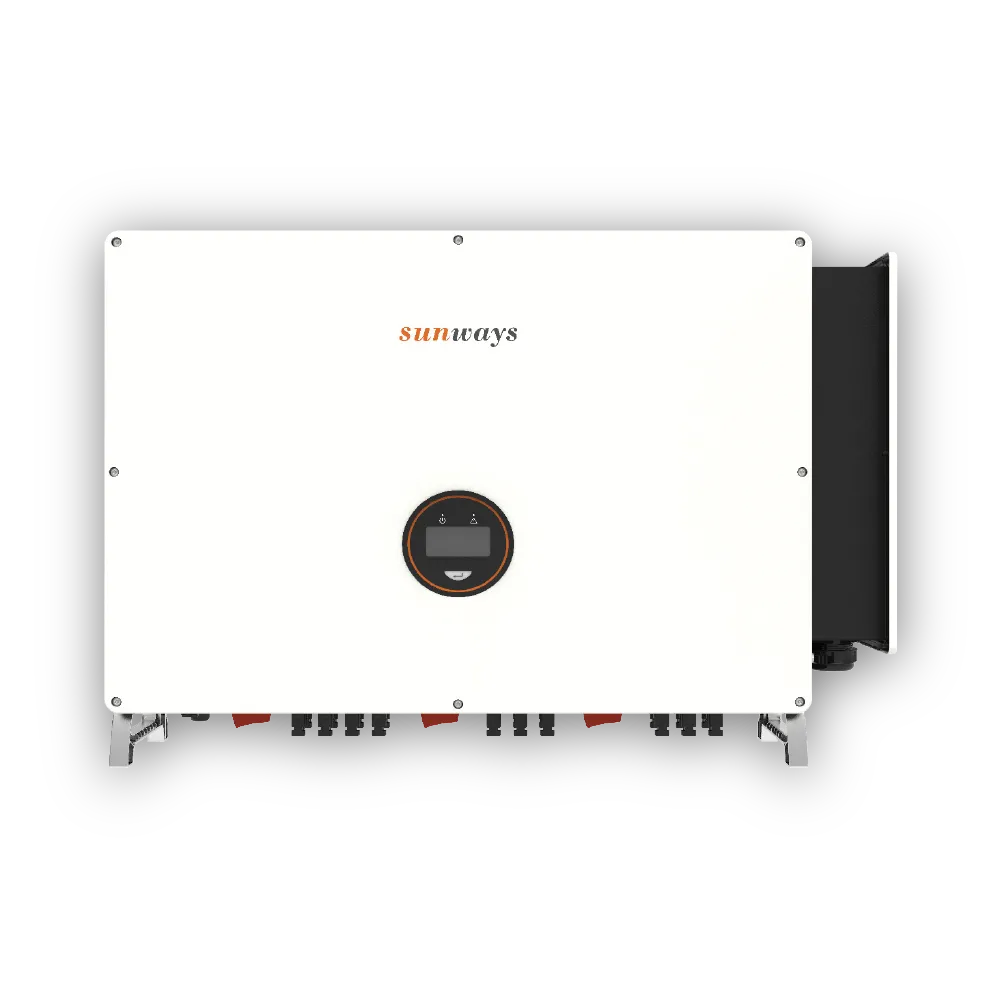
- When electrical conditions vary across different array zones, connecting them to separate MPPT channels can minimize mutual interference. This enhances system design flexibility and facilitates subsequent string monitoring and fault analysis. For example, the Sunways STT 55–80 kW series is equipped with 10 MPPT channels, each capable of connecting two DC strings. This means the inverter can manage 20 DC inputs but has only 10 independent MPPT channels.
How Many MPPTs Does Your Solar System Need?
The number of MPPT channels required for a photovoltaic system depends primarily on the modules’ orientation, tilt angle, shading conditions, and string layout—rather than solely on the system’s total power. Modules with similar operating conditions can be connected to the same MPPT channel. For arrays with significantly different operating conditions, separate MPPT channels should be used for tracking.
- Single Roof Orientation:
If all modules have essentially the same orientation, tilt angle, model, and shading conditions, a single or dual MPPT configuration typically meets the requirements. In this case, adding more MPPT channels may not significantly increase power generation. - East-West Roof:
It is recommended to connect east-facing and west-facing modules to separate MPPT channels. East-facing arrays typically produce higher output in the morning, while west-facing arrays perform better in the afternoon. Dual MPPT for an east-west roof allows both arrays to track their respective maximum power points independently. - Multiple Roof Sections:
If modules are installed on different orientations, at different tilt angles, or across multiple building sections, independent MPPT units should be allocated based on actual operating conditions. Generally, each array with significantly different electrical and shading conditions should be prioritized for a separate tracking channel. - Commercial and Industrial Rooftops:
Commercial and industrial rooftops typically contain more strings and complex installation areas. MPPT for commercial rooftops should be planned in consideration of building zones, the number of strings, shading conditions, and O&M requirements. Large-scale projects may require 4, 6, or 10 MPPT channels. - Partial Shading:
Different shaded areas can be connected to different MPPT channels to minimize mutual interference between arrays. However, increasing the number of MPPT channels cannot completely resolve component-level shading within the same string. In cases of severe shading, it is also necessary to optimize the string layout or evaluate solutions such as power optimizers.
How to Read MPPT Specifications on a Solar Inverter Datasheet?
| Specification | What It Means | Why It Matters |
|---|---|---|
| Start-up Voltage | The minimum PV input voltage required for the inverter to enter the startup process | Determines whether the inverter meets the startup conditions |
| MPPT Voltage Range | The DC voltage range within which MPPT can track the maximum power point | The operating voltage of the PV string should fall within this range |
| Full-Power MPPT Range | The primary voltage range in which the inverter can support rated power output | If the string voltage is too low, the inverter may not be able to operate at full power |
| Maximum DC Input Voltage | The highest DC input voltage the inverter can withstand | The open-circuit voltage of the string under low-temperature conditions must not exceed this value |
| Maximum Input Current per MPPT | The maximum input current each MPPT channel can handle during normal operation | Determines compatibility with high-current modules and paralleled strings |
| Maximum Short-Circuit Current | The maximum PV short-circuit current allowed per input channel | Used to verify string design and input safety |
| Number of MPP Trackers | The number of independent maximum power point tracking channels the inverter has | Determines whether different roof areas can be tracked independently |
| DC Inputs per MPPT | Number of DC strings that can be connected to each MPPT channel | The number of DC inputs does not equal the number of independent MPPT channels |
| MPPT Efficiency | The degree to which the actual power harvested by the MPPT approaches the theoretical maximum available power | Measures tracking capability; not equivalent to DC/AC conversion efficiency |
MPPT Efficiency
MPPT efficiency refers to how accurately an inverter tracks the maximum power point. It is not the same as the inverter’s conversion efficiency—that is, the efficiency with which it converts DC to AC. For example:
- MPPT efficiency might be 99.9%;
- The inverter’s maximum conversion efficiency might be 98.1%;
- The system’s actual power generation efficiency is further affected by other losses.
Therefore, “99.9% MPPT efficiency” should not be interpreted as “the efficiency of the entire inverter or PV system is 99.9%.”
Residential Example: Sunways STS 3–6kW
The Sunways STS 3–6kW series of single-phase grid-tied inverters features the following PV input configuration:
- 2 independent MPPT channels;
- 1 DC input per channel;
- 100–550V MPPT voltage range;
- 600V maximum DC input voltage;
- 20A maximum input current per channel;
- 25A maximum short-circuit current per channel;
- 99.9% MPPT efficiency.
Dual MPPT channels allow for separate management of two PV arrays. For example, east- and west-facing roof sections can be connected to different channels. Each array can independently track its own maximum power point. This configuration is suitable for residential rooftops, two installation areas, or PV systems with two primary orientations.
C&I Example: Sunways STT 55–80 kW
The Sunways STT 55–80kW series of three-phase low-voltage grid-tied inverters features:
- 10 independent MPPT channels;
- 2 DC inputs per channel;
- A total of 20 DC string input interfaces;
- 200–1000V MPPT voltage range;
- 1100V maximum DC input voltage;
- Maximum input current of 40 A per channel;
- Maximum short-circuit current of 50 A per channel;
- 99.9% MPPT efficiency.
The 10 MPPT channels allow for separate management of multiple roof areas and PV strings. This series is suitable for commercial and industrial roofs with multiple orientations, a large number of strings, or complex operating conditions. It is important to note that the 20 DC inputs do not correspond to 20 MPPT channels. Every two strings connected to the same MPPT channel will still share that same maximum power point tracking channel. The final selection should not be based on a single parameter alone. Installers and system designers should verify the strings’ Voc, Vmp, Imp, Isc, the number of MPPT channels, and the number of DC inputs per channel simultaneously. They should also consider the project site’s minimum temperature, maximum module temperature, and local electrical codes.
How to Choose the Right MPPT Solar Inverter?
1. Choose the System Type
First, determine the operating mode of the photovoltaic system. Different types of inverters have different energy management capabilities.
- On-grid inverter: Converts DC power from the PV system into AC power for on-site loads or for feeding into the public grid. Standard on-grid inverters typically do not provide backup power during outages.
- Hybrid inverter: Manages PV, batteries, the grid, and loads simultaneously. Suitable for projects that need to increase self-consumption of PV power, take advantage of peak-off-peak electricity rates, or obtain backup power.
- Off-grid inverter: Primarily used in areas without a grid or with poor grid quality. The system typically relies on PV, batteries, and diesel generators for power.
When selecting a hybrid inverter with MPPT, you must also check the battery voltage range, charge/discharge power, backup output capacity, and switchover time. MPPT parameters only represent PV input capacity and cannot replace battery and backup power parameters.
2. Determine the Required AC Power
The inverter’s AC power should be determined comprehensively based on the PV installed capacity, on-site loads, grid connection constraints, and system design objectives. For residential projects, it is necessary to consider household electricity demand, the connection capacity allowed by the single-phase grid, the total power of the PV modules, and whether batteries or high-power loads will be added in the future.
Selection for commercial and industrial projects is typically more complex. Designers must also evaluate peak power demand, transformer capacity, configurations for parallel operation of multiple inverters, local grid connection requirements, and the project’s permissible DC/AC capacity ratio. If the inverter is undersized, power curtailment may occur during periods of high solar irradiance, resulting in some PV energy going unused. If the inverter is oversized, it may increase initial equipment costs and cause the equipment to operate at low loads over the long term.
3. Select Single-Phase or Three-Phase
The inverter’s phase configuration must match the grid type and connection requirements at the project site. Residential MPPT inverters typically feature a single-phase design, suitable for standard homes, small rooftops, and single-phase low-voltage grids. Some high-power residential or small commercial projects may also use three-phase inverters.** Three-phase MPPT inverters** are better suited for: commercial and industrial rooftops, three-phase loads, higher system power, or projects requiring improved three-phase power balance.
4. Determine the Number of MPPTs
The number of MPPTs should be determined based on how many groups of modules with different operating conditions are present in the PV array.
Key factors to consider include:
- Roof orientation;
- Module tilt angle;
- Building sections;
- Shading conditions;
- String length;
- Module model.
If all modules are installed facing the same direction and have similar tilt angles and shading conditions, a single- or dual-MPPT system can typically meet the requirements. If the roof includes both east and west orientations, it is recommended to connect the two arrays to separate MPPTs. This allows them to track their respective maximum power points independently. Complex commercial and industrial roofs are typically better suited for multi-channel MPPT. Different building zones, roof orientations, and shading areas can be managed separately, thereby increasing string design flexibility.
5. Check the MPPT Voltage Range
The operating voltage of the PV strings must match the inverter’s MPPT voltage range. During design, calculate the operating voltage of the strings at different temperatures based on the module datasheet. It is particularly important to check high-temperature conditions, as the maximum power point voltage (Vmp) typically decreases as module temperature rises. Ensure that the string’s Vmp under high-temperature conditions remains above the inverter’s minimum MPPT voltage. If the datasheet provides a full-power MPPT voltage range, also confirm that the string voltage remains within this range as much as possible. Even if an inverter can operate over a wider voltage range, it may not be able to deliver rated power across the entire range.
6. Check the Maximum DC Voltage
The inverter’s maximum DC input voltage is the upper safety limit that must not be exceeded. The open-circuit voltage (Voc) of photovoltaic modules increases at low temperatures. Therefore, the number of modules per string cannot be determined based solely on the Voc under standard test conditions. During design, ensure that the total Voc of the string at the lowest ambient temperature remains below the inverter’s maximum DC input voltage. Adjustments must also be made based on the module’s temperature coefficient, the local minimum design temperature, and applicable standards.
7. Check Input Current Compatibility
As the operating current of high-power modules increases, input current compatibility has become a critical factor in selecting an MPPT inverter. Review the following parameters in the module datasheet:
- Imp: Maximum power point operating current;
- Isc: Short-circuit current;
- Module current temperature coefficient;
- Number of strings in parallel per MPPT channel.
Then compare these with the inverter parameters:
- Maximum input current per MPPT;
- Maximum short-circuit current per MPPT;
- DC inputs per MPPT.
FAQs About MPPT Solar Inverters
Q1. What does MPPT mean in a solar inverter?
MPPT stands for Maximum Power Point Tracking. It continuously adjusts the operating voltage of the PV array to ensure the modules operate as close as possible to the maximum power point under current conditions. MPPT primarily functions on the PV input side of the inverter, but it cannot generate additional solar energy, nor can it replace proper string design.
Q2. How does MPPT work in a solar inverter?
MPPT measures the PV input voltage and current to calculate the current power output, then continuously adjusts the array’s operating voltage. The controller compares the change in power before and after each adjustment to determine the direction of the next adjustment. This process continues to adapt to changes in sunlight, temperature, and shading, after which the inverter converts the optimized DC power into AC power.
Q3. Is a dual MPPT inverter better than a single MPPT inverter?
A dual-MPPT inverter isn’t necessarily better for every project, but it’s more suitable for two PV arrays with different operating conditions. For example, east-facing and west-facing modules can be connected to separate MPPTs. For simple roofs with identical orientation, tilt, and shading conditions, a single MPPT may suffice; the final choice should be based on the actual array layout.
Q4. How many MPPTs do I need for an east-west roof?
An east-west roof typically requires at least two independent MPPTs. East-facing modules receive stronger irradiance mainly in the morning, while west-facing modules usually produce higher output in the afternoon. Connecting the two arrays to separate MPPTs allows them to track their optimal operating points independently. Ultimately, you’ll also need to check the string voltage, current, and the number of inputs per MPPT.
Q5. Can different solar panels be connected to the same MPPT?
Different modules can be connected to the same MPPT, but it is generally not recommended to mix them arbitrarily. Strings connected to the same MPPT should ideally have similar electrical parameters, the same number of modules, and comparable orientation and shading conditions. If there are significant differences in Vmp, Imp, or installation conditions among the modules, module mismatch may occur, reducing the available power of some arrays.
Q6. What happens if the PV voltage is outside the MPPT range?
If the PV operating voltage falls below the MPPT range, the inverter may be unable to stably track the maximum power point, or may even fail to operate normally or deliver full-power output. If the voltage exceeds the MPPT range but remains below the maximum DC voltage, the system may still be unable to optimize power output properly. Exceeding the maximum DC input voltage may trigger protective measures and pose a risk of equipment damage.
Q7. Is MPPT efficiency the same as inverter efficiency?
MPPT efficiency and inverter conversion efficiency are not the same metrics. MPPT efficiency measures how accurately the inverter tracks the maximum power point, while conversion efficiency measures energy loss during the conversion of DC to AC. Even if MPPT efficiency reaches 99.9%, the inverter’s maximum conversion efficiency and the actual power generation efficiency of the entire system are typically lower.
Q8. Is an MPPT solar inverter the same as an MPPT charge controller?
An MPPT solar inverter and an MPPT charge controller are not the same type of device. An MPPT solar inverter is responsible for optimizing the PV input and converting DC power to AC power. An MPPT charge controller, on the other hand, primarily regulates PV energy to charge batteries. Some hybrid or off-grid inverters integrate both of these functions into a single device.
Need Help Choosing an MPPT Solar Inverter?
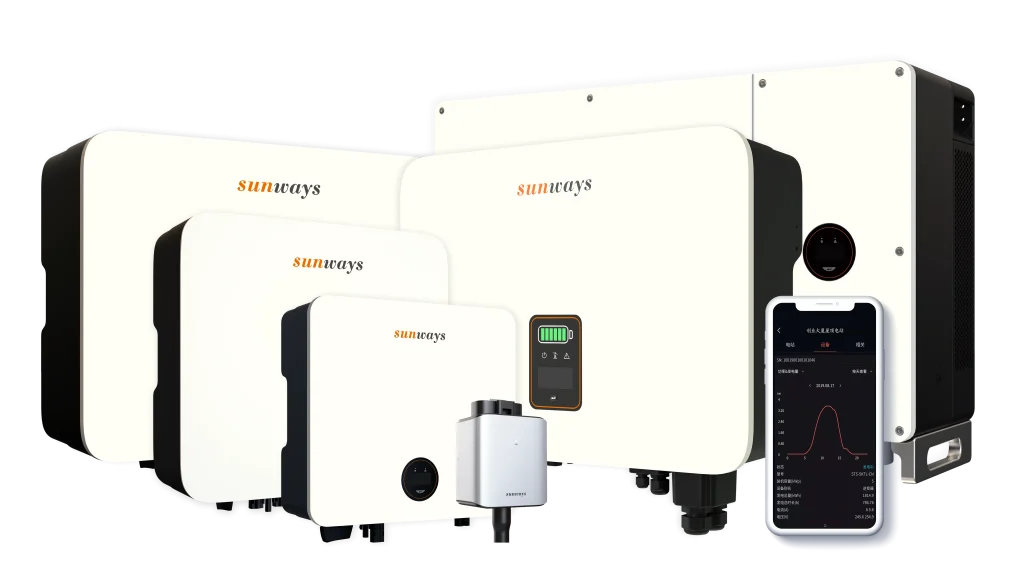
The right MPPT solar inverter should be selected based on a comprehensive assessment of project conditions. Key considerations include PV module parameters, roof orientation, string design, system capacity, grid type, and local technical requirements. The number of MPPT channels, voltage range, and input current must also match the actual array configuration.
As a professional MPPT solar inverter manufacturer, Sunways offers grid-tied and hybrid inverter solutions for residential, commercial, and industrial projects, as well as solar-plus-storage projects. You can submit your project capacity, module models, roof layout, and local grid information. Based on this information, the Sunways technical team will provide preliminary inverter selection and MPPT configuration recommendations.
Contact Sunways for professional inverter recommendations, or submit your project requirements to request a solar inverter quote.
Start Your Project