
Germany Residential Solar Case Study: 11.4 kWp PV, Battery Storage and EV Charging with Sunways
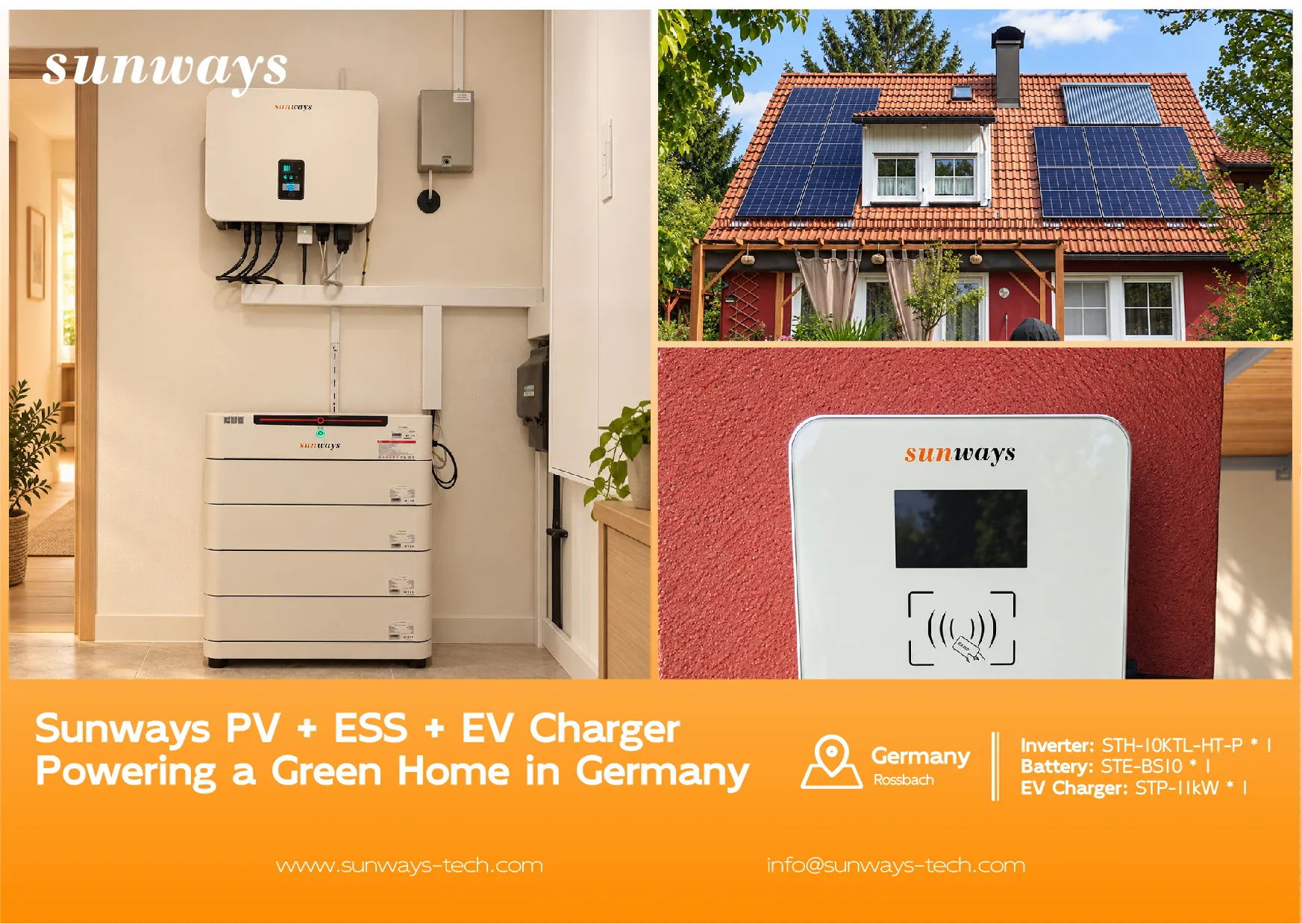
In Wald-Rossbach, Germany, a residential solar energy system was designed to combine rooftop photovoltaics, battery storage and electric vehicle charging into one integrated energy solution.
The project includes an 11.4 kWp rooftop solar system, a Sunways hybrid inverter, a 12.8 kWh battery storage system, and an EV charging solution. Instead of simply increasing PV capacity, the system focuses on how solar generation can be better matched with household electricity consumption and future mobility needs.
For homeowners considering a similar solar and storage investment, this project provides a practical reference for understanding how system size, roof orientation, battery capacity and EV charging requirements should be evaluated together.
Project Overview: A Residential Energy System Designed Around Daily Electricity Usage
The Wald-Rossbach residential project includes:
| System Component Configuration | |
|---|---|
| Location | Wald-Rossbach, Germany |
| PV System Size | 11.4 kWp |
| PV Modules | 24 × 475 W modules |
| Roof Orientation | East-west orientation |
| Hybrid Inverter | Sunways STH-10KTL-HT-P |
| Battery Storage | Sunways STE-BS |
| Battery Capacity | 12.8 kWh |
| Additional Application | Electric vehicle charging |
The Wald-Rossbach project uses 24 photovoltaic modules, each rated at 475 W, resulting in a total installed PV capacity of 11.4 kWp.
The modules are installed on both east-facing and west-facing roof sections, with 12 modules on each side. The system is paired with a Sunways STH-10KTL-HT-P hybrid inverter, a Sunways STE-BS high-voltage battery storage system, and an electric vehicle charging solution.
In a residential solar system, each component has a different role. The PV modules generate electricity from sunlight, the hybrid inverter manages energy conversion and interaction between different system components, while the battery stores surplus solar energy for later use.
This type of system design is increasingly considered by homeowners who want to improve solar self-consumption, use more locally generated electricity and integrate electric vehicle charging into their daily energy routine.
From Rooftop Solar to Household Energy: Understanding the System Design
The installed PV system has a total capacity of 11.4 kWp, calculated from:
24 modules × 475 W = 11,400 W
The kWp value represents the rated power of the PV modules under standard test conditions. In real operation, solar output changes throughout the day depending on sunlight intensity, temperature, weather conditions and installation conditions.
Therefore, when evaluating a residential solar system, the important question is not only the total installed capacity, but also when electricity is generated and when the household needs electricity.
For this project, the east-west roof layout creates a different generation profile compared with a single-direction rooftop system. East-facing modules can contribute more electricity earlier in the day, while west-facing modules can continue producing energy later in the afternoon.
This type of configuration can help extend the daily period of solar generation. However, actual energy production still depends on site-specific conditions such as roof angle, shading, local climate and system design.
East-West Solar Installation: Matching Generation with Household Consumption
One important consideration in residential solar design is the relationship between electricity generation and electricity demand.
Many households consume electricity not only during peak solar hours but also in the evening, when solar production decreases. This is where battery storage becomes an important part of the energy system.
In the Wald-Rossbach project, the east-west PV arrangement and battery storage work together to shift part of the solar energy generated during the day into periods when household electricity demand is higher.
The system uses a Sunways hybrid inverter with two MPPT channels. MPPT, or Maximum Power Point Tracking, is a technology used by inverters to help PV modules operate at an optimal working point under changing conditions.
For installations with different roof orientations, independent MPPT channels can provide more flexibility during system design. However, the final configuration should always be verified through the electrical design documents, including PV string arrangement, voltage range and current compatibility.
Battery Storage: Evaluating Capacity Based on Real Household Needs
The project includes a 12.8 kWh Sunways STE-BS battery storage system.
Battery capacity is measured in kilowatt-hours (kWh), which represents the amount of energy that can be stored. This is different from kilowatts (kW), which describe power output capability.
The purpose of residential battery storage is to store surplus solar energy during periods of high PV production and make that energy available when solar generation is lower, such as during evening household consumption.
However, battery size should not be selected based only on the available roof area or PV capacity.
A suitable battery configuration should consider:
- household electricity consumption patterns;
- evening and overnight energy demand;
- expected solar surplus;
- backup power requirements, if required.
A 12.8 kWh battery does not automatically mean that a household can operate independently throughout the night, because usable energy depends on battery settings, conversion losses, reserve capacity and actual electricity consumption.
For homeowners evaluating battery storage, analysing real electricity usage data is usually more meaningful than selecting a battery only based on nominal capacity.
Solar EV Charging: Connecting Renewable Generation with Electric Mobility
Another key feature of this residential project is the integration of electric vehicle charging. Solar EV charging allows homeowners to use surplus solar generation for vehicle charging instead of sending all excess electricity back to the grid. However, effective solar EV charging depends on the relationship between three factors:
- First, the household needs sufficient solar production during charging periods.
- Second, the vehicle needs to be available when solar energy is generated.
- Third, the energy management strategy needs to coordinate PV generation, household consumption, battery charging and EV charging.
For example, during periods of strong solar production, electricity may be prioritised for household loads first, followed by battery charging and EV charging depending on system settings.
If solar generation is insufficient, grid electricity may still be required. Therefore, installing solar, battery storage and an EV charger does not automatically guarantee that all vehicle charging will come exclusively from solar energy.
A proper evaluation should always consider actual household routines and charging behaviour.
What This Residential Solar Project Shows
The Wald-Rossbach project demonstrates that a successful residential solar system is not defined only by installed PV capacity.
A well-designed system needs to consider how different energy components work together:
- the rooftop configuration determines when solar energy is available;
- the inverter manages energy conversion and system operation;
- the battery enables energy shifting between different periods;
- EV charging introduces additional electricity demand that needs to be coordinated.
For homeowners with similar goals, including higher solar self-consumption, reduced dependence on grid electricity during certain periods, or integration of EV charging, the system design should start with an understanding of personal energy habits.
Important factors include:
- geographical location;
- roof orientation and available space;
- annual electricity consumption;
- evening electricity demand;
- vehicle charging schedule;
- backup power expectations.
Evaluate Your Residential Solar Storage Solution with Sunways
The Wald-Rossbach residential project provides a practical example of how solar generation, battery storage and EV charging can be combined into one home energy system.
With an 11.4 kWp east-west PV installation, Sunways hybrid inverter technology, 12.8 kWh battery storage and EV charging integration, the project demonstrates the importance of matching system components with real household energy requirements.
Every home has different electricity patterns and installation conditions. Before selecting a solar and storage solution, homeowners and installers should evaluate roof characteristics, electricity consumption data and future energy needs.
Related Projects
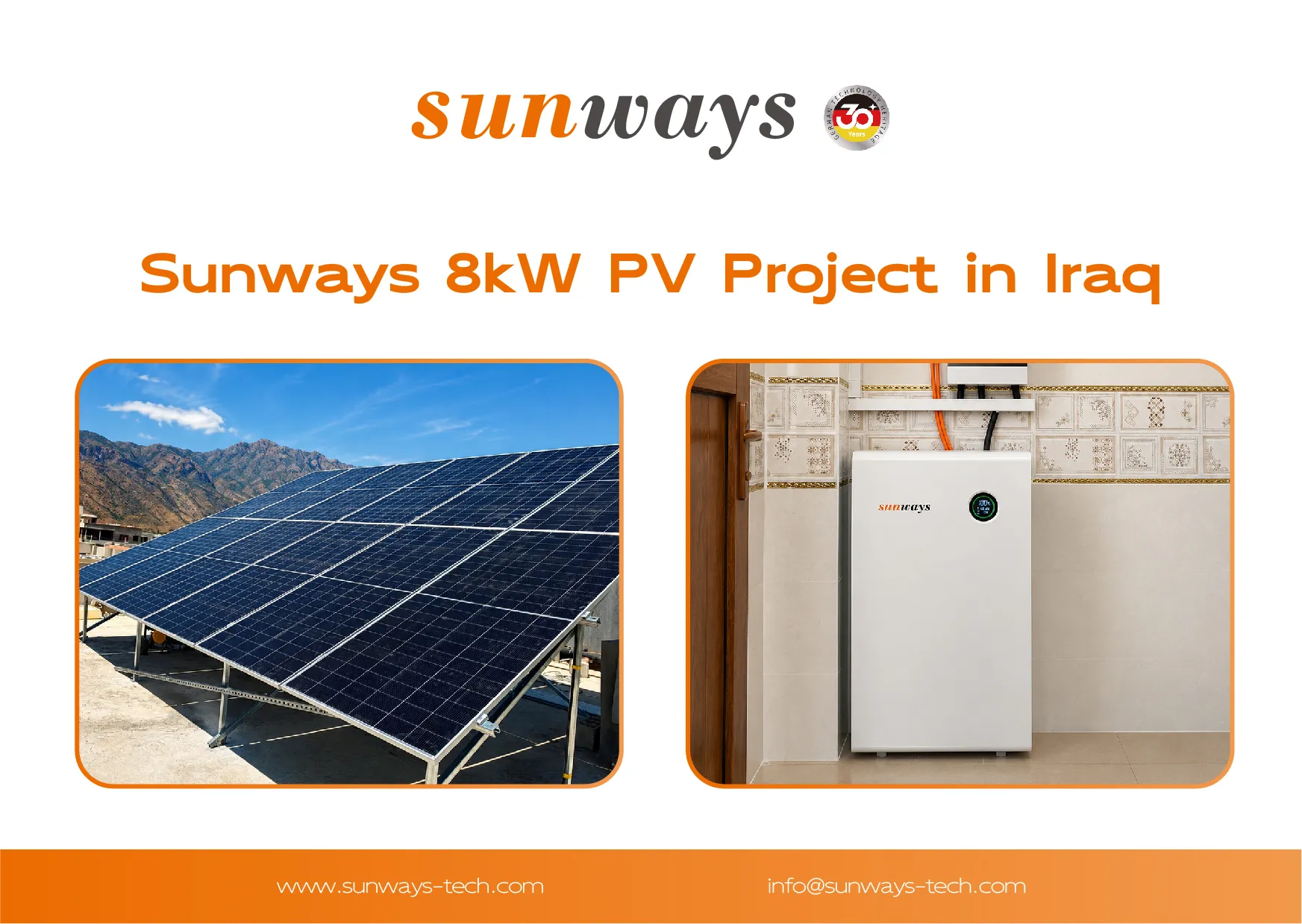
Solar Battery Storage in Iraq: How Sunways’ First 8kW Project Keeps Power On
Explore Sunways’ 8kW solar battery storage project in Iraq, featuring an STH-8KTL-LS hybrid inverter and 16kWh battery for reliable home backup power.
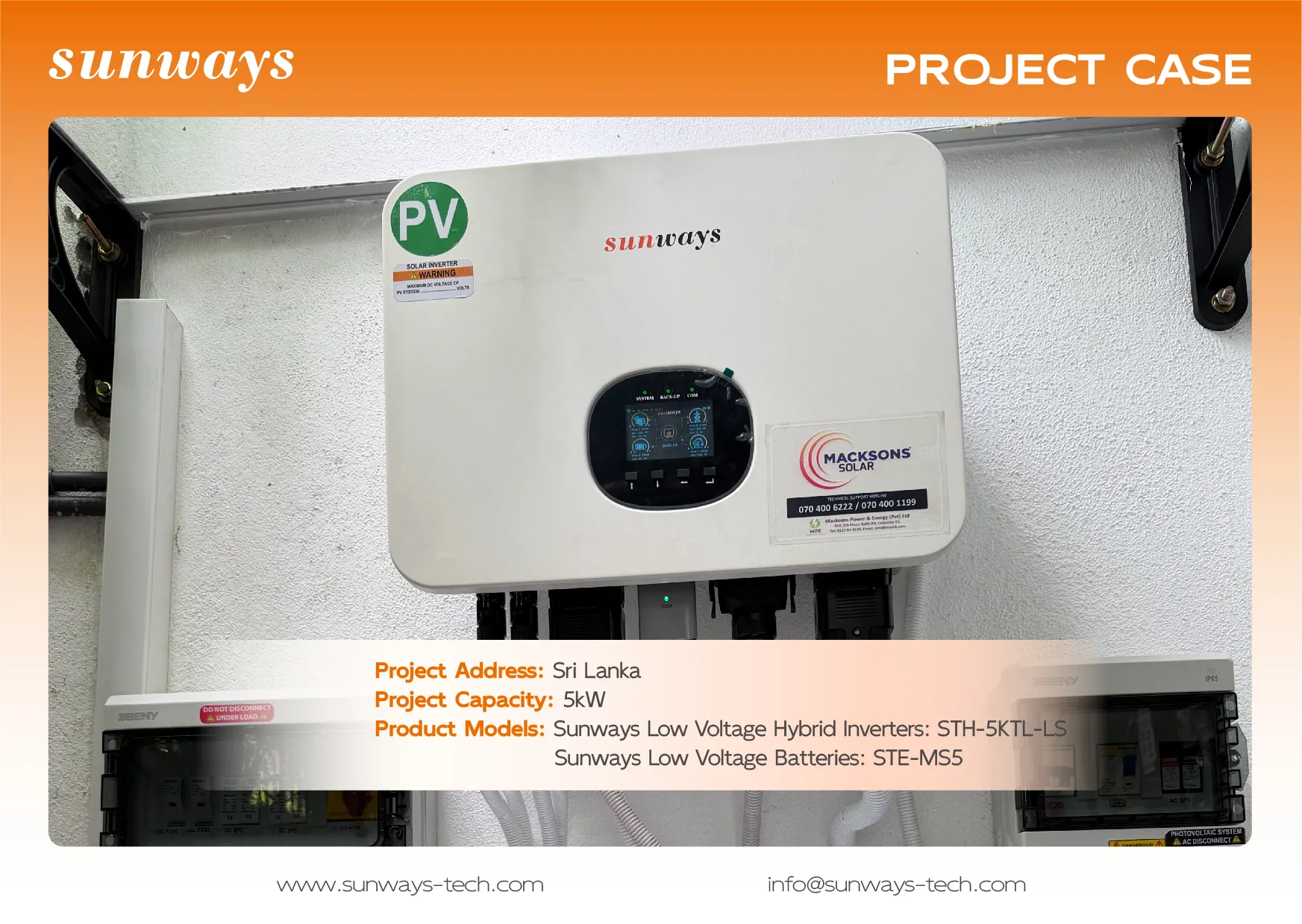
When the Grid Is Unpredictable: Sunways 5kW Residential Hybrid Solar Project in Sri Lanka
Discover how a Sri Lankan home uses a Sunways 5kW hybrid inverter and 5kWh battery to store solar energy and maintain backup power during grid outages.