Types of Energy Storage: What Does Your Solar Project Really Need?
Table of Contents
Energy storage can be categorised into five main types based on the form in which energy is stored: electrochemical storage, mechanical storage, thermal storage, chemical storage, and electrical or electromagnetic storage. Typical examples include batteries, pumped-storage hydro, thermal water storage, hydrogen storage and supercapacitors. This is a common classification method, although the categorisation may vary slightly across different sources.
For residential and commercial projects seeking to store surplus daytime solar power for use in the evening, battery storage is usually the preferred option to evaluate. If the primary demand is for hot water, heating or cooling, thermal or cold storage may be considered. Pumped-storage hydro and hydrogen storage also have their own specific applications, but their requirements in terms of site, supporting infrastructure and system scale differ significantly from those of typical rooftop solar projects.
When selecting an energy storage method, the first step is to clarify: is electricity, heat or cooling required? What is the required power output, and for how long? If backup power during power cuts is also required, it is essential to verify the inverter’s off-grid operation capability, switching mode and backup circuit configuration. Installing a battery does not automatically guarantee a continuous power supply during a power cut. Hybrid inverters are system components and do not constitute a standalone form of energy storage.
This article will compare different energy storage methods from a practical perspective and help you determine which solution your project truly requires, based on your energy needs, the duration of power supply required and your existing PV configuration.
How Do Energy Storage Technologies Compare in Real Use?
When comparing energy storage technologies, first consider what you need them to provide: electricity, heat, cooling, or short-term power support. Then compare the duration of energy supply, site requirements and system configuration. Focusing solely on capacity or efficiency can easily lead you in the wrong direction. For example, a thermal storage tank can meet hot water requirements, but cannot directly power lighting, computers or cold store control systems.
What Can Each Technology Do for Your Project?
| Energy Storage Technology | What Can It Do for You? | Key Considerations When Selecting | Practical Significance for PV Projects |
|---|---|---|---|
| Battery Energy Storage | Stores surplus solar power for use at other times; provides backup power according to system configuration. | Available capacity, output power, capacity degradation, protection and backup power configuration. | Prioritise this option when night-time electricity consumption or backup power for critical loads is required. The IEA also lists residential and commercial on-site energy storage as application scenarios for batteries. |
| Pumped-storage Hydro | Pumps water to a higher elevation to store energy, then releases it to generate electricity, enabling large-scale energy transfer. | Reservoirs, elevation difference, civil engineering conditions and project scale. | Not suitable as a direct supporting facility for standard rooftop solar projects. |
| Compressed Air Energy Storage | Uses electricity to compress air, which is then released via expansion and power generation equipment to release energy. | Air storage facilities, thermal management, scale and system design. | Constitutes an infrastructure solution requiring specialised planning. |
| Flywheels / Supercapacitors | Respond rapidly to power fluctuations, providing short-term support. | Energy storage capacity, discharge duration and standby losses. | Suitable for managing short-term power demands; should not be the default choice for overnight power supply. Both serve similar purposes but operate on different energy storage principles. |
| Thermal Energy Storage / Cold Storage | Stores heat or cold for use in hot water, heating or cooling. | Required temperature, thermal insulation efficiency, heat exchange equipment and end-use systems. | Worth evaluating when the end-use requirement is heat or cold; additional conversion steps are required if electricity output is needed. |
| Hydrogen Storage | Converts electricity into hydrogen, which is stored for use in industry, heating or for generating electricity again. | Hydrogen production, storage and utilisation equipment, as well as conversion losses throughout the process. | May be worth investigating for multi-day, seasonal storage or industrial hydrogen projects; it is not the default solution for standard rooftop projects. |
Battery vs Thermal Storage: Can One Replace the Other?
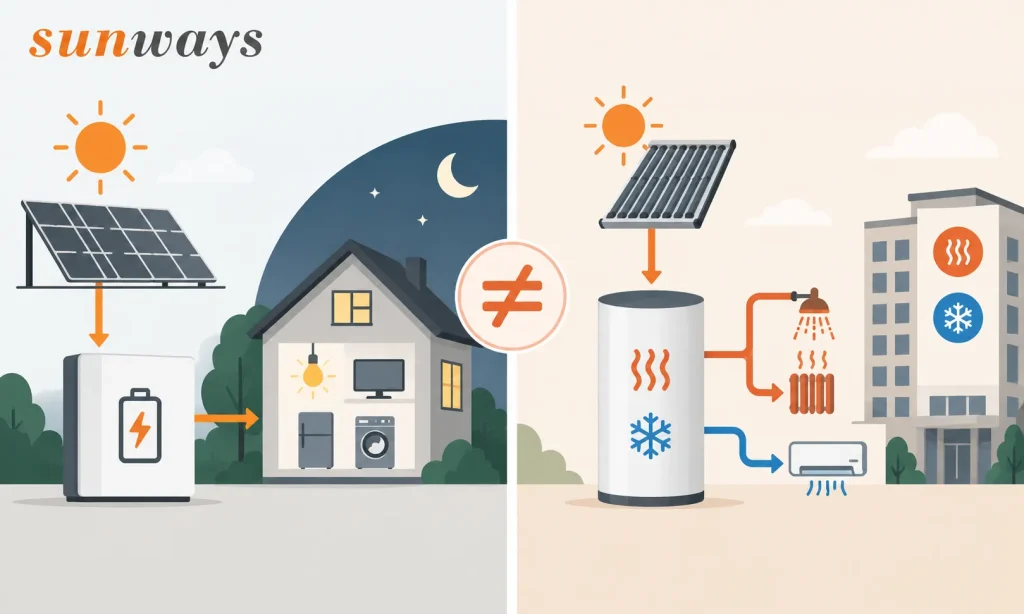
They cannot be directly substituted for one another. Battery energy storage and thermal energy storage store different forms of energy and ultimately address different problems.
Battery energy storage is primarily used to store and release electrical energy. For example, it can store surplus electricity generated by photovoltaic panels during the day for use during peak domestic electricity consumption in the evening; or, in the event of a power cut, it can provide a backup power supply for critical loads. Therefore, if you need to operate domestic appliances, production equipment, or ensure the continued operation of critical equipment during a power cut, battery energy storage solutions should be prioritised. Thermal energy storage systems cannot directly replace batteries in supplying electricity to electrical loads.
Thermal energy storage, on the other hand, is primarily used to store thermal energy or cooling capacity, serving hot water, heating, cooling and certain industrial thermal energy requirements. It does not involve directly storing electrical energy and then outputting electricity; rather, it optimises energy use by storing heat or cooling capacity. For example, hotels can utilise surplus electricity generated by photovoltaic systems during the day to heat water storage tanks, storing hot water for use in the evening; cold stores or commercial buildings can also evaluate cold storage solutions to reduce energy demand during peak periods.
However, it should be noted that thermal energy storage does not mean complete disconnection from the electricity grid. Pumps, fans, compressors and control systems still require electricity to operate. Therefore, if the project’s focus is on power outage protection, a separate backup power system will still need to be designed.
Start with Your Load
Before requesting a quote, clearly list three items: which equipment needs to operate, the total power required simultaneously, and for how long.
Here is a simplified example: a critical load with an average power of 2 kW, running continuously for 5 hours, requires approximately 10 kWh of electricity to be delivered to the load. This does not take into account conversion losses, reserve capacity and capacity degradation; therefore, you cannot simply purchase a battery with a nominal capacity of 10 kWh based on this figure alone. You must also verify that the system can handle the power demands when equipment is running and starting up simultaneously.
Which Storage Option Fits Your Solar Project?
If you wish to store surplus solar power for use in the evening, or to safeguard critical equipment during power cuts, you should prioritise assessing battery storage. If your primary needs are hot water, heating or cooling, you should first compare thermal storage options. Battery storage can also be used for peak shaving in businesses, but the power, capacity and control strategies will need to be calculated separately.
Match the System to Your Main Goal
| Your Main Requirements | What Should You Prioritise Assessing? | What Information Should You Prepare First? | Clear Selection Recommendations |
|---|---|---|---|
| Surplus electricity during the day, electricity required at night | Battery storage; simultaneously assess shifting some electricity consumption to daytime. | Records of time-of-use PV generation, surplus electricity and night-time electricity consumption. | Assess capacity based on the actual amount of electricity that can be shifted; do not simply copy the installed PV capacity. |
| Maintain power to critical equipment during power cuts | A comprehensive backup power solution supporting off-grid operation, including switching and protection equipment. | List of critical equipment, simultaneous operating power, start-up requirements, backup duration and permissible interruption time. | First define the circuits requiring backup power, then determine the output power and capacity. Do not assume that the entire building requires backup power. |
| Businesses with short-term load peaks | Battery systems equipped with metering and energy management controls. | Peak magnitude, duration, charging windows and electricity bills. | First confirm how peak loads are billed, then calculate the value of peak shaving. Having a battery does not necessarily mean you can reduce demand charges. |
| Primary requirements are for hot water, heating or cooling | Thermal storage tanks, thermal or cold storage solutions. | Heating/cooling loads, usage periods, temperature requirements and existing equipment. | Compare options based on end-use; avoid automatically configuring a battery system solely to meet thermal demand. |
Batteries can store photovoltaic electricity for use at night; thermal energy storage, on the other hand, primarily serves subsequent heating and cooling requirements. This distinction should be considered before selecting a brand or capacity.
For Peak Shaving, Check the Bill Before the Battery
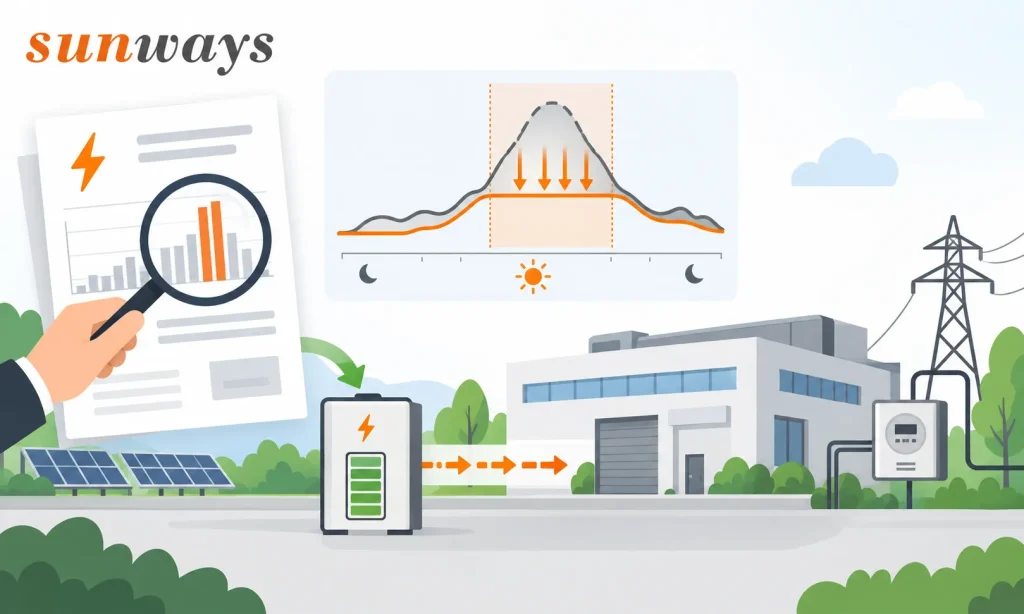
Peak shaving aims to control the peak grid draw under the applicable billing rules. You need to cover the entire duration of the peak and ensure the battery has been sufficiently charged beforehand. NREL’s energy storage dispatch model also uses load forecasts, target power draw, capacity and state of charge as control conditions.
For example, suppose a business needs to reduce grid draw by 20 kW for 30 consecutive minutes; the battery system would need to provide approximately 10 kWh of energy on the AC side, whilst maintaining an output capacity of at least 20 kW. This is merely a demand calculation that does not account for losses or margins; actual cost savings also depend on the billing periods and whether other peaks are controlled.
Setting Priorities When a Single Battery Serves Multiple Purposes
A single battery system can serve the purposes of self-consumption, emergency backup and peak shaving, but the same available energy cannot be allocated to multiple purposes simultaneously. If the battery has been fully discharged during evening use, there will be insufficient reserve capacity available in the event of a subsequent power cut.
Make your priorities clear to the installer: if power cut protection is the priority, reserve capacity for backup power; if self-consumption is the priority, arrange charging and discharging according to surplus electricity and night-time loads; if peak shaving is the priority, ensure sufficient power and capacity are available during the target periods. Request that the proposal clearly sets out these configurations so that you can assess whether it truly meets your needs.
Lithium-Ion vs Lead-Acid: What Are You Really Paying For?
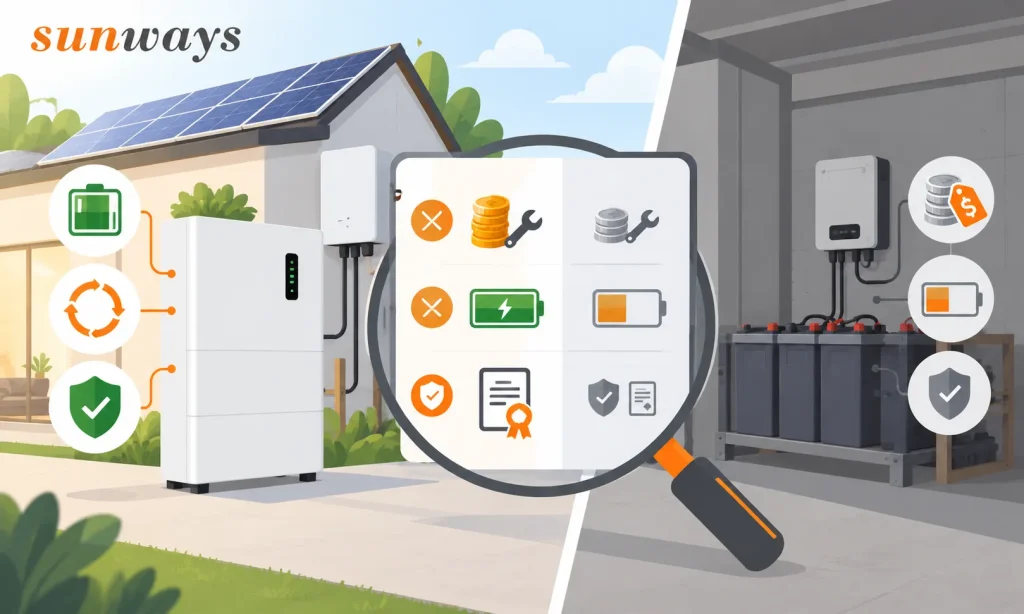
If you are installing a new solar power system and plan to charge and discharge it daily, we recommend first considering compatible LFP batteries. If your existing system, local maintenance conditions or budget are better suited to lead-acid batteries, you should still include them in your comparison. What is truly worth comparing is the total installation cost, usable energy capacity and warranty terms, rather than the price of the batteries alone.
Where Does LFP Fit?
LFP (lithium iron phosphate, LiFePO₄) is a type of lithium-ion battery, not a separate category alongside lithium-ion. Lead-acid and flow batteries belong to other battery technology pathways. Flow batteries require a systematic assessment that takes into account storage tanks, pumps and site conditions; the standard selection process for ordinary domestic batteries should not be applied directly.
The IEA’s Global Energy Review 2026 notes that LFP accounts for approximately 90 per cent of current global battery energy storage deployments. This figure relates to global deployments and does not represent the market share of any specific country, the residential market or Sunways. It indicates that LFP warrants close consideration, but does not prove that LFP should be selected for every project.
The IEA also notes that lithium-ion batteries have a higher energy density than lead-acid batteries, which helps to reduce weight and size. However, installation space should still be calculated based on specific product dimensions and maintenance clearance requirements.
Compare Quotes on the Same Basis
Request the following six items of information from suppliers to ensure that lithium-ion and lead-acid solutions are compared under the same conditions.
| Comparison Criteria | Data You Need to Obtain | Issues Easily Overlooked |
|---|---|---|
| Total Installation Cost | Quotes covering the same scope for batteries, essential ancillary equipment, installation and taxes. | Cheaper batteries alone do not necessarily mean lower total project costs. |
| Available Energy | Available kWh within the permissible operating range, along with test temperatures and discharge rates. | Actual deliverable energy may differ even for the same nominal capacity. |
| Power Capability | Continuous and peak charge/discharge power, peak duration and limiting conditions. | Sufficient energy capacity may still be insufficient to power equipment starting simultaneously. |
| Cycle Life and Warranty | Cycle test conditions, warranty period, throughput limits, capacity retention rate and exclusions. | Cycle life cannot be assessed in isolation from depth of discharge, temperature and end-of-life comparisons. |
| Maintenance and Installation | Maintenance, ventilation, temperature and space requirements for specific models. | Not all lead-acid batteries require topping up with water, nor should lithium-ion batteries be assumed to require no maintenance whatsoever. |
| System Compatibility | List of compatible inverters, charging settings, and applicable BMS communication and firmware requirements. | The fact that the chemical system or nominal voltage is the same does not mean the batteries can be directly substituted. |
Make the Supplier Demonstrate the Performance
Require both quotations to meet the same load, energy supply duration and operating conditions. Then compare available energy capacity, estimated maintenance and replacement costs, and exactly what the warranty covers.
In particular, ask clearly: Is the warranty subject to a limit on cumulative charge and discharge cycles? What remaining capacity level is required to qualify for a claim? Who bears the labour and transport costs for replacement? These terms provide a clearer indication of the long-term protection you are purchasing than a single ‘cycle count’ alone.
The final selection must be based on a specific battery and inverter combination. The above recommendations do not imply that any Sunways model is compatible with both lithium-ion and lead-acid batteries.
How Long Will Storage Last? Check kW Before You Count kWh
Even with a 10 kWh battery, the higher the load, the shorter the runtime is usually. However, you must first ensure that the system can power your appliances before calculating how long it will last. kW represents power, which determines which appliances can run simultaneously; kWh represents energy, which affects how long these appliances can run.
A 10 kWh Example: Two Different Runtimes
① How Much Energy Can You Actually Use?
Suppose you have chosen a battery with a rated capacity of 10 kWh, and that 90 per cent of this is permitted to be discharged, taking into account the reserve capacity. Further, suppose the efficiency of the discharge path from the battery to the AC equipment is 92 per cent; the amount of energy the equipment ultimately receives is: 10 × 90 per cent × 92 per cent = 8.28 kWh. **These figures are for illustrative purposes only and do not represent general industry values or specific product specifications.
② How Does Your Load Affect Runtime?
If your equipment draws a continuous load of 2 kW, this amount of energy would theoretically last for approximately 4.14 hours. When the load increases to 4 kW, the runtime is reduced to approximately 2.07 hours. This estimate assumes a constant load, with no supplementary power sources such as solar panels, and does not account for additional standby power consumption. Actual runtime also depends on the initial charge level, temperature, battery ageing and load variations.
③ Can the System Start Your Equipment?
Sufficient battery capacity does not necessarily mean sufficient output power. Water pumps or compressors may require higher instantaneous power when starting up. Even if the battery still has charge, the equipment may fail to start due to output limitations of the battery or inverter. Therefore, you need to verify the system’s continuous output power, starting power and the permitted duration.
④ Avoid Counting the Same Loss Twice
If the available capacity provided by the manufacturer has already been calculated after deducting the same reserve capacity, do not apply the 90 per cent reduction again. You must also examine the efficiency carefully. In this example, we are considering the efficiency of the battery discharging to the equipment; this cannot be directly substituted with ‘round-trip efficiency’, which includes losses from both charging and discharging.
Does Battery Storage Work During a Power Cut?
Yes, provided the entire system is capable of providing backup power. The fact that the battery is charged does not guarantee that the inverter will be able to supply power during a power cut, nor does it mean that all sockets will continue to function.
Ask the installer to clarify these five points in the proposal:
- Critical loads: Which equipment and which circuits are connected to the backup power supply?
- Continuous and start-up power: Can the system operate simultaneously whilst starting up equipment such as water pumps and compressors?
- Available charge: How much charge is expected to remain at the start of a power cut, and how long will it last?
- Isolation and switching: How will the system be isolated from the mains, and does the switching time meet the equipment’s requirements?
- Equipment compatibility: Are the battery, inverter, BMS and related control equipment compatible?
When requesting a quotation, instead of saying “I need a 10 kWh battery”, state: “These devices need to operate simultaneously; what is the average load in kW, and how many hours do I need to maintain power after a power cut?” Also include the start-up power and permissible interruption time so that the supplier can verify a comprehensive solution based on this information.
Adding Storage to Solar: Should You Choose AC or DC Coupling?
For existing photovoltaic (PV) systems, it is usually possible to assess the feasibility of adding energy storage without necessarily replacing the original inverter with a hybrid inverter. If you wish to retain your existing equipment, you should first assess AC-coupled solutions; if the PV system and battery are being installed together as a new system, you should prioritise comparing fully integrated DC-coupled or hybrid inverter solutions. The final choice depends on equipment compatibility, retrofitting costs and backup power objectives.
Where Does the Battery Connect?
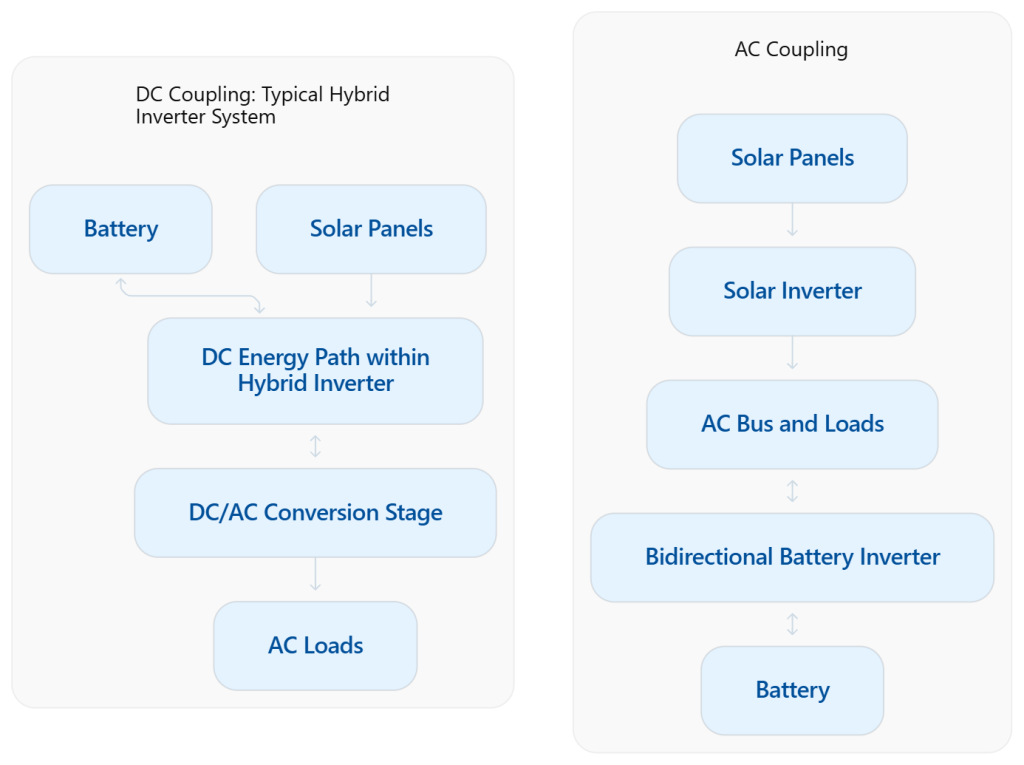
AC coupling connects the PV system to the energy storage on the AC side. PV power first passes through the existing PV inverter and is then fed into the battery via a bidirectional converter on the battery side. This configuration allows the existing PV inverter to be retained.
DC coupling integrates the energy pathways of the PV system and the battery on the DC side. Common new-build solutions use hybrid inverters to coordinate the PV system, the battery and the AC loads; specific systems may also employ independent charge controllers. AC and DC coupling describe connection architectures, not new categories of energy storage technology.
Compare the Work Each Option Requires
| Comparison Item | Key Considerations for AC Coupling | Key Considerations for DC Coupling |
|---|---|---|
| Retrofitting Existing PV Systems | Can the original inverter be retained? How will new equipment be connected and controlled? | Is it necessary to replace the inverter, adjust the PV strings and the connection path? |
| New PV-Storage Installations | Can independent devices operate in coordination? | Can the PV, battery and inverter be matched as a whole? |
| Conversion and Efficiency | What conversions does the solar power undergo when stored in the battery and then supplied to the load? | Can conversions along this path be reduced? What DC conversion losses remain? |
| Operation during Power Cuts | Can the existing PV system continue to generate power within the backup power system? | Does it support the required off-grid modes and backup power circuits? |
| Future Expansion | How much headroom remains for metering, control and AC connection? | How does the number of batteries, voltage and inverter interfaces allow for expansion? |
Fewer conversion stages do not necessarily equate to higher efficiency throughout the year. When comparing systems, use the same electricity consumption curve and examine actual scenarios—such as direct power supply from PV and power supply after storage—rather than simply comparing the maximum efficiency figures on promotional leaflets.
Check What Happens When the Grid Fails
The fact that the batteries can be charged whilst connected to the grid does not mean that the existing PV system will continue to function after a power cut. If you need to continue using PV power and charging during a power cut, you must ensure the system can establish off-grid voltage and frequency and coordinate the PV output. Victron’s AC-coupled design documentation specifically outlines these power control requirements; the exact implementation must be based on the documentation for the selected equipment.
Before requesting a quote, have the following information ready: the model of your existing inverter, the installed PV capacity, whether the supply is single-phase or three-phase, and your backup power objectives. Ask the installer to verify the battery voltage and current ranges, the applicable BMS protocol and firmware, operating modes, and the backup power circuit.
If the old inverter is still suitable, first compare options for an AC retrofit that retains it; if the equipment needs replacing anyway, then include DC/hybrid inverter solutions in the overall cost comparison. Do not base your decision solely on the ‘AC’ or ‘DC’ label.
What Sunways Project Records Show—and What kW Alone Cannot Tell You
Just because both projects are listed as 6 kW does not mean you can simply replicate the same energy storage configuration. Sunways’ installation records in Italy and India demonstrate different equipment combinations for projects with the same capacity.
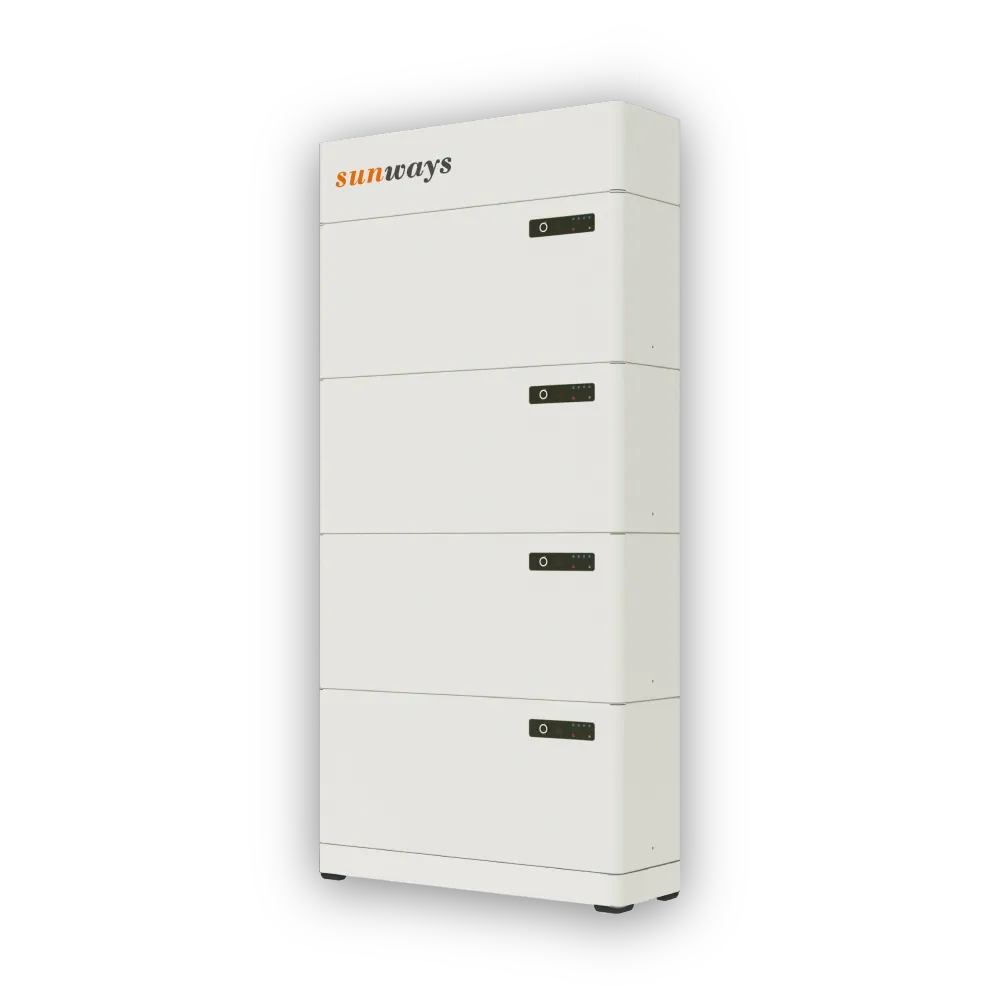
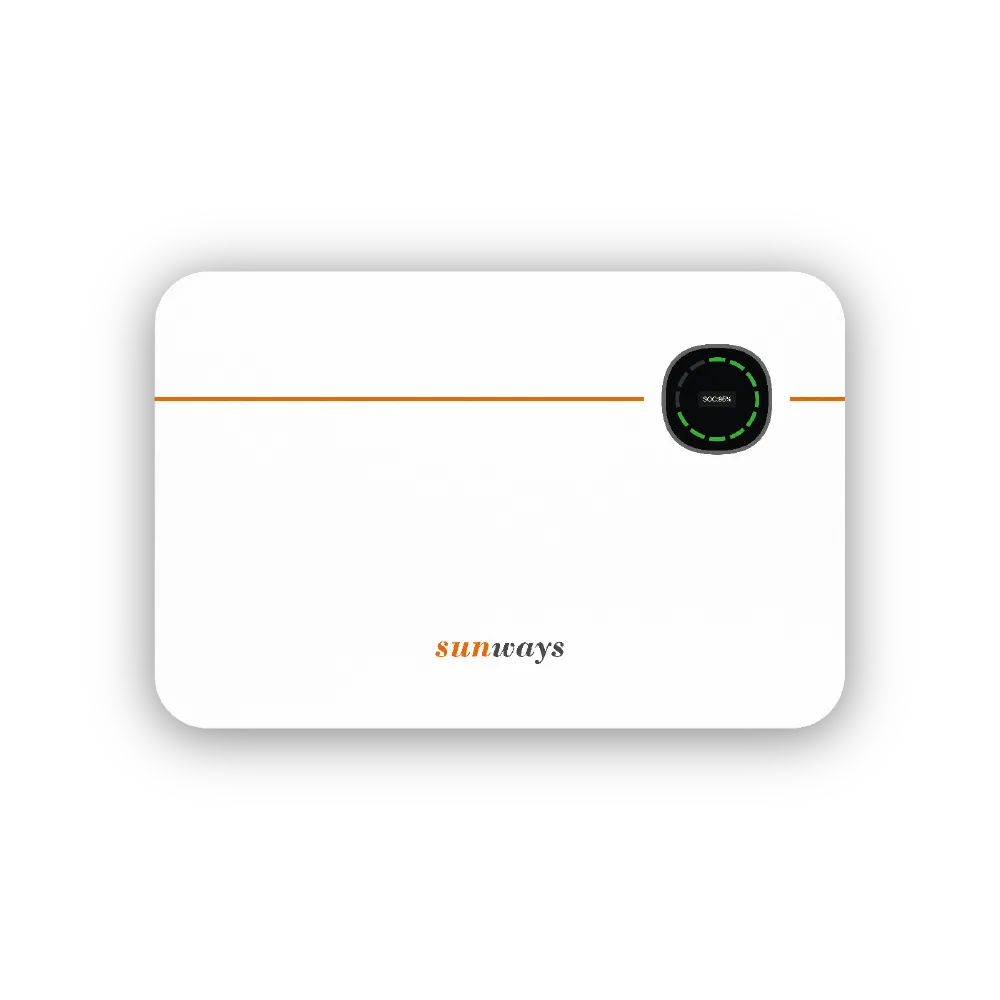
a. Riccione, Italy: A 6 kW Installation
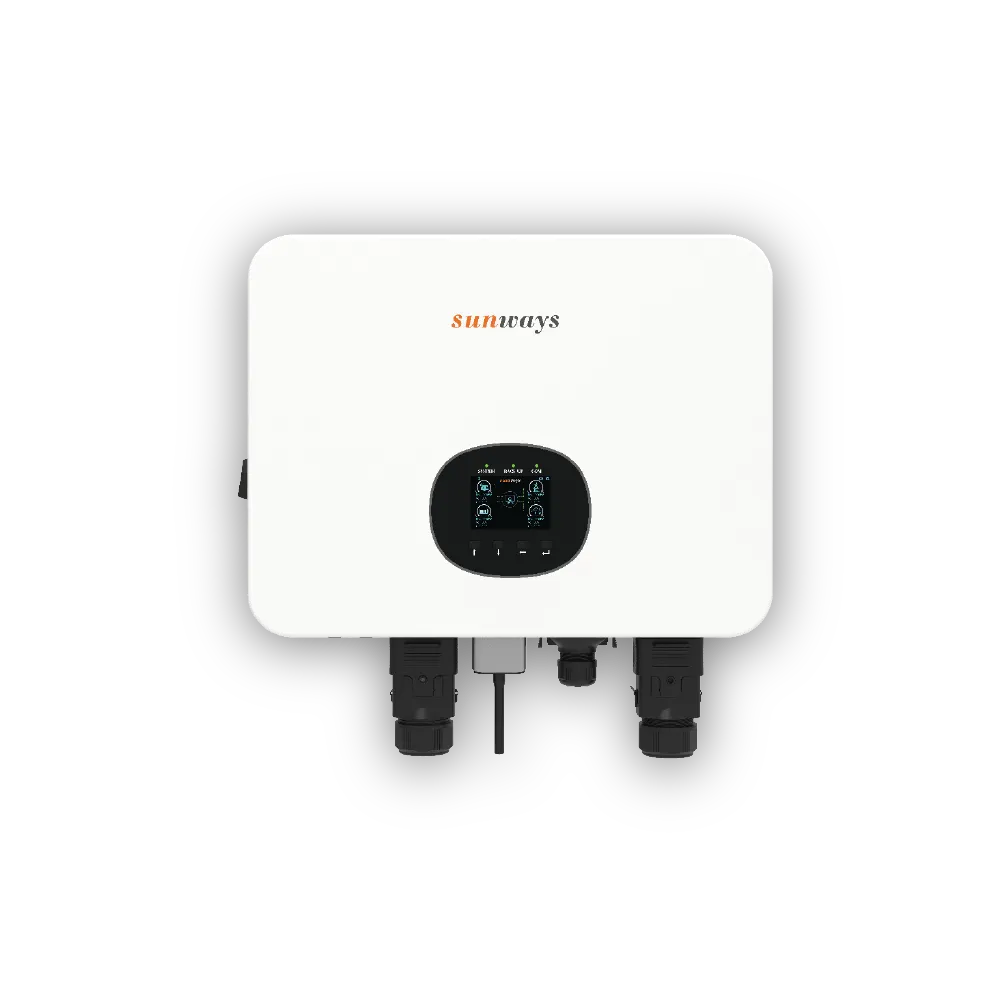
The Riccione project in Italy is listed as having a project capacity of 6 kW, with equipment comprising the Sunways STH-6KTL-LS and STE-OS.
b. Gujarat, India: Same kW, Different Equipment
The project in Gujarat, India, is also listed as having a project capacity of 6 kW. It utilises the Sunways STH-6KTL-LS, but is paired with the STE-MS10.
Three Checks Before You Copy a Configuration
Both projects use the same inverter model, but the accompanying equipment listed in the records differs. These details reflect the actual installation and equipment selection, but do not directly prove backup duration or cost-saving effects. You also need to understand the project’s loads, available electricity, operational objectives and full configuration; battery capacity cannot be estimated solely based on the model suffix.
When evaluating your own solution, we recommend carrying out the following three checks:
- Backup power requirements: List critical loads and start-up requirements, then verify the system’s output capacity and available power.
- Existing PV system: Prepare documentation for your current inverters and batteries, then determine which energy storage integration path is suitable.
- Planned expansion: First confirm the compatibility list, firmware and permitted expansion conditions, then decide which equipment to add.
Choose for Your Load, Then Match the Inverter and Battery
First, determine which devices need to be powered and when electricity is required, then select the inverter and battery. You can narrow down your options based on the following four scenarios:
- If you wish to store surplus solar power generated during the day for use at night: Start by assessing compatible battery storage systems. If you plan to charge and discharge frequently, prioritise comparing LFP solutions, paying particular attention to available capacity, output power and warranty terms.
- If you wish to safeguard critical equipment during power cuts: first list the loads that must remain operational, their start-up requirements and the desired backup duration, then confirm the backup capacity of the complete system.
- If your primary needs are hot water, heating or cooling: first compare thermal storage or cold storage solutions, and select the energy storage method based on the end use.
- You already have a solar PV system and are planning to install a battery: First, determine whether to retain the existing inverter, then compare the compatibility requirements and retrofit costs for AC- and DC-coupled systems.
Prepare These Details Before You Enquire
You do not need to decide on a specific battery model from the outset. Having the following information ready will help suppliers assess whether a solution is suitable for you:
- Project details: Country of location, residential or commercial/industrial, new installation or retrofit.
- Primary objectives: increasing self-consumption, providing backup power for critical loads, or peak load management; if multiple objectives apply, please specify your priorities.
- Existing equipment: PV installation details, inverter model, and whether the supply is single-phase or three-phase.
- Electricity requirements: load power to be supported, electricity consumption profile, or desired backup duration.
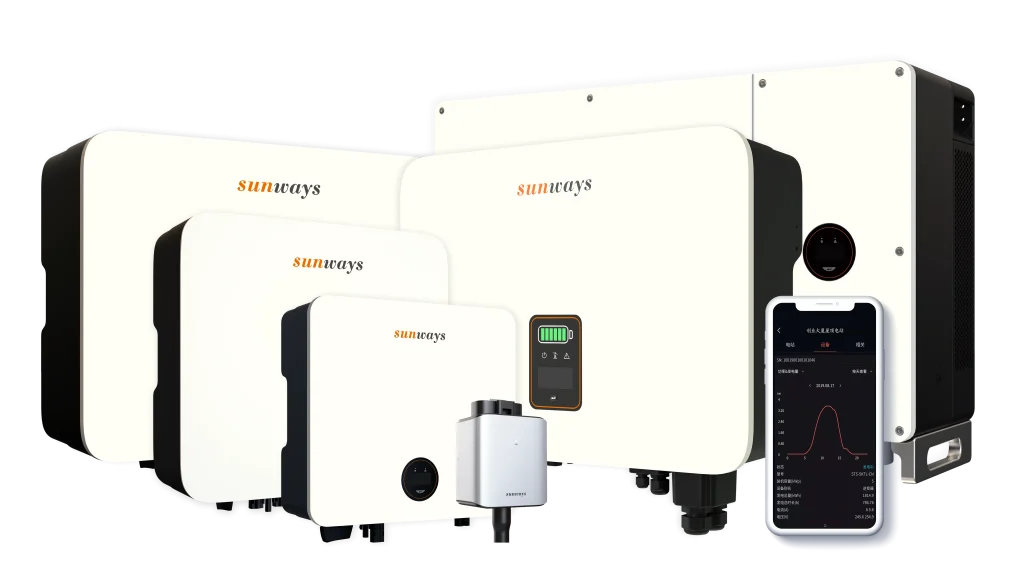
Are you planning to install battery storage for a solar project? Bring along details of your load, battery and backup power requirements to find out more about Sunways hybrid inverters and identify the right product for your project.
Start Your Project