
Sunways Hybrid Inverters
Hybrid inverters integrate photovoltaic power generation, battery storage, the grid and backup loads into a single energy system.
Sunways’ range of hybrid inverters covers single-phase, three-phase, low-voltage battery and high-voltage battery systems, with power ratings suitable for residential, small commercial and commercial and industrial energy storage applications.
Complete LV and HV Product Portfolio
Choose from single-phase and three-phase solutions for different battery systems.
Reliable Backup and Smart Energy Management
Manage solar, battery and grid energy while supporting critical loads during outages.
Flexible Residential and C&I Solutions
Configure systems for homes, villas, farms, offices and commercial facilities.
Choose the Right Hybrid Inverters
01丨
Choose by Application
Residential Solar Storage: STH-3~8KTL-LS or STH-3~8KTL-HS
Three-Phase Homes: STH-5~20KTL-LT or STH-4~12KTL-HT-P
Small Commercial: STH-5~20KTL-LT, STH-4~12KTL-HT-P and STH-15~33KTL-HT.
C&I Energy Storage: STH-15~33KTL-HT or STH-40~80KTL-HT
02丨
Choose by Grid Type
Single-Phase Hybrid Inverter: Suitable for standard residential properties and small-scale power systems.
Three-Phase Hybrid Inverter: Suitable for three-phase residential properties and commercial and industrial projects.
03丨
Choose by Battery Voltage
Low Voltage Battery System: Suitable for residential properties, retrofit projects and small-scale commercial applications.
High Voltage Battery System: Suitable for three-phase residential properties and higher-power projects.
04丨
Choose by Backup Requirement
Rated Backup Power: First, calculate the loads that must remain operational during a power cut.
Switching Time: The shorter the switching time, the lower the likelihood of load interruption.
Surge Capacity: Air conditioning units, water pumps and motors require higher power during start-up.
Low-Voltage Hybrid Inverters
Single-Phase Low-Voltage Hybrid Inverter
Designed for residential solar-plus-storage and backup power applications. Suitable for projects seeking to utilise low-voltage batteries whilst balancing self-consumption of solar power with backup power during power cuts.
- Power Range: 3–8 kW
- Grid Type: Single-phase
- Battery System: 40–60 V Low Voltage
- MPPT: Up to 2 MPPTs
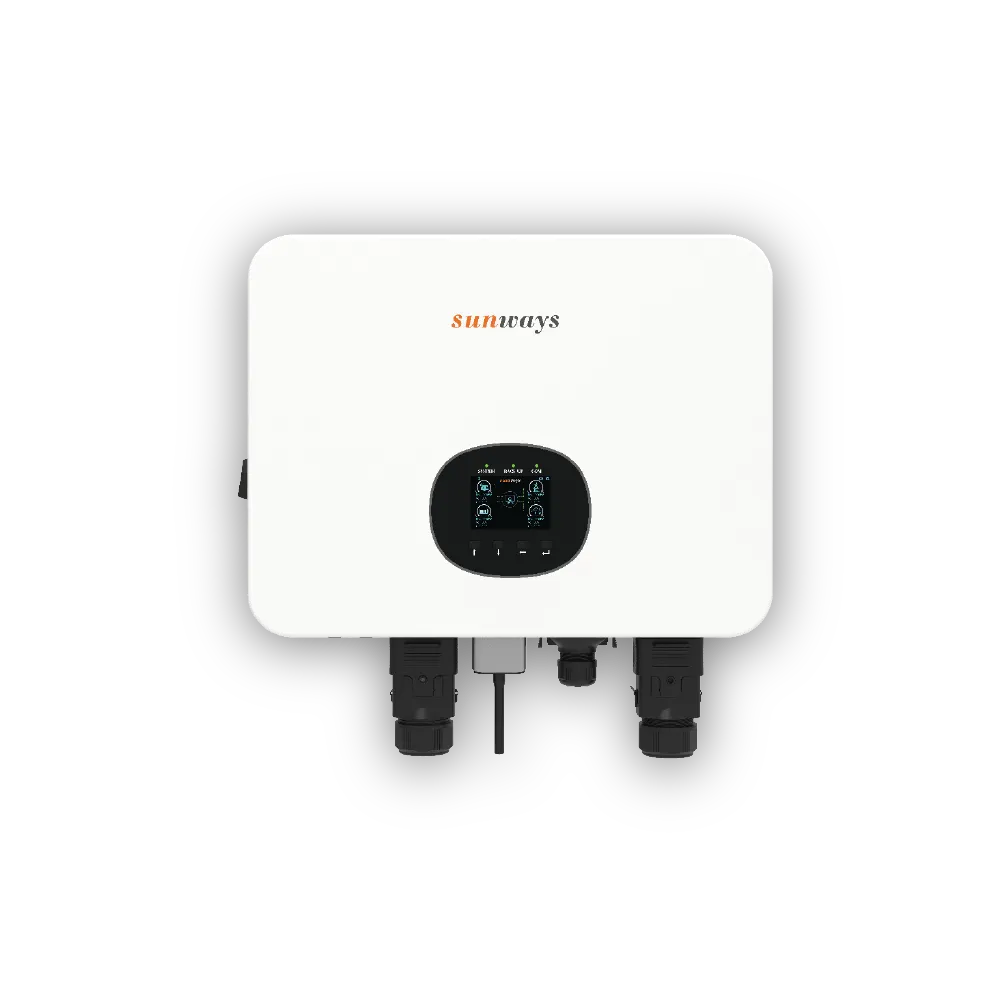
Three-Phase Low-Voltage Hybrid Inverter
A three-phase low-voltage energy storage solution suitable for residential and small commercial projects with higher power requirements. It enables you to support more three-phase loads whilst maintaining a low-voltage battery architecture.
- Power Range: 5–20 kW
- Grid Type: Three-phase
- Battery System: 40–60 V Low Voltage
- Project Type: Residential and Small Commercial
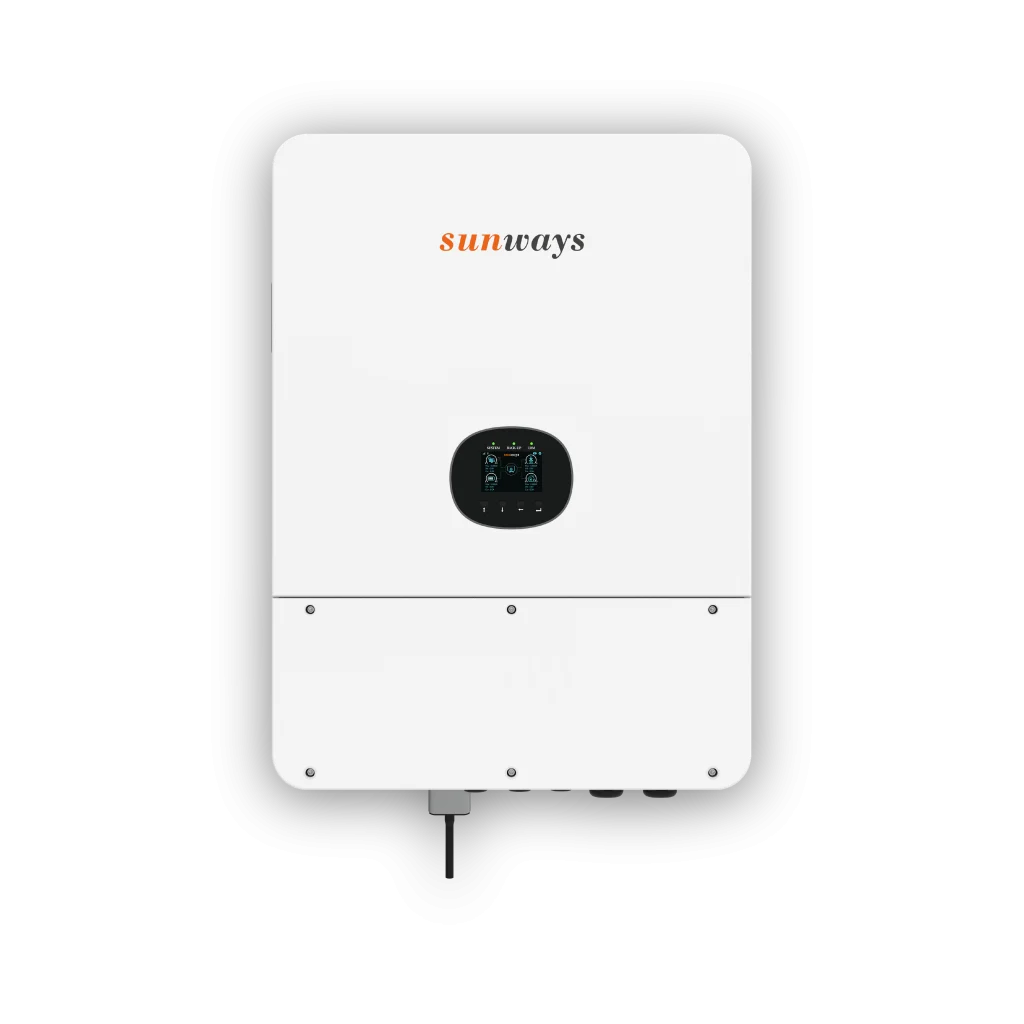
High-Voltage Hybrid Inverters
Single-Phase High-Voltage Hybrid Inverter
Designed for single-phase residential high-voltage energy storage systems. Suitable for new solar-plus-storage projects, as well as users seeking to integrate high-voltage battery solutions.
- Power Range: 3–8 kW
- Grid Type: Single-phase
- Battery System: 85–500 V High Voltage
- Project Type: Residential
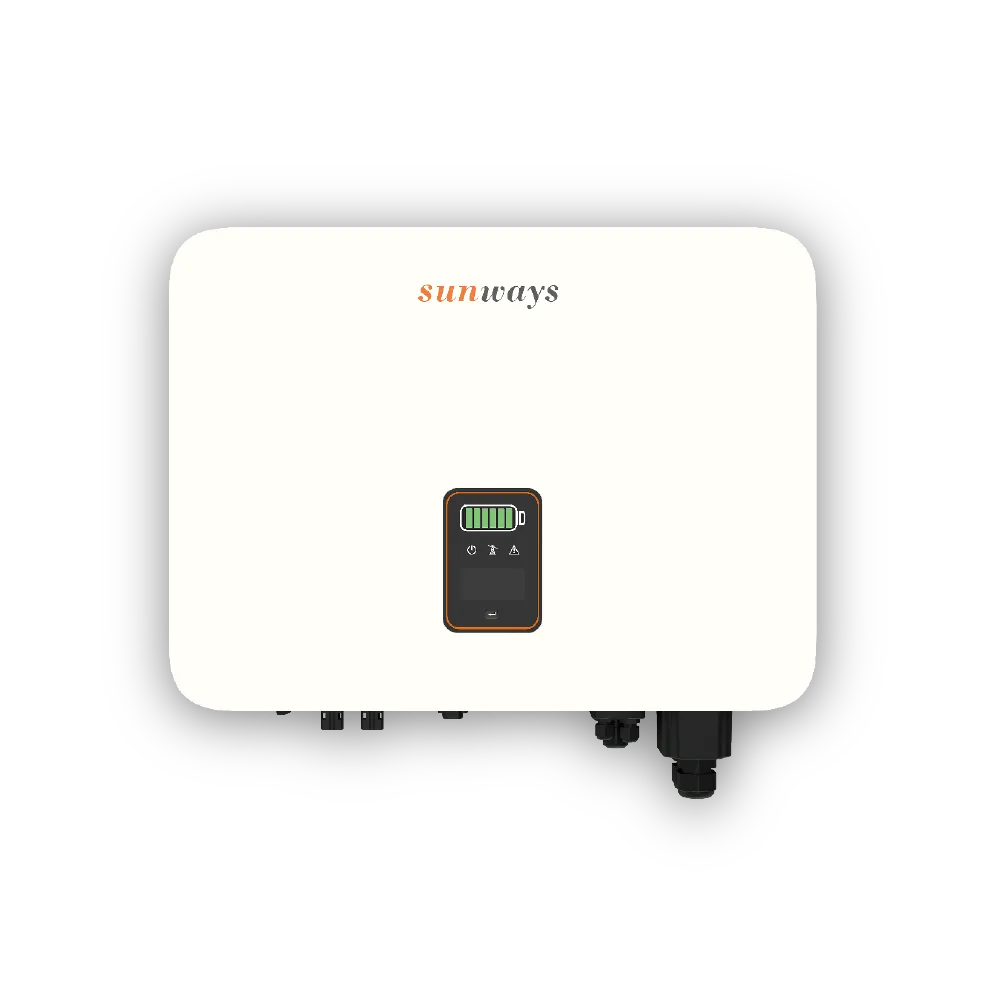
Three-Phase High-Voltage Hybrid Inverter
Designed for three-phase residential applications and higher-power domestic loads. The high-voltage battery architecture and backup power capability cater to both day-to-day energy management and power outage scenarios.
- Power Range: 4–12 kW
- Grid Type: Three-phase
- Battery System: 140–750 V High Voltage
- MPPT: 2 MPPTs
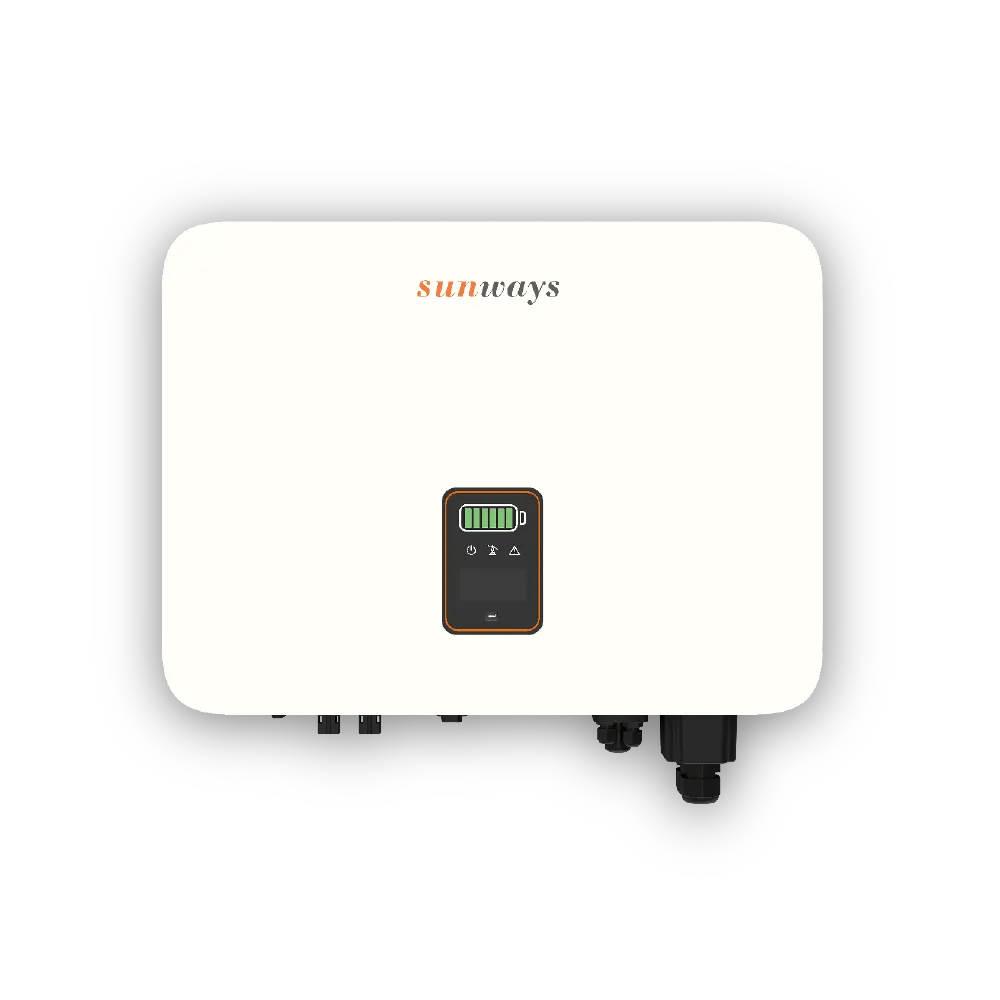
Three-Phase Commercial Hybrid Inverter
Suitable for small-scale commercial and industrial projects requiring higher backup power and three-phase load capacity. Can be used for self-generation and self-consumption, time-of-use tariffs and critical load protection.
- Power Range: 15–33 kW
- Grid Type: Three-phase
- Battery System: 200–800 V High Voltage
- MPPT: 2 MPPTs
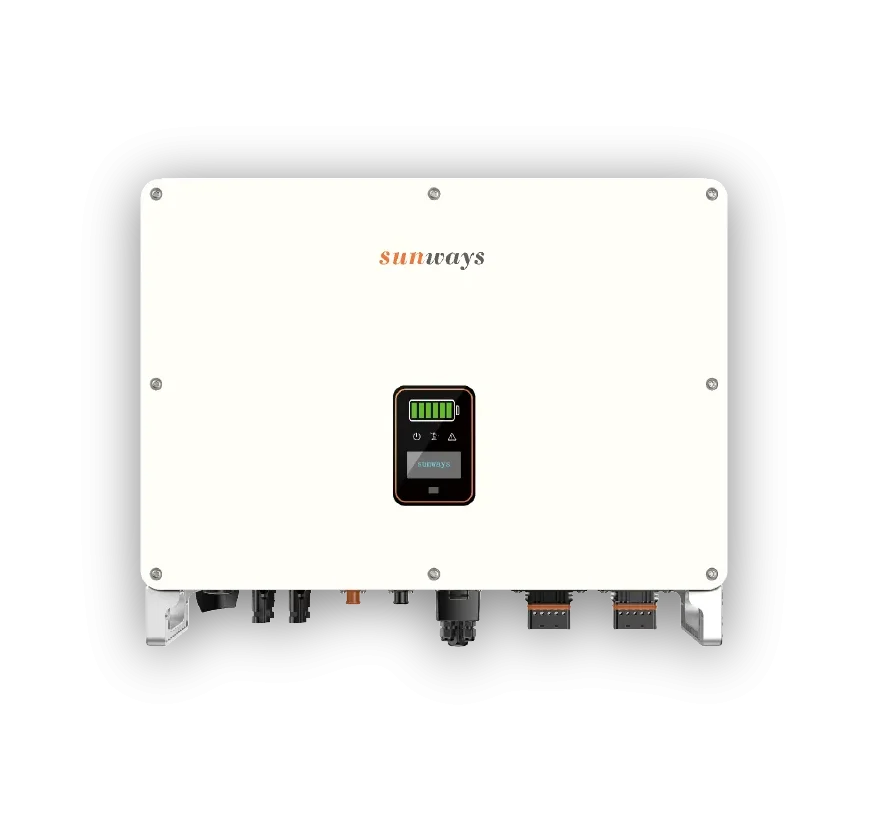
STH-40~80KTL-HT Series
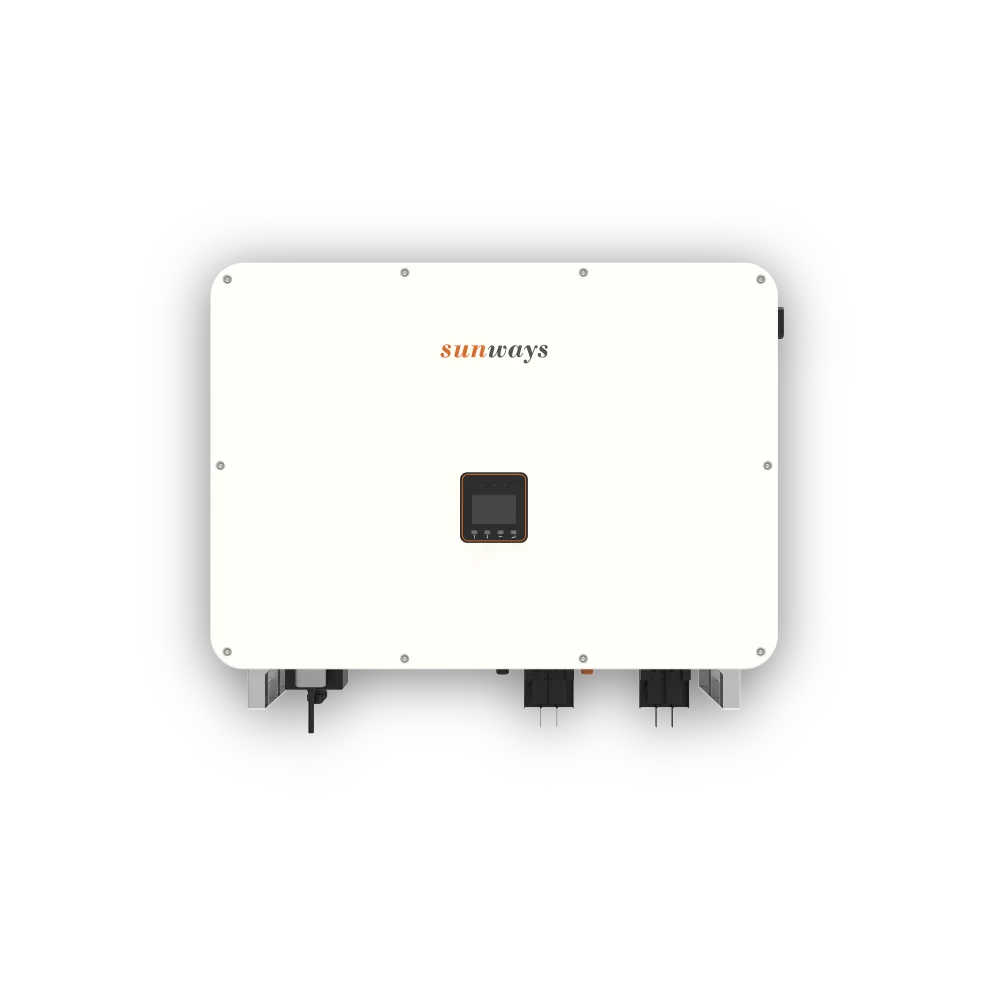
Three-Phase C&I Hybrid Inverter
Designed for higher-power commercial and industrial energy storage projects. Multiple MPPT channels and high-current PV inputs facilitate system design for complex rooftops and larger PV arrays.
- Power Range: 40–80 kW
- Grid Type: Three-phase
- Battery System: High Voltage
- MPPT: 4 or 5 MPPTs
Get a Product Recommendation
You don’t need to check all the electrical parameters on your own.
Tell Sunways the country where your project is located, the grid type, the load power and your battery requirements. Our technical team can help you narrow down the product range and provide the relevant data sheets, information on compatible batteries and selection recommendations.
What Is a Hybrid Inverter
A hybrid inverter is a bidirectional power conversion device. It centrally manages photovoltaic (PV) modules, batteries, the mains grid and electrical loads. The system converts DC power from the PV system into AC power and also controls battery charging and discharging. This enables you to increase the proportion of self-consumption of PV power, reduce the cost of purchasing electricity during peak hours, and provide backup power to critical loads in the event of a power cut.
Solar Panels → Hybrid Inverter → Loads / Battery / Grid / Backup Loads
- Daytime
Solar power is prioritised to supply the loads. Surplus electricity is used to charge the battery; once the battery is fully charged, the excess is fed into the grid or output is restricted. - Nighttime
At night, when there is no PV generation, the battery takes priority in supplying power to the loads. Once the minimum SOC is reached, the system switches to grid power. - Grid Outage
During a power cut, the inverter is isolated from the public grid. The PV system and battery continue to supply power to critical loads connected to the ‘Backup’ terminal. - Time-of-Use
Charge the battery during off-peak hours and discharge it during peak hours. You can utilise the difference between peak and off-peak electricity prices to reduce your electricity costs.
What Is a Hybrid Inverter? How It Works, Cost and Selection Guide
Are Hybrid Inverters Worth It
If your project only requires grid-connected solar power generation, with no need for energy storage or backup power, a standard grid-tied inverter is usually the more cost-effective option. A hybrid inverter offers greater long-term value when you need to store solar energy, cope with power cuts, take advantage of peak-off-peak electricity tariffs, or manage electricity consumption peaks.
| Your Needs | Core Features | Practical Value |
|---|---|---|
| Stores surplus energy during the day | Battery Charging | Stores excess solar energy for use at night. |
| Frequent power cuts | Backup Output | Provides backup power for critical loads. |
| Significant difference between peak and off-peak electricity tariffs | TOU Scheduling | Charges during off-peak hours and discharges during peak hours. |
| Complex roof orientation | Multiple MPPTs | Minimises string mismatch and shading losses. |
| High inrush current from air conditioners and water pumps | Surge Capacity | Enhances the system’s ability to handle inductive load start-up. |
| Export to the grid is not permitted | Export Limitation | Meets anti-backflow or export-power limitation requirements. |
| The project requires future capacity expansion | Parallel Operation | Increases system power and supports future scalability. |
| High on-site operation and maintenance costs | Cloud Monitoring | Supports remote monitoring and fault diagnosis. |
Hybrid Solar Inverter Solutions for Every Application
Sunways offers hybrid inverter solutions ranging from residential to commercial and industrial applications. You can select the product series that best suits your requirements based on grid phase configuration, load power, battery system and backup power needs.
Residential Solar Storage
Suitable for standard homes, self-consumption and domestic backup power.
- Stores surplus solar power generated during the day;
- Prioritises battery power at night;
- Protects critical loads during power cuts;
- Option to choose between low-voltage or high-voltage battery systems.
Recommended Series: STH-3~8KTL-LS / STH-3~8KTL-HS
Premium Homes and Three-Phase Loads
Suitable for three-phase residential properties, villas and high-power domestic loads.
- Supports three-phase distribution systems;
- Suitable for heat pumps, air conditioning and EV charging;
- Provides higher PV and backup power capacity;
- Can be configured for whole-house or critical load backup.
Recommended Series: STH-5~20KTL-LT / STH-4~12KTL-HT-P
Small Commercial Projects
Suitable for retail premises, farms, hotels, clinics and office buildings.
- Reduces electricity costs through time-of-use tariffs;
- Enables peak shaving and valley filling via batteries;
- Supports three-phase commercial loads;
- Provides backup power for critical equipment.
Recommended Series: STH-5~20KTL-LT / STH-15~33KTL-HT
C&I Energy Storage
Suitable for factories, commercial buildings and high-power energy storage projects.
- Supports high-power PV and energy storage systems;
- Can be expanded through parallel operation to meet project requirements;
- Works with an EMS for energy management;
- Used for demand response and critical load protection.
Recommended Series: STH-15~33KTL-HT / STH-40~80KTL-HT
International R&D
Our R&D teams in Germany and China collaborate on the development of low-voltage and high-voltage hybrid inverters, as well as energy storage systems.
Smart Manufacturing
A 60,000 m² smart factory equipped with automated production lines, smart workshops and an ageing test centre.
Testing and Quality Control
Covering incoming materials, PCBA, functional, ageing and final inspection; key quality data is fully traceable throughout the process.
Market Certifications
In collaboration with international testing bodies, product certifications cover more than 150 countries and regions.
Battery Compatibility
Covers both low- and high-voltage battery solutions, with compatibility ensured based on BMS protocols, firmware versions and compatibility lists.
Global Technical Support
Provides product selection, battery matching, commissioning, remote monitoring and after-sales support.
FAQs About Hybrid Inverters
What Is a Hybrid Inverter?
A hybrid inverter is a bidirectional power conversion device that simultaneously manages solar panels, batteries, the utility grid, and loads. It converts DC power from solar panels into AC power, controls battery charging and discharging, and adjusts the flow of energy based on load and grid conditions.
Are Hybrid Inverters Worth It?
Yes—hybrid inverters are a worthwhile choice for projects that require energy storage, backup power during outages, increased PV self-consumption, or taking advantage of peak-off-peak electricity rates.
They can store excess solar energy generated during the day for use at night, during periods of high electricity rates, or during power outages, thereby improving system utilization and reducing reliance on the utility grid. However, if the local grid is stable, you have no plans to use batteries, and you do not need backup functionality, a standard grid-tied inverter is typically more cost-effective.
How Much Is a Hybrid Inverter?
The equipment cost of a hybrid inverter typically ranges from $600 to $4,000.
Residential single-phase, low-power models are usually near the lower end of this price range. Three-phase, high-power models, those with high-voltage battery compatibility, or those with enhanced backup power and grid-tie capabilities are typically more expensive.
This price generally refers only to the inverter unit itself and does not include batteries, smart meters, communication modules, installation, shipping, or taxes. An accurate quote will depend on your project’s location, required power, grid phase configuration, battery system, and purchase quantity.
What Size Hybrid Inverter Do I Need?
The rated power of a hybrid inverter should at least cover your maximum simultaneous electrical load while also meeting the critical load requirements of the backup circuit.
For example, if a household’s maximum simultaneous load is 6 kW, even if only 4 kW of critical loads are maintained during a power outage, you should prioritize an inverter with a capacity of at least 6 kW. If there are multiple air conditioners, water pumps, or motors, it is recommended to allocate an additional 20%–30% of power and verify the peak output capacity.
Can a Hybrid Inverter Work Without Batteries?
Yes. Many hybrid inverters can operate without batteries connected. In this case, it functions primarily as a grid-tied inverter. Solar power is prioritized to supply the load, and excess electricity can be fed into the grid or limited according to system settings.
However, without batteries, the system cannot store solar energy and typically cannot provide backup power during a power outage. Whether a specific model supports battery-free operation depends on the data sheet and system configuration.
Which Batteries Are Compatible with Sunways Hybrid Inverters?
Sunways hybrid inverters are compatible with Sunways STE-BS, STE-ES, STE-FS, STE-MS, STE-NS, and STE-OS energy storage batteries. Existing project documentation records the actual application of these batteries with various STH series hybrid inverters.
The low-voltage STH-LS series supports 40–60V lithium-ion batteries (with BMS), and some models also support lead-acid batteries. For the high-voltage series, the battery voltage range must match the specific model.
Can a Hybrid Inverter Provide Power During a Blackout?
Yes, but the system must be configured with compatible batteries, and critical loads must be connected to the “Backup” terminal. After a power outage, the inverter disconnects from the utility grid, and the PV system and battery then supply power to the backup loads. Some Sunways series achieve a switchover time of less than 10 ms.
Can Multiple Hybrid Inverters Operate in Parallel?
Some models support parallel operation, but the number of units and operating modes vary by series. For example, the STH-3~8KTL-LS and related low-voltage three-phase series support up to 3 units.