Horse Farm Solar Storage Project in Gujarat, India

Location

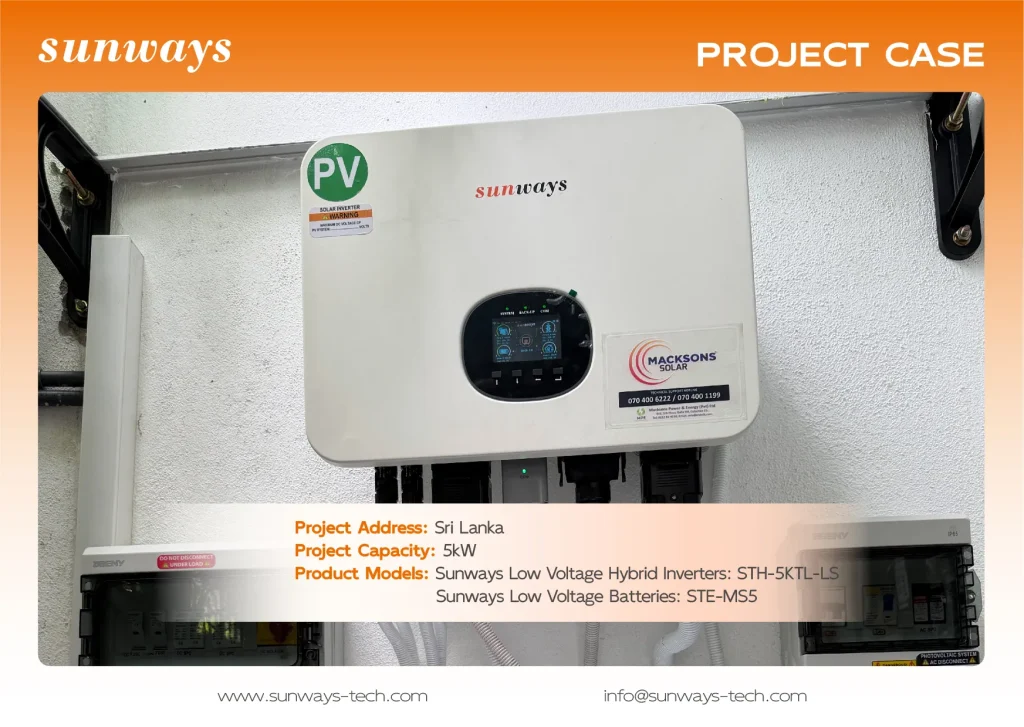
Sri Lanka

Inverter&Battery

Inverter: Sunways STH-5KTL-LS

Battery: Sunways STE-MS5

Application

Residential Solar + Storage

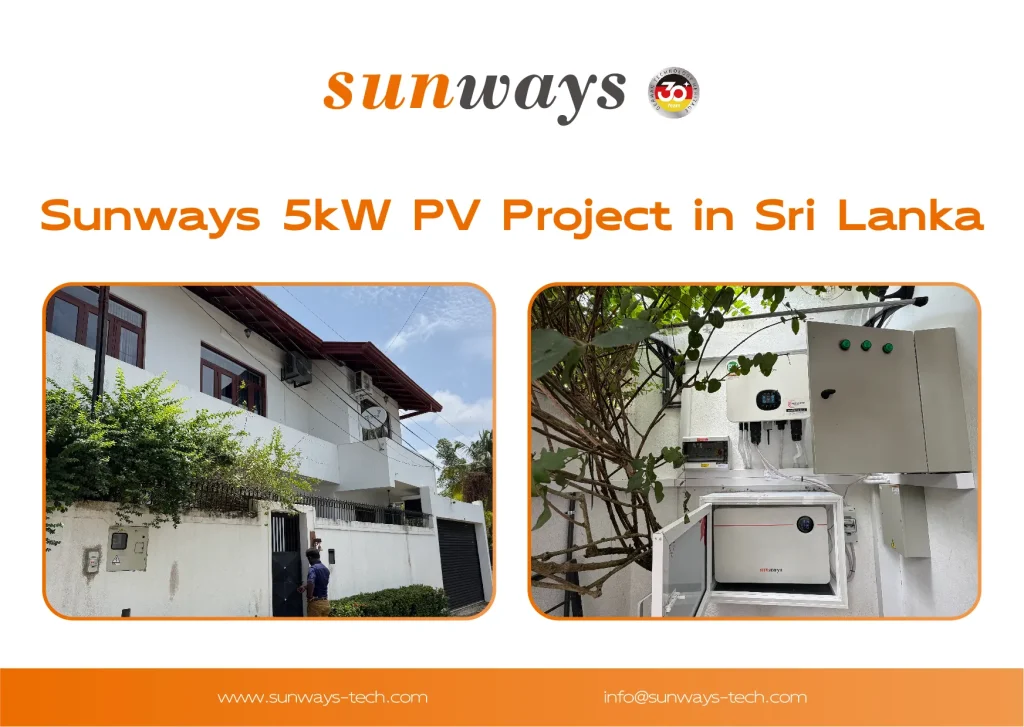
Sunways 5kW Hybrid Solar Project in Sri Lanka

For residential users, the value of solar power shouldn’t be limited to daytime electricity generation. The real questions that need to be addressed are: What happens after the sun goes down? What happens during a power outage?

In this residential project in Sri Lanka, the homeowner installed a Sunways STH-5KTL-LS 5kW low-voltage hybrid inverter + STE-MS5 energy storage battery to connect solar power generation, household loads, the battery, and the public grid into a single energy system. During the day, solar power is used first, and any surplus electricity is stored in the battery; at night or during grid disruptions, the stored energy is then drawn upon.

Project at a Glance

Project DetailConfiguration
LocationSri Lanka
ApplicationResidential Solar + Storage
Hybrid InverterSunways STH-5KTL-LS
Rated Inverter Power5kW
BatterySunways STE-MS5
Battery Energy5.1kWh nominal / 4.6kWh usable
Battery System51.2V LiFePO₄
Main RequirementSolar self-consumption + backup power

The STE-MS5 uses a 51.2V LiFePO₄ battery with a nominal capacity of 5.1 kWh and a usable capacity of 4.6 kWh, and supports over 6,000 cycles (at 25°C, with a recommended 90% DOD).

The Challenge: Solar Power Should Not Stop When the Sun Goes Down

Conventional grid-tied PV systems can reduce the need to draw power from the grid during the day, but they cannot store excess solar energy for use at night. When the grid goes down, grid-tied inverters typically stop outputting power as well.

The core requirements for this project are therefore very clear:

  • Use self-generated solar power as much as possible during the day;
  • Store excess PV electricity in a battery;
  • Continue using the energy stored during the day at night;
  • Maintain critical household loads in the backup circuit during a power outage.

For homes with backup power needs, a hybrid inverter + battery system addresses the issue of power continuity more directly than simply adding more PV panels.

The Solution: 5kW Hybrid Inverter + 5.1kWh Battery

At the heart of the system is the STH-5KTL-LS. This single-phase, low-voltage hybrid inverter supports 40–60V battery systems and simultaneously manages PV, the battery, the utility grid, and backup loads.

Sunways 5kW Hybrid Solar Project in Sri Lanka

5kW Rated Output

The STH-5KTL-LS has a rated output of 5kW and a maximum AC output of 5.5kW, providing a margin of power for daily residential loads.

Up to 10kW PV Input

The 5kW model supports a maximum PV input power of 10,000W, which is up to 200% of the inverter’s rated power. This provides greater flexibility for rooftop panel design and future PV capacity expansion.

<10 ms UPS Switching

In the event of a grid outage, the STH-3~8KTL-LS series UPS switches over in less than 10 ms. Compared to standard grid-tied systems, it is better suited for residential applications that require continuous operation of lighting, network equipment, and other critical loads.

20A PV Input

The STH-5KTL-LS is equipped with two MPPT channels, each with a maximum input current of 20A, making it compatible with a wider range of high-current, high-power PV modules.

97.6% Maximum Efficiency

This series achieves a maximum conversion efficiency of 97.6%. High conversion efficiency means less energy is lost during the DC-to-AC conversion process.

IP66 Protection

The STH-3~8KTL-LS series features an IP66 protection rating, enhancing the inverter’s adaptability to installation environments with dust, rain, and high humidity.

How the System Works

Daytime

Solar power first meets the home’s immediate energy needs. Excess solar power is stored in the STE-MS5 battery rather than being fed entirely into the utility grid.

Evening

As PV generation decreases, the battery releases the energy stored during the day. This extends the use of solar power from daytime into the evening.

Grid Outage

When the utility grid goes down, the hybrid inverter switches to Backup mode. The battery and available PV power continue to supply energy to loads connected to the backup circuit.

Backup duration is not a fixed value. It depends on the battery’s SOC and actual load. For example, the STE-MS5 has a usable energy capacity of 4.6 kWh: Theoretically, a continuous 1 kW load corresponds to approximately 4.6 hours of stored energy; actual runtime must account for system conversion losses and is subject to battery protection strategies.

What This Home Gains

The value of this project lies not merely in adding a 5 kWh battery, but in transforming how the home uses solar energy.

Higher Solar Self-Consumption

Excess solar energy during the day can be stored rather than used only immediately.

Solar Energy After Sunset

The battery transfers daytime solar energy for use at night, improving the utilization rate of self-generated power.

Backup During Outages

A backup switchover time of less than 10 ms minimizes the impact of power outages on critical household loads.

More Control Over Grid Dependence

Households are no longer entirely dependent on grid stability to determine when they can use their own solar energy.

For this Sri Lankan household, installing a hybrid solar-storage system is not about “going completely off-grid,” but about gaining greater energy autonomy: When to use solar energy, whether to store it, and which loads continue to operate during a power outage—all of these can be managed by their own energy system.

A Proven Residential Configuration

This is not an isolated product showcase. Sunways has experience with multiple low-voltage residential energy storage systems in Sri Lanka, including 5 kW, 6 kW, 8 kW, and 10 kW projects, and has frequently utilized combinations of the STH-LS series and STE-MS low-voltage batteries.

This track record of real-world projects provides valuable reference for installers, distributors, and residential users: When selecting equipment, don’t just look at spec sheets; check whether similar systems have already been successfully implemented in real residential environments.

Planning a Residential Solar + Storage Project?

If your project also aims to increase PV self-consumption, expand home energy storage, or address backup power needs during outages, you should first determine your household’s peak load, backup load, grid phase configuration, rooftop PV capacity, and required backup duration when selecting equipment.

Talk to Our Solar Storage Team

Share the Projects:

Related Projects

Scan to follow Sunways on WeChat

Scan the QR code to follow Sunways on WeChat and get the latest updates on solar inverter products, energy storage solutions, project cases and company news.

Sunways Wechat QR

Get a Solar Solution Quote

Tell us your project needs. Sunways will help you find the right solar inverter, battery or energy storage solution.

Your Contact Information
Project & Product Interest
Inquiry Details