Three Phase Solar Inverter: When Do You Need One—and How Do You Choose the Right One?
Table of Contents
What Is a Three Phase Solar Inverter—and Do You Need One?
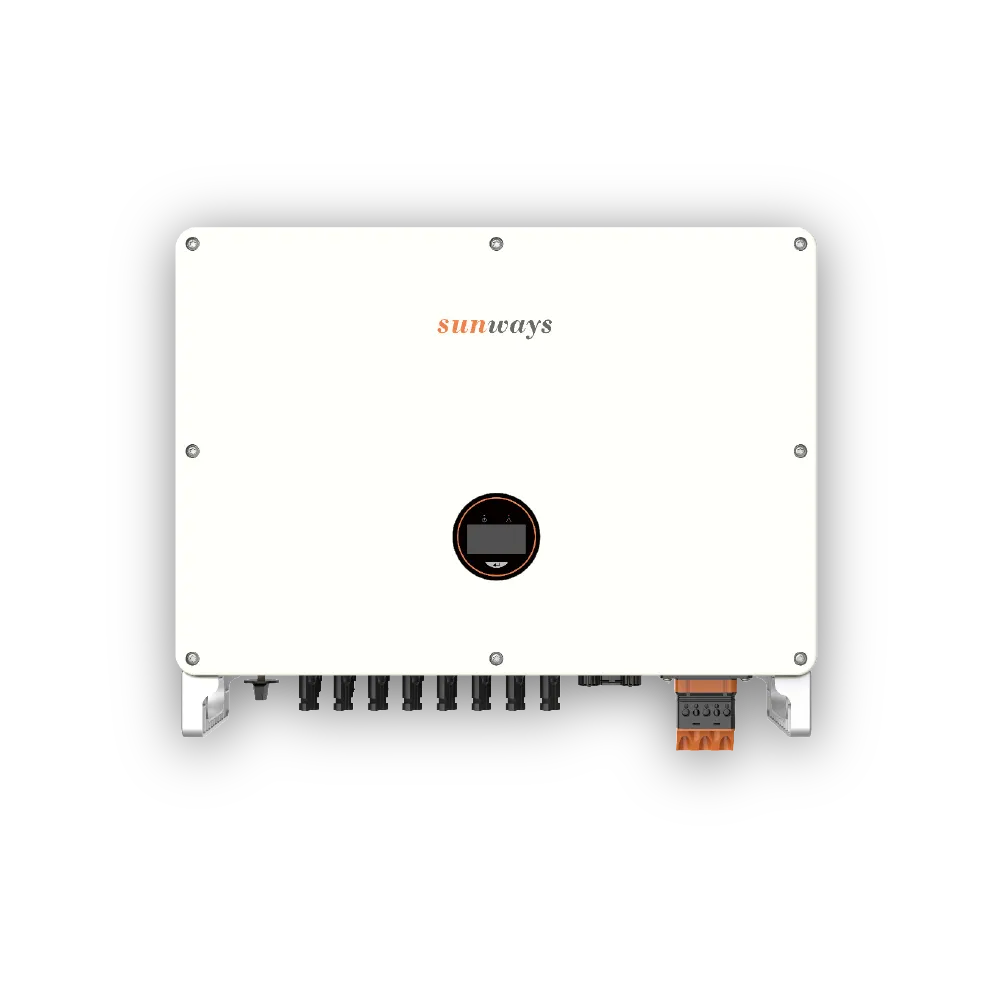
A three-phase solar inverter converts the DC electricity generated by solar panels into three-phase AC electricity for use in a three-phase electrical system. It is primarily used in residential, commercial, and industrial solar PV projects that are already connected to a three-phase grid, allowing the electricity generated by the solar PV system to be compatible with the building’s three-phase power distribution system and the utility grid.
What Does “Three-Phase” Actually Mean?
The term “three-phase” in a solar inverter refers to the inverter’s AC output, not the solar panels. Photovoltaic modules generate DC electricity. A three-phase inverter converts this DC electricity into three-phase AC, which is then fed into the corresponding three-phase power distribution system. The DOE also clearly states that PV modules generate DC, while the inverter converts it to AC.
How Is It Different From a Regular Solar Inverter?
Solar inverters can be classified as single-phase or three-phase based on their AC output. Both perform DC-to-AC conversion; the main difference lies in the fact that they are designed to match different AC power distribution systems. Choosing a three-phase inverter is not because it is inherently “more advanced,” but because your grid connection and project’s power usage requirements necessitate a three-phase output.
How Does a Three Phase Solar Inverter Work?
A three-phase solar inverter takes DC power from the solar array, tracks the optimal operating point, converts the DC into three-phase AC, and supplies that power to the building or the grid.
1. Solar PV Generates DC Power
When solar panels are exposed to sunlight, they generate DC electricity. Multiple panels are typically connected in series to form PV strings, which are then connected to a three-phase solar inverter. The inverter’s first task is to receive and manage this DC power from the PV array.
2. MPPT Optimizes PV Output
Since solar irradiance and module temperature are constantly changing, the operating point at which the PV array can deliver maximum power also varies. The inverter uses MPPT (Maximum Power Point Tracking) to continuously adjust the PV array’s operating state, keeping the modules as close as possible to the maximum power point under current conditions.
3. The Inverter Converts DC Into Three-Phase AC
After MPPT is complete, the inverter performs the DC-to-AC conversion using internal high-speed electronic switches, and through filtering and control, generates an AC waveform suitable for the utility grid. A three-phase inverter outputs three sets of three-phase AC power, typically denoted as L1, L2, L3. In a standard balanced three-phase system, the three-phase voltages are phase-shifted by 120° relative to one another.
4. Power Supplies the Loads or Enters the Grid
After conversion, the solar power can be used to power three-phase loads within the building, such as commercial equipment, air conditioning units, motors, or other electrical devices. If power generation exceeds on-site demand, the excess electricity can be fed into the grid in accordance with local grid connection regulations and project settings.
Single Phase vs Three Phase Solar Inverter: Which One Fits Your Project?
The main difference between a single-phase and a three-phase solar inverter is how AC power is delivered to the electrical system. A single-phase inverter feeds photovoltaic power into a single-phase AC system, while a three-phase solar inverter distributes AC power across three phases, making it more suitable for projects that already use a three-phase grid.
In a three-phase power distribution system, excessive differences in load or power generation distribution among L1, L2, and L3 can lead to voltage imbalance. Therefore, when designing a three-phase solar system, it is also necessary to consider the power distribution among the phases and the actual grid conditions.
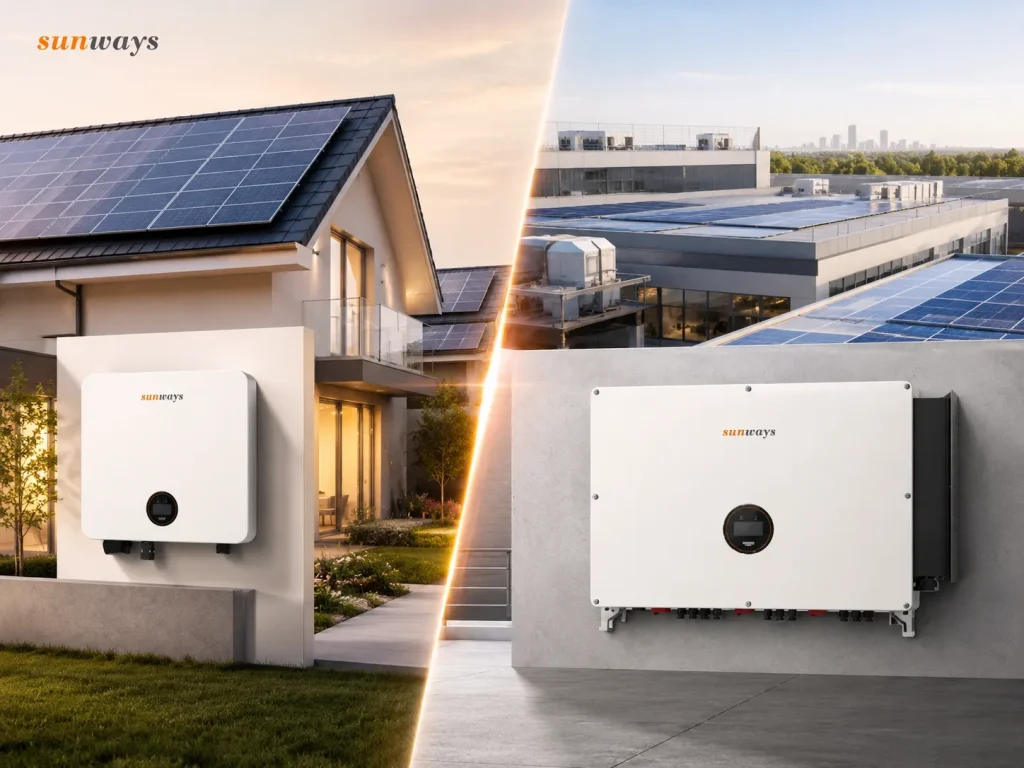
Single-Phase vs. Three-Phase Solar Inverters
| Factor | Single-Phase Solar Inverter | Three-Phase Solar Inverter |
|---|---|---|
| AC Output | Single-phase | Three-phase |
| Typical Grid | Single-phase supply | Three-phase supply |
| Typical PV Size | Smaller systems | Medium / larger systems |
| Common Applications | Residential | Large residential, Commercial, C&I |
| Power Distribution | Power delivered on one phase | Power distributed across three phases |
| Three-phase Loads | Not directly matched | Better matched |
1. Start With Your Grid Connection
Your grid connection is typically the first factor you need to confirm.
If the building is connected to a single-phase grid, choose a single-phase solar inverter. If the site is connected to a three-phase grid, a three-phase solar inverter will integrate more easily with the existing power distribution system. For grid-connected projects, you must also verify local grid code and distribution network requirements. You cannot decide on your own whether to use single-phase or three-phase based solely on the size of the PV system.
2. Consider Your PV System Size
As PV capacity increases, the benefits of three-phase output become more apparent. Smaller residential systems can typically use a single-phase inverter. However, for larger residential, commercial rooftop, or C&I projects, using a three-phase inverter allows the output power to be distributed across all three phases rather than concentrated on a single phase.
3. Look at the Loads You Need to Supply
If your project includes a large number of three-phase loads, such as motors, pumps, compressors, HVAC systems, or industrial machinery, choosing a three-phase solar inverter is better suited to the site’s existing electrical system.
4. Think About the Overall Project Scale
Large-scale projects, such as factories, warehouses, or large commercial rooftops, not only require higher solar capacity but also necessitate consideration of three-phase loads, power distribution across phases, and long-term operational management. Large PV systems typically use multiple three-phase string inverters to form the entire AC output system. A three-phase architecture can be scaled up to accommodate larger PV projects using multiple inverters.
Which One Should You Choose?
For small residential projects connected to a single-phase grid, choose a single-phase solar inverter.
If the building is already connected to a three-phase grid, or if your PV capacity, three-phase loads, and project scale are substantial, choose a three-phase solar inverter.
Is a Three Phase Solar Inverter Only for Large Commercial Projects?
No. A three-phase solar inverter is not limited to large commercial projects. As long as your project is connected to a three-phase grid and the PV capacity and load requirements are appropriate, you can use a three-phase inverter. It can be used in both large residential and small commercial projects, and is widely used in commercial and C&I systems. The relevant IEC grid-connection testing standards also cover low-voltage single-phase and three-phase PV installations.
a. Large Residential
Large residential properties may also require a three-phase solar inverter. If your home is already connected to a three-phase grid and has a large solar PV system installed, or if you simultaneously operate large loads such as heat pumps, EV chargers, and pool pumps, using a three-phase inverter can better match your existing three-phase electrical distribution system.
Sunways’ existing portfolio includes actual residential three-phase projects, such as the 10 kW and 15 kW STT projects in Gujarat, India, and the 20 kW STT residential project in Sri Lanka. This demonstrates that three-phase systems are not exclusively reserved for large-scale C&I projects.
b. Small Commercial
5 kW three-phase solar inverters can also be used in small commercial projects. For example, in shops, offices, restaurants, clinics, or small warehouses—as long as they are connected to a three-phase grid—a three-phase inverter may be more suitable even if the solar PV capacity is only around 5 kW.
Therefore, one should not simply assume that “5 kW” means a single-phase inverter is the only option. Power rating is just one of the selection criteria. Sunways’ existing three-phase string inverter product line also covers lower power ranges, including the STT 5–30 kW series. Three-phase products are not limited to large-scale projects of tens or hundreds of kW.
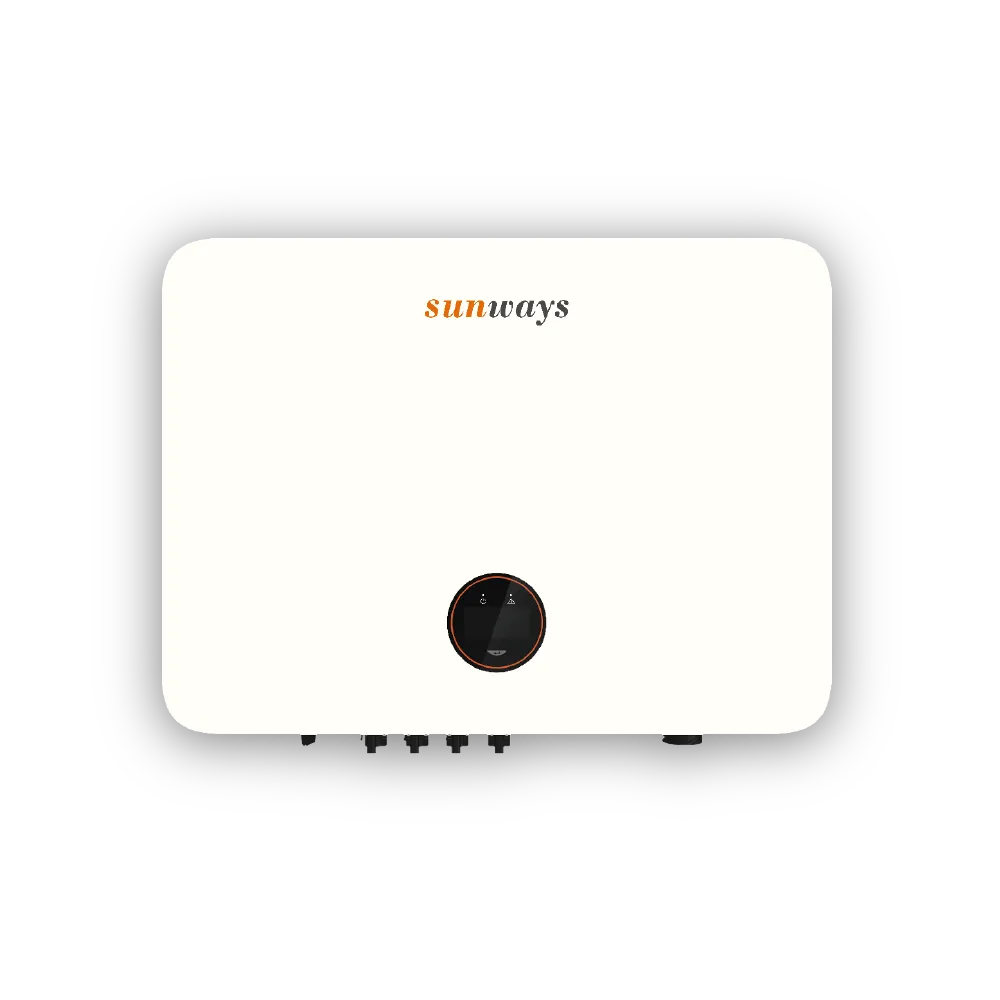
c. Commercial & Industrial
As PV capacity and electrical loads increase, three-phase inverters become more common in commercial and industrial projects. Application scenarios include factories, warehouses, hotels, schools, hospitals, and commercial buildings—environments that typically use three-phase power distribution and require higher-power solar PV systems.
What Makes the Best Three Phase Solar Inverter for Your Project?
The best three-phase solar inverter is the one that matches your grid, PV array, installation environment, and long-term operating needs—not simply the model with the highest efficiency. When selecting a model, be sure to compare the following aspects.
①. Grid Compatibility Comes First
First, confirm whether the inverter can connect properly to your power grid. Pay close attention to the three-phase grid, rated voltage, frequency, and the grid requirements at the project site.
Grid conditions may vary from project to project, so even if two inverters both have a power rating of 20 kW, that does not mean they can both be used in the same project. Grid-tied inverters also need to continuously monitor and operate in sync with the grid.
②. Choose the Right Inverter Power
Do not select an inverter based solely on “5 kW, 20 kW, or 100 kW.” You must also consider PV Capacity, Load Demand, Grid Connection, and DC/AC Ratio.
For example, the DC capacity of a PV array may differ from the inverter’s AC rated power, but if the system is significantly oversized, it may be limited by the inverter’s maximum AC output under high irradiance conditions. Therefore, three-phase inverter sizing should be based on the design of the entire PV system.
③. Match the MPPT Configuration to Your Roof
More MPPT channels aren’t necessarily better. If your PV array is distributed across roof surfaces with different orientations, or if there are varying tilt angles, partial shading, and multiple string groups, you’ll need a more flexible MPPT configuration. This helps minimize the impact of varying operating conditions among different PV strings.
④. Check PV Voltage and Current Carefully
Mismatched PV-side parameters are the most critical mistake to avoid during selection. The voltage of the modules in series must fall within the inverter’s permissible operating range, and the string current must not exceed the limits of the corresponding input terminal.
⑤. Don’t Judge Efficiency by a Single Number
When looking at three-phase inverter efficiency, many people first compare the maximum efficiency, but this figure does not represent the project’s actual annual power generation performance. Actual energy yield is also influenced by factors such as MPPT performance, PV oversizing and clipping, temperature, shading, and string mismatch. Therefore, if the maximum efficiencies of two inverters are very close, you should also compare whether they are better suited to your PV array and actual operating environment.
⑥. Check Protection and Installation Environment
Three-phase inverters are typically expected to operate for many years. Anti-islanding protection is particularly important for grid-connected PV systems. If the project is located in a high-temperature, dusty, humid, or outdoor environment, you should also carefully review the cooling method, IP rating, and permissible operating temperature.
Grid-Tied or Hybrid? Same Three Phases, Very Different Jobs
Both three-phase grid-tied inverters and three-phase hybrid inverters can convert the DC generated by solar PV into three-phase AC, but they address different needs. If your project also requires battery storage, backup power or more flexible energy management, a hybrid inverter is the more suitable option.
| Three-phase grid-tied | Three-phase hybrid | |
|---|---|---|
| Solar PV | ✓ | ✓ |
| Grid connection | ✓ | ✓ |
| Battery | Not usually supported | ✓ |
| Energy Storage | — | ✓ |
| Backup Power | Not usually supported | Depends on system design |
| Main Purpose | Solar generation | Solar + storage + backup |
Three-Phase Grid-Tied Inverter
The core function of a three-phase grid-tied inverter is to convert solar power into three-phase AC, which is then supplied to on-site loads or fed into the grid. The DOE also defines a solar inverter as a device that converts DC generated by PV into AC suitable for the grid.
Reasons for choosing a grid-tied inverter: Primarily to reduce daytime electricity consumption from the grid and improve the utilisation rate of solar generation.
Three-Phase Hybrid Inverter
A three-phase hybrid inverter allows a battery to be integrated into the system, in addition to the solar array and the grid. In this way, surplus solar energy can first be stored in the battery and then released when generation decreases, demand increases, or backup power is required.
Reasons for choosing a hybrid inverter: Your project requires battery storage, energy shifting, increased solar self-consumption or backup power.
Sunways currently offers both the Three-phase STT Grid-Tied series and the Three-phase STH Hybrid series. The three-phase low-voltage hybrid products cover a range of 5–20 kW, enabling different three-phase system solutions for both pure grid-tied and solar + storage projects.
What Should You Check Before Using a Three Phase Inverter in a Real Project?
Before proceeding with actual procurement and project design, it is advisable to confirm the following six points:
- Grid Connection — Confirm whether the site is connected to a three-phase grid, and check that the rated voltage, frequency and local grid connection requirements are compatible with the inverter.
- PV Array — Check the PV capacity, string voltage and input current to ensure they all fall within the inverter’s permitted DC input range.
- Roof / String Layout — If the roof has varying orientations, pitches or shading, confirm that the number of MPPT trackers and the string configuration are sufficiently flexible.
- Installation Environment — High temperatures, dust, humidity, and outdoor or coastal environments can all influence product selection. Particular attention should be paid to operating temperature, cooling and IP rating.
- Grid Functions — Confirm whether export control, reactive power control, power factor adjustment or other grid support functions are required, based on project requirements.
- Certification & Service — For EPC and long-term operational projects, local certification, remote monitoring, after-sales support and fault response capabilities are equally important.
For projects in South Asia, greater attention should be paid to grid conditions, high-temperature operation, reliability and local service; for projects in Europe, the focus should be on confirming grid compliance, multi-MPPT, monitoring and energy management.
Sunways’ existing three-phase projects span various application scales, including 330 kW in Bangladesh, 675 kW in Pakistan, 900 kW in Sri Lanka, and 700 kW and 847 kW in Italy, and can serve as a reference for actual project selection and system adaptation.
3 Phase Solar Inverter FAQs
Q1. Does a three-phase inverter have three MPPTs?
No. There is no direct relationship between being three-phase and the number of MPPTs. ‘Three-phase’ refers to the inverter’s AC output, namely L1, L2 and L3; MPPTs manage the DC input and are used to optimise power generation from different PV strings or PV arrays.
Therefore, a three-phase solar inverter may have two, four or even more MPPTs. The exact number required depends on roof orientation, PV string layout, shading and system size, rather than the fact that it has a three-phase output.
Q2. What Is the Difference Between a Single-Phase and a Three-Phase Solar Inverter?
A single-phase inverter supplies power to a single-phase AC system, whilst a three-phase solar inverter distributes power across a three-phase AC system. Single-phase inverters are generally more suitable for smaller residential PV systems. Three-phase inverters are more commonly used in three-phase residential, commercial rooftop and C&I projects, as they are better suited to higher system power ratings and three-phase loads.
Q3. Is a Three-Phase Solar Inverter Better Than a Single-Phase Inverter?
Not always. Three-phase solar inverters are used in applications connected to a three-phase grid, or where the PV system capacity and electrical loads are substantial. They distribute the output power across three phases, better matching the three-phase distribution systems found in commercial, industrial and large residential settings. If your project is a small residential installation connected to a single-phase grid, a single-phase inverter is the more suitable choice.
Q4. Can I Use a 5kW Three-Phase Solar Inverter?
Yes. Provided the project is connected to a compatible three-phase grid and the PV array parameters match the inverter, a 5kW three-phase solar inverter can be used. A 5kW rating does not necessarily mean a single-phase inverter must be used. Some residential and small commercial projects are already connected to a three-phase grid, so there is a demand for 5kW three-phase inverters in these scenarios.
Matching the PV array parameters to the inverter: Put simply, this means that once the photovoltaic modules are connected to the inverter, the voltage, current and total power must all fall within the inverter’s permitted range.
For example, the voltage of the modules connected in series must not exceed the inverter’s maximum input voltage, and the normal operating voltage must fall within the MPPT operating range. Similarly, the current of the modules connected in parallel must not exceed the inverter’s maximum permitted input current.
At the same time, the total power of the PV modules must be appropriately matched to the 5 kW inverter. A moderate amount of DC over-design is acceptable, but it must not be excessive, as this can lead to clipping, resulting in a restriction on part of the power generation.
Q5. What Are the Common Problems With 3-Phase Inverters?
Common issues with 3-phase inverters primarily include grid voltage abnormalities, phase imbalance, PV input abnormalities, overheating, and communication or protection alarms.
For example, if the grid voltage or frequency exceeds the permissible range, the inverter may cease to be connected to the grid; if the PV string voltage or current is incorrectly designed, this may also affect start-up or power generation. Furthermore, high temperatures, inadequate heat dissipation, communication interruptions, and insulation or earth fault issues may also trigger protection mechanisms.
Should any of the above issues arise, further troubleshooting can be carried out based on the specific fault code and the manufacturer’s technical manual.
Q6. What is the difference between a 5kW three-phase solar inverter and a 5kW three-phase hybrid solar inverter?
Both can output 5kW of three-phase AC power, but they serve different purposes. A standard 5kW three-phase solar inverter primarily converts the DC power generated by photovoltaic modules into three-phase AC power for use with on-site loads or for grid-connected generation; it is not usually connected directly to a battery.
A 5kW three-phase hybrid solar inverter not only enables grid-connected solar power generation but can also be connected to a battery to provide energy storage. Depending on the specific system design, it can also support energy shifting, increase solar self-consumption, and provide backup power to certain critical loads during a power cut. Therefore, if your project also requires battery storage or backup power, you should consider a three-phase hybrid inverter.
Planning a Three Phase Solar Project?
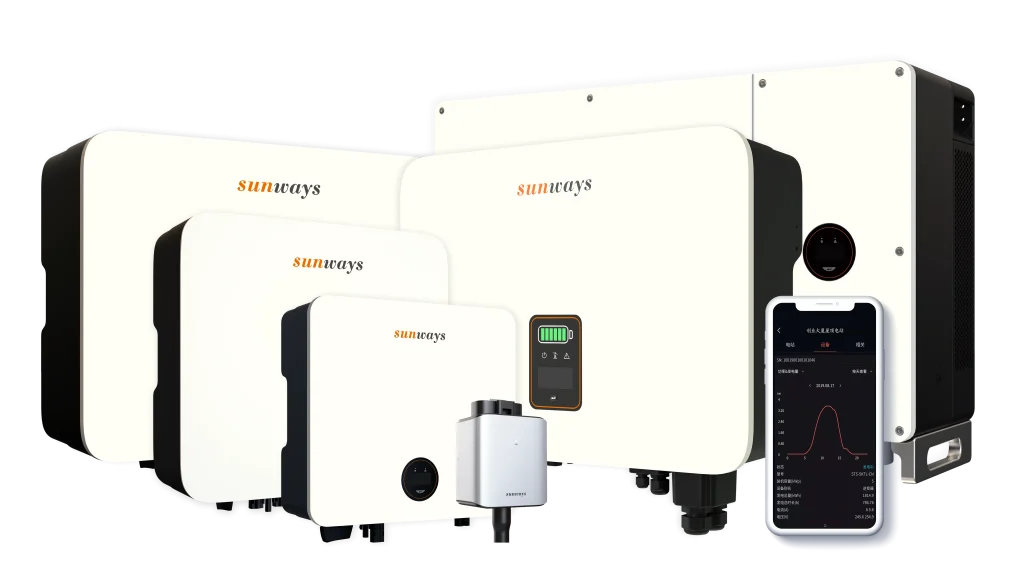
Since 1993, Sunways has specialised in the research, development, manufacture and sale of solar inverters. Our current range of on-grid inverters covers 1–170 kW, supported by in-house capabilities in R&D, testing, manufacturing, quality control and global certification. We have over 30 years’ experience in inverters, a 10 GW smart factory and a 60,000 m² production base, with product certifications covering over 150 countries.
If you are planning a residential, commercial rooftop or C&I solar project, please provide Sunways with details of your PV capacity, grid voltage, module specifications, string layout and project location. Based on the specific project conditions, we will assist you in selecting the appropriate inverter power, MPPT configuration and three-phase solar solution.
Reference
Start Your Project