How to Choose the Right Solar Inverter for Home Use?
Table of Contents
When choosing the right solar inverter for your home, you should first consider your grid conditions, PV capacity, household electricity requirements and whether you need battery storage.
- If your aim is to reduce your electricity bills and the grid in your area is stable, an on-grid inverter is usually the simpler and more economical choice.
- If you wish to store solar energy, increase your self-consumption rate, or continue to power essential appliances during a power cut, we recommend choosing a hybrid inverter with battery and backup functions.
- If your home lacks a reliable public grid and requires an independent power supply, you should consider an off-grid inverter.
Selecting inverter capacity:
- PV Capacity
- DC/AC Ratio
- Household Peak Load
- Grid Connection (single-phase or three-phase grid)
- Battery and Backup Requirements
Check whether the inverter is compatible with your solar system design:
- Number of MPPT channels;
- MPPT voltage range;
- Maximum PV input power;
- Maximum PV input current.
What Is a Solar Inverter for Home?
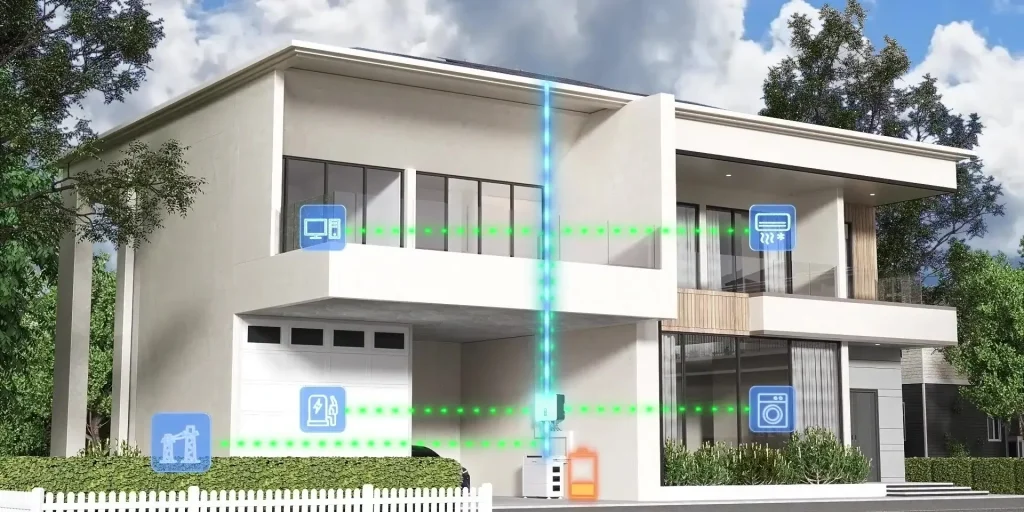
A domestic solar inverter is the core component of a residential photovoltaic (PV) system. It converts the direct current (DC) generated by solar panels into alternating current (AC) that can be used by household appliances, and coordinates the flow of electricity between the PV system, household loads, the mains grid and the battery. Different types of domestic inverters cater to different needs:
- On-grid inverter: Suitable for households with a stable mains supply that primarily wish to reduce their electricity bills.
- Hybrid inverter: Suitable for households requiring battery storage, backup power or more flexible energy management.
- Off-grid inverter: Suitable for households without a reliable public grid that require an independent power supply.
How Does a Home Solar Inverter Work?
When a domestic solar system is in operation, the solar panels on the roof first generate direct current (DC). The home solar inverter converts this DC into alternating current (AC) that can be used by household appliances, and then prioritises power supply to loads such as the fridge, air conditioning and lighting. Once solar power is generated, the inverter manages the flow of electricity according to the system type:
- For on-grid inverters, solar power is prioritised for household use, with any surplus electricity fed into the grid in accordance with local grid connection regulations.
- For hybrid inverters, the inverter also manages battery charging and discharging, storing surplus solar power in the battery to provide backup power for the home at night or during power cuts.
On-Grid, Hybrid or Off-Grid: Which Type Is Right for Your Home?
When choosing a home solar inverter, the first step is to determine which type of system best suits your household’s needs. An on-grid inverter is better suited to households with a stable grid connection that primarily wish to reduce their electricity bills through solar power. Hybrid inverters are better suited to households wishing to add battery storage, increase the proportion of solar energy they consume themselves, or have a backup power supply in the event of a power cut. Off-grid inverters, on the other hand, are suitable for areas without a reliable public grid, where a standalone energy system meets the household’s electricity needs; these typically require battery storage.
On-Grid Inverters: A Simple Solution for Solar Savings
The on-grid inverter is currently one of the most common types of inverter used in residential solar photovoltaic systems. Its primary function is to help households prioritise the use of electricity generated by solar panels, thereby reducing the amount of electricity purchased from the grid and lowering daily electricity bills.
For households with a stable grid connection whose main objective is to save on electricity bills, on-grid inverters typically offer advantages such as a simple system structure, lower initial costs, high conversion efficiency and easy maintenance. It is particularly suitable for households with high daytime electricity consumption, or for users who wish to improve their energy efficiency by installing a solar system.
However, installing a solar system does not guarantee that you will still have electricity during a power cut. Due to anti-islanding safety requirements, most on-grid inverters will automatically cease operation upon detecting a grid outage, preventing the continued supply of electricity to the de-energised line and ensuring the safety of grid maintenance personnel.
Therefore, if your primary requirement is to keep critical loads such as fridges, lighting and network equipment running during a power cut, a standard on-grid inverter may not meet your needs. You should consider a hybrid inverter system with battery storage and backup capability.
Hybrid Inverter: Greater Flexibility with Battery and Backup
Hybrid solar inverters for the home are an increasingly popular choice for domestic energy storage systems. Compared to traditional on-grid inverters, hybrid inverters not only handle solar power conversion but also manage battery charging and discharging, whilst coordinating the flow of energy between solar panels, the battery, the grid and household loads.
If your area experiences frequent power cuts, an unstable grid or voltage fluctuations, a hybrid inverter, combined with battery storage, can provide backup power to critical household loads—such as lighting, fridges and network equipment—during grid outages.
At the same time, for households wishing to store surplus solar energy generated during the day for use at night, a hybrid inverter can increase the rate of self-consumption of solar energy and reduce electricity costs during peak hours. It is also suitable for residential users planning to add EV chargers, heat pumps or additional battery capacity in the future. It is particularly well-suited to markets with high electricity prices, Time-of-Use (peak and off-peak pricing) environments and households requiring smart energy management.
Off-Grid Inverter: Designed for Energy Independence
Off-grid inverters are primarily used in residential settings where a stable public grid cannot be relied upon. Unlike grid-connected systems, off-grid systems can operate independently and typically require battery storage to provide a continuous and reliable power supply to the home. They are suitable for homes in remote areas, regions without grid coverage, and areas where the grid is chronically unstable.
How to Choose the Best Solar Inverter for Home Use?
To choose the right inverter, you first need to identify your energy requirements, and then select the appropriate system type and inverter configuration.
When selecting a domestic solar inverter, there are typically two key factors to consider:
1. Choose Based on System Function: What Do You Need Your Solar System to Do?
| System Type | Best For | Main Benefits |
|---|---|---|
| Grid-Connected Inverter | Households seeking grid stability and primarily aiming to reduce electricity bills | Reduces grid electricity consumption by utilising solar power, increases the rate of self-consumption of PV energy, and is one of the most common residential PV solutions. |
| Hybrid Inverter | Households wishing to add battery storage, increase the rate of self-consumption of solar power, or requiring a backup power supply | Coordinates solar power, batteries, the grid and household loads to achieve more flexible energy management. |
| Off-Grid Inverter | Households without a reliable public grid that require an independent power supply | Typically operates in conjunction with battery storage to help households maintain a power supply when the grid is unavailable. |
2. Choose Based on PV Architecture: How Is Solar Power Managed?
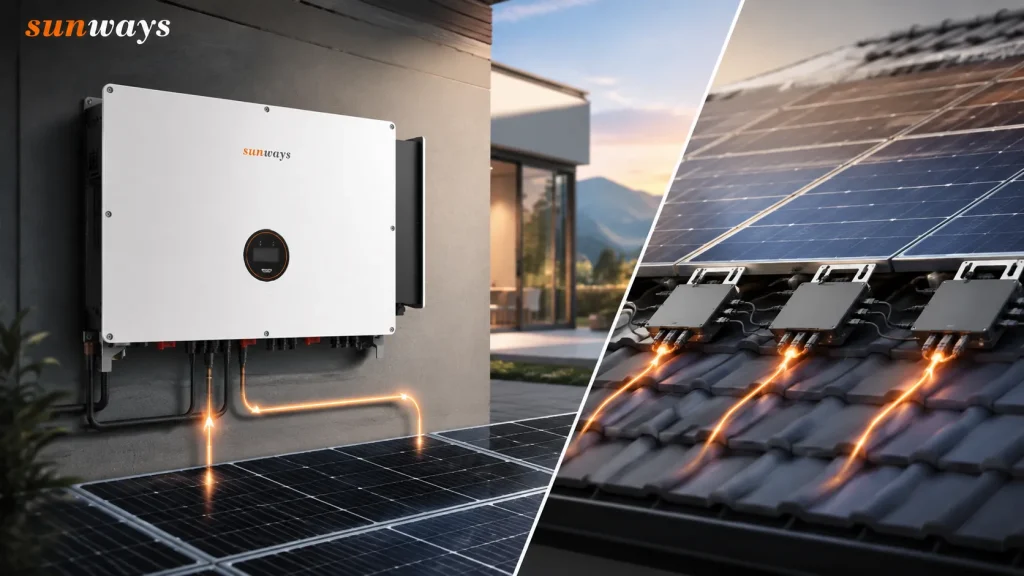
In addition to system functionality, inverters can be categorised by PV connection method into String Inverters and Microinverters.
| PV Architecture | How It Works | Best For | Main Benefits |
|---|---|---|---|
| String Inverter | Multiple solar modules form a PV string, which is managed and converted by a single inverter. | Most residential and commercial rooftop PV systems | Cost-effective, simple system structure, easy maintenance; currently the most common PV inverter solution. |
| Microinverter | Each solar panel is equipped with an independent inverter, enabling independent management at the panel level. | Residential properties with complex roof orientations, shading issues or requiring precise panel management | Each panel operates independently, reducing interference between panels and enhancing flexibility in complex roof scenarios. |
How Should You Choose?
- Roof structure is simple, with no shading, and you are looking for better value for money
→ String Inverter is usually the more common choice. - The roof has multiple orientations, localised shading, or requires optimised management at the module level
→ Microinverter can provide a more flexible solution. - If you wish to add battery storage, increase the proportion of solar energy used on-site, or require a backup power supply during power cuts
→ A hybrid inverter is the more suitable choice. - If the grid is stable and the primary objective is to reduce electricity bills
→ Give priority to an on-grid inverter. - If there is no reliable grid and an independent energy supply is required
→ Consider an off-grid inverter.
What Size Solar Inverter Do You Need for Your Home?
For a standard domestic solar system, the capacity of the solar inverter is primarily determined by the capacity of the solar panel array (PV capacity), rather than by the household’s total electricity consumption or the size of the property.
Typically, residential PV systems are designed with a DC/AC ratio of around 1.2–1.3, meaning that the total capacity of the solar panels is usually slightly higher than the inverter’s rated power, in order to maximise solar utilisation throughout the year.
a. Start With Your Solar PV Capacity
When selecting the capacity of a domestic solar inverter, you first need to understand your Solar PV Capacity.
PV capacity represents the maximum DC output power that solar panels can generate under standard test conditions. For example, a domestic solar system might be fitted with a solar panel array of 8 kWp, 10 kWp or 12 kWp.
It is important to note that the inverter’s rated power does not necessarily need to be exactly the same as the PV capacity. In residential solar systems, an inverter with a slightly lower capacity than the PV capacity is typically selected based on the system design to improve equipment utilisation.
For example:
PV Array: 12 kWp
Inverter Rated Power: 10 kW
This configuration is very common in residential PV systems; through a well-designed DC/AC ratio, it is possible to improve overall energy yield whilst ensuring system performance.
b. Understanding the DC/AC Ratio
When selecting a domestic solar inverter, it is also important to understand the DC/AC ratio. Put simply, the DC/AC ratio is calculated as: total solar panel capacity ÷ inverter rated output power
For example: 12 kWp PV array ÷ 10 kW inverter = 1.2 DC/AC ratio. This means that a 12 kW solar array is installed and operates with a 10 kW inverter.
This design is known as PV oversizing and is very common in residential solar systems. Appropriately increasing the PV capacity allows the inverter to utilise more solar input during periods of low irradiance—such as in the morning, evening or on overcast days—thereby improving the annual power generation utilisation rate.
However, not all 10 kW inverters can be connected to 12 kW or even larger PV arrays. Before increasing the PV capacity, you need to confirm:
- Maximum PV Input Power: The maximum PV capacity the inverter permits. For example, a 10 kW inverter may support 12 kW, 15 kW or even higher PV inputs, though specifications vary by product.
- MPPT Voltage Range: The voltage of the solar modules connected in series must fall within the inverter’s MPPT operating range; otherwise, power generation efficiency will be compromised.
- Maximum Input Current: It is necessary to confirm whether the inverter supports the current input of the current high-power modules to ensure that the modules’ performance is not compromised.
- Local Solar Conditions: Solar irradiance varies by region, so the design ratio for the same PV capacity may differ across different markets.
c. Consider Your Household Load
When selecting the capacity of a domestic solar inverter, in addition to considering the PV capacity, you also need to assess your household’s actual electricity consumption, particularly the operation of high-power appliances.
Pay particular attention to high-power loads in your home, such as air conditioning units, water heaters, heat pumps, water pumps, ovens and EV charging points. These appliances consume a significant amount of power whilst in operation, and some may even draw higher peak power during start-up.
If your household plans to add an electric vehicle charging point, a heat pump system, additional air conditioning units or other high-power domestic appliances in the future, it is advisable to allow for some expansion capacity when selecting an inverter to avoid capacity shortages when upgrading equipment later on.
d. Hybrid Inverters Require Additional Consideration for Backup Loads
If you opt for a hybrid solar inverter for the home, the sizing logic must also take into account the backup load. This is because, during a power cut, not all household appliances necessarily need to remain operational.
Essential Loads
Essential loads refer to critical household appliances that must remain operational during a power cut. Although these appliances typically have low power consumption, they are vital for daily life. For example, the refrigerator needs to run continuously to keep food chilled; lighting is used to maintain basic illumination; the Wi-Fi router ensures internet connectivity; and the security system safeguards the home.
When designing a backup system, priority is usually given to these critical loads to minimise battery consumption and extend the duration of power supply during a power cut.
High-Power Loads
High-Power Loads refer to household appliances with higher power requirements that place greater demands on the inverter’s output capacity. In power-cut backup mode, these appliances may consume a significant amount of battery power, and some may also draw high instantaneous power during start-up.
For example, appliances such as air conditioners, electric heaters and EV chargers require higher continuous output power and peak power support. If you wish for these appliances to continue operating during a power cut, you must confirm the following in advance:
- Backup Power Rating: Whether the inverter’s backup output power is sufficient to power the appliances.
- Battery Discharge Capability: Whether the battery’s maximum discharge capacity meets the appliances’ power requirements.
- Peak Power Capability: Whether the inverter and battery can withstand the high power draw during the moment the appliances start up.
Home Solar Inverter Sizing Checklist
| Consideration | What You Need to Check |
|---|---|
| PV Capacity | Confirm the total capacity of your solar panels, e.g. a 5kW, 8kW or 12kW PV system, to ensure the inverter supports the corresponding PV input. |
| Inverter Rated Power | Check whether the inverter’s rated output power is sufficient to meet your household’s daily electricity requirements. |
| DC/AC Ratio | Check the match between the PV capacity and the inverter’s power rating to avoid insufficient power generation due to too few panels, or exceeding the inverter’s capacity. |
| Grid Phase | Confirm whether your household grid is single-phase or three-phase, and select a suitable inverter. |
| Household Peak Load | Identify the household’s highest simultaneous power consumption devices, such as air conditioners, water heaters and water pumps, to ensure the inverter can support peak power demands. |
| Backup Load | If backup power is required during power cuts, determine in advance which appliances must remain operational and calculate the required backup power. |
| Battery Requirement | If opting for a hybrid system, confirm that the battery capacity and maximum charge/discharge power meet household requirements. |
| Future Expansion | Consider whether you may wish to add an EV charger, a heat pump, additional air conditioners or expand the photovoltaic system in the future, to avoid capacity shortages later on. |
| Local Grid Requirements | Confirm local grid regulations, such as grid connection certification, voltage requirements and power limits, to ensure the system can be installed and operated correctly. |
Single-Phase or Three-Phase? Check Your Grid and Solar Array Before Choosing
When choosing a solar inverter for your home, you should not focus solely on power output; it must also be compatible with your grid type and PV system design. There is no absolute superiority between single-phase and three-phase inverters; the key is to choose the one that best suits your household’s energy needs.
① Single-Phase vs Three-Phase Inverter
Single-phase inverters are the preferred choice for standard residential properties with conventional electricity requirements; three-phase inverters are more suitable for high-power households, properties with three-phase electricity supply, or homes that may require additional energy-consuming appliances in the future.
Single-Phase Inverters:
Single-phase inverters are primarily suitable for standard residential homes and small-scale solar systems. They are typically connected to a single-phase grid and can meet everyday household electricity needs, such as lighting, fridges, televisions and standard domestic appliances.
If your household does not have a large number of high-power appliances, your PV system is relatively small, and you are connected to a single-phase supply, a single-phase inverter will usually suffice.
Three-phase inverters are better suited to residential scenarios with higher electricity demands, such as large homes, households connected to a three-phase grid, and those installing high-power equipment such as EV chargers, heat pumps, air conditioning units and water pumps. Compared to single-phase systems, three-phase inverters can distribute power more evenly, making them better suited to larger-capacity PV systems and future household energy expansion needs.
② Check Your PV Compatibility
In addition to the grid type, you also need to confirm whether the inverter is compatible with your solar panel configuration:
- Number of MPPTs
Multiple MPPTs are suitable for roofs with different orientations or complex layouts, such as east- and south-facing roofs. Single-orientation, unobstructed roofs (e.g. entirely south-facing): typically, 1–2 MPPTs are sufficient. Roofs with multiple orientations (e.g. east- and south-facing): it is recommended to choose 2 or more MPPTs to allow modules facing different directions to operate independently. In cases of shading (e.g. from trees, chimneys or buildings): more MPPTs can minimise the impact of shading on overall power generation. - MPPT Voltage Range:
When selecting a domestic solar inverter, you must ensure that the PV string voltage matches the inverter’s MPPT voltage range (MPPT operating voltage range). When solar modules are connected in series, they generate a certain DC voltage; the inverter can only effectively track the maximum power point and generate power stably when this voltage falls within the inverter’s MPPT range. For example, if the inverter’s MPPT operating range is 160–850 V, the operating voltage of your PV string should remain within this range. - Start-Up Voltage
Determines the minimum PV voltage at which the inverter begins operation, affecting the time of day when power generation commences. - Maximum PV Input Current
Confirm whether the inverter supports the input current of current high-power modules. - Maximum PV Input Power
Confirm the maximum PV capacity the inverter permits to be connected, to avoid exceeding the equipment’s limits.
Choose the Right Match, Not the Biggest Inverter
When selecting a domestic solar inverter:
- Stable grid, standard residential property → Single-Phase Inverter
- High-power household, three-phase supply → Three-Phase Inverter
- Complex roof orientation → Consider different MPPT solar inverters
- Large PV capacity → Consider PV Input Capability
What Affects Solar Inverter Price for Home?
When choosing a solar inverter for the home, price is not determined by a single factor. The type of inverter, power rating, feature set and product reliability all influence the final cost.
1. Inverter Type: Different Systems Have Different Costs
The type of inverter is a key factor affecting price. Different system configurations offer different features, and therefore costs vary.
String inverters are typically the most common choice for residential solar installations and are relatively inexpensive. They manage multiple strings of solar panels via a single inverter and are suitable for most residential roofs that are unobstructed and have a simple structure.
Microinverters usually incur higher costs as each solar panel requires its own dedicated inverter, resulting in a greater number of units. They are better suited to homes with complex roof orientations, where shading is a concern, or where panel-level monitoring is desired.
Hybrid Inverters are generally more expensive than standard grid-tied inverters, as they not only perform DC/AC conversion but also manage battery charging, grid interaction and backup functions. For households requiring energy storage, hybrid systems can offer greater energy flexibility.
2. Inverter Capacity: Power Rating Directly Affects Cost
The higher the inverter’s rated power, the more electrical energy it needs to handle, and hardware specifications and costs generally increase accordingly.
- 3–5 kW: Suitable for small dwellings or basic domestic PV systems.
- 6–10 kW: A common capacity range for many residential properties, suitable for higher daily electricity demands.
- 10 kW and above: Suitable for large homes, households with three-phase power supply, or scenarios involving high-power equipment such as EV chargers and heat pumps.
3. Brand and Product Quality: Reliability Affects Long-Term Value
Residential inverters on the market typically come with a 5–10-year standard warranty, whilst some brands offer extended warranty services of 10–15 years or longer. The warranty period, after-sales support and product stability are all important factors to consider when selecting an inverter.
4. Features and Smart Functions: More Functions Increase System Value
Additional smart features can help households manage their energy more efficiently and also influence the overall value of the product. For example, Smart Monitoring allows users to view the system’s operational status in real time via an app or cloud platform, including current power generation, daily/monthly/annual energy output, household energy flow and equipment status, giving users a clearer understanding of their solar energy usage.
Sunways offers comprehensive residential solar solutions, ranging from grid-connected power generation to energy storage and backup power, tailored to the energy needs of different households.
On-Grid Inverters are suitable for households with a stable grid supply that wish to reduce electricity bills and increase the proportion of self-consumed solar energy; they meet daily energy needs through a simple and efficient grid-connected solution.
Single-Phase Hybrid Inverters are suitable for standard residential users; they support battery storage and backup functions, helping households to increase their energy independence and cope with power cuts.
Three-Phase Hybrid Inverter Suitable for three-phase homes and high-power consumption scenarios, it meets the demands of high-power equipment such as EV chargers and heat pumps, whilst supporting future home energy expansion.
Choosing the right residential solar solution requires consideration of your grid conditions, electricity consumption needs and future energy plans, rather than simply comparing product prices or specifications.
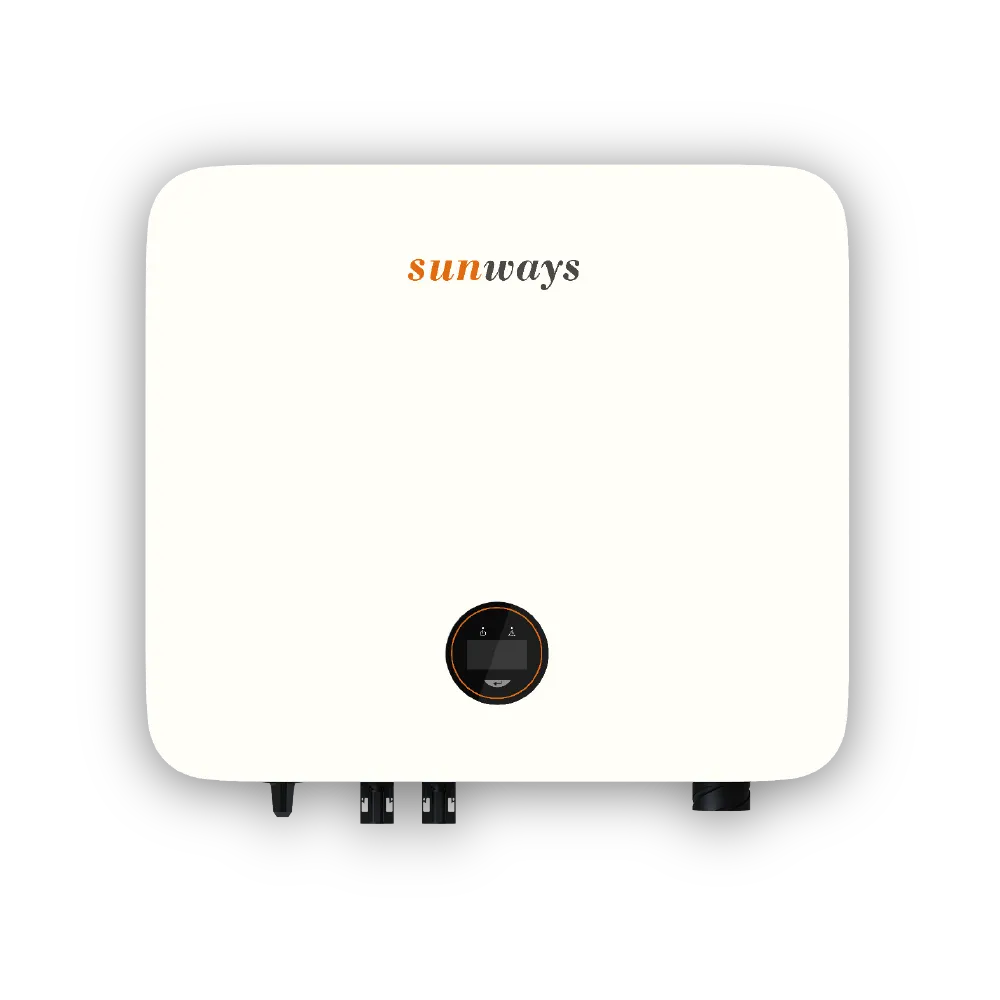
Single-Phase On-Grid Inverter
Designed for larger residential PV systems that require more solar capacity while remaining on a single-phase grid. A strong fit for higher-power home rooftop installations.
- Power Range: 7.5–8 kW
- Grid Type: Single-phase
- MPPT: 2 MPPTs
- Protection Degree: IP66
- Application: Larger Residential
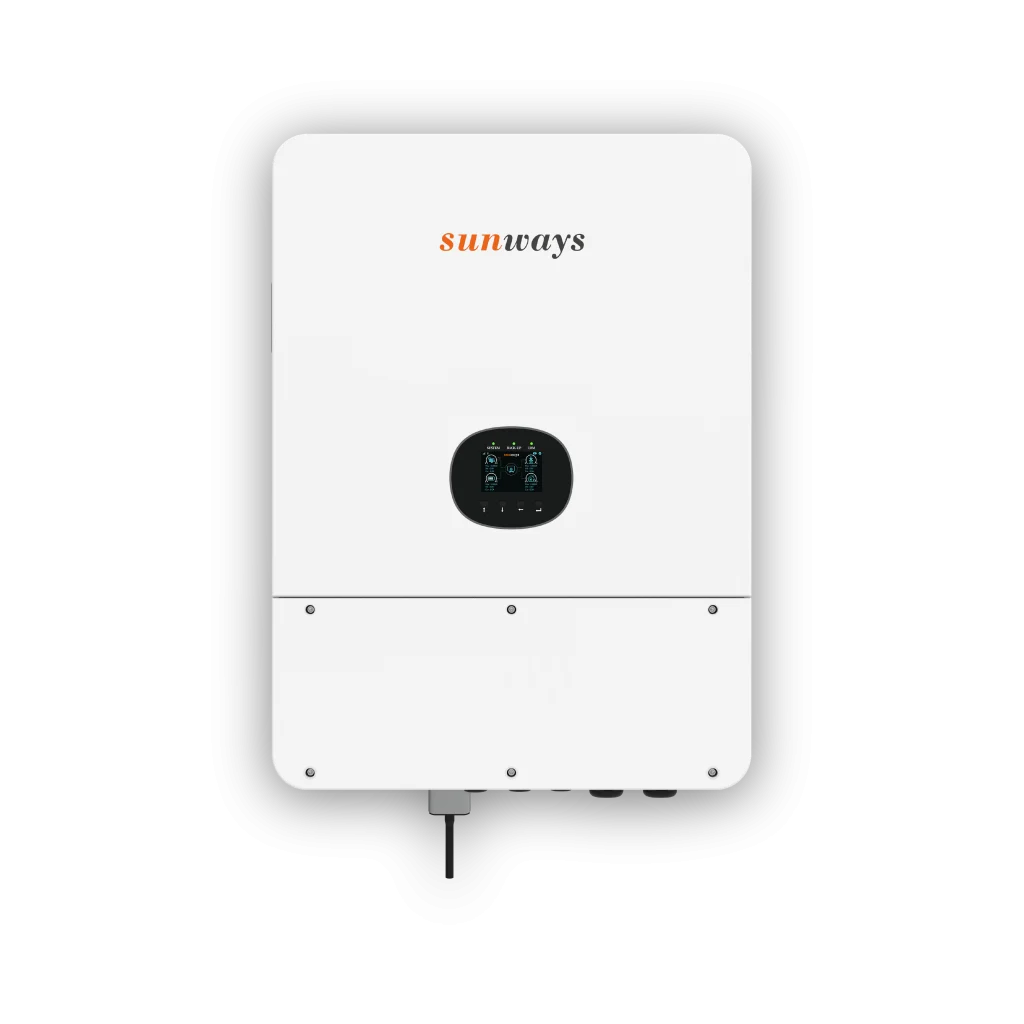
Three-Phase Low-Voltage Hybrid Inverter
A three-phase low-voltage energy storage solution suitable for residential and small commercial projects with higher power requirements. It enables you to support more three-phase loads whilst maintaining a low-voltage battery architecture.
- Power Range: 5–20 kW
- Grid Type: Three-phase
- Battery System: 40–60 V Low Voltage
- Project Type: Residential and Small Commercial
Solar Inverter for Home FAQs
Q1. What Size Solar Inverter Do I Need for My Home?
The capacity of a domestic solar inverter is primarily selected based on PV Capacity, rather than simply on the size of the property or the number of people in the household. It is usually necessary to take into account the capacity of the solar panels, the DC/AC ratio, the household’s maximum load, the type of electricity grid, and future expansion requirements. For example, a 5–8 kW residential PV system is typically paired with an inverter in the 5–7.6 kW range, although the exact capacity must be determined based on the actual system design.
Q2. How Do I Calculate Solar Inverter Capacity for Home?
When calculating solar inverter capacity for a home, it is usually determined by the ratio between the solar panel array capacity (DC) and the inverter’s rated output power (AC). The formula is: DC/AC Ratio = PV Array Capacity ÷ Inverter Rated Power. The final capacity also needs to be adjusted to account for household loads, the type of grid connection, and whether battery storage and backup functions are required.
Q3. Which Solar Inverter Is Best for Home Use?
If your aim is to reduce electricity bills, an on-grid inverter is usually the more suitable option; if you require energy storage and backup, a hybrid inverter will offer greater flexibility.
Q4. Can a Solar Inverter Work Without a Battery?
Yes. A standard on-grid inverter generally does not require a battery; it can convert solar energy directly into electricity for domestic use, helping to reduce the amount of electricity purchased from the grid. Whilst hybrid inverters support battery connection, some systems can also operate without a battery. If your aim is to use solar energy at night, increase self-consumption rates or have a backup during power cuts, you will need to install a battery storage system.
Q5. Does a Solar Inverter Work During a Power Cut?
A standard on-grid inverter usually cannot continue to supply power during a power cut, as it must comply with anti-islanding safety requirements to prevent feeding electricity back into a de-energised grid. If you wish to continue using solar power during a power cut, you will need to choose a hybrid inverter system with a backup/EPS output function, combined with a battery storage design.
Planning a Home Solar or Battery System?
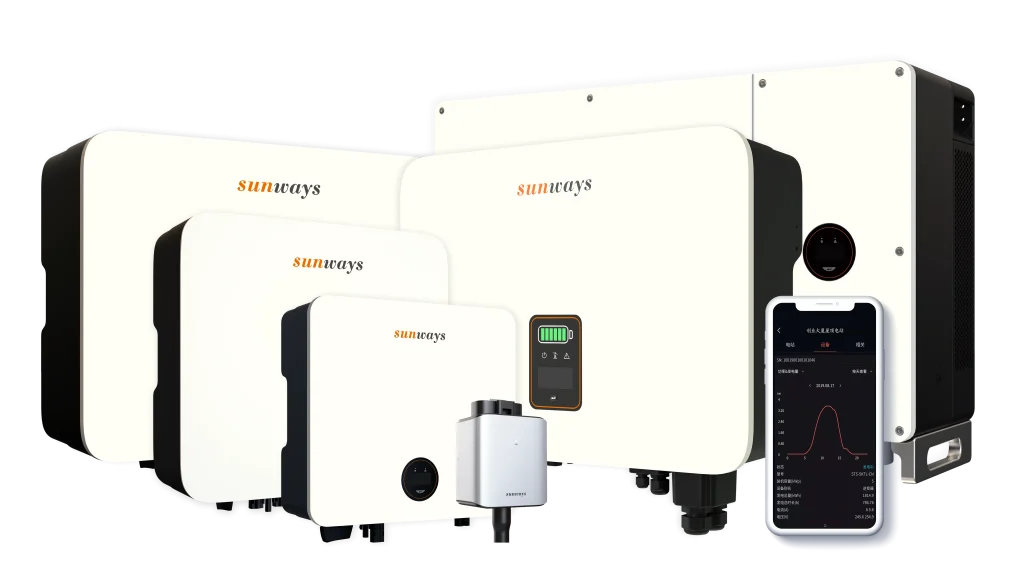
Selecting the right solar inverter for your home requires an assessment based on your location, grid conditions, PV capacity and energy requirements. If you are planning a residential solar or energy storage system, please contact Sunways to find a solution tailored to your needs.
Reference
- U.S. Department of Energy (DOE), Solar Integration: Inverters and Grid Services Basics
- National Renewable Energy Laboratory (NREL), Technology Tips for Solar + Storage
Start Your Project