Battery Cell Guide: What Really Matters for Solar Energy Storage?
Table of Contents
If you want a quick overview of how battery cells affect the performance, lifespan and safety of solar energy storage systems, this article will help you clarify several key points:
- What is a battery cell? A cell is the basic unit within a battery that actually stores and releases energy; multiple cells are combined to form a complete battery.
- Which type of cell is best suited to solar storage: For most stationary energy storage projects, LiFePO₄ (LFP) is more suitable, as it prioritises safety, cycle life and long-term use.
- How to interpret battery parameters: Ah represents capacity, kWh represents the amount of energy stored, the C-rate indicates the charging and discharging speed, whilst DoD and cycle life determine how long the battery will last.
- Why cell consistency is important: A battery pack is often limited by its weakest cell, so consistency in voltage, capacity and internal resistance is crucial.
- Why a BMS is indispensable: The BMS is responsible for monitoring voltage, current and temperature, as well as providing protection, balancing and communication.
- Low-voltage or High-voltage: Low-voltage (LV) batteries are generally more common in small residential systems, whilst high-power systems are better suited to high-voltage (HV) batteries.
- Can the battery be connected to a hybrid inverter? It is not enough to consider voltage alone; you must also verify the current, battery type, BMS communication and compatibility.
What Is a Battery Cell and How Is It Different from a Battery
A battery cell is the smallest electrochemical unit that converts chemical energy into electrical energy. You can think of it as the fundamental unit within a battery that is actually responsible for storing and releasing electrical energy. When in operation, the battery cell converts chemical energy into electrical energy through internal electrochemical reactions and supplies power to the external circuit.
Is a Battery Cell the Same as a Battery?
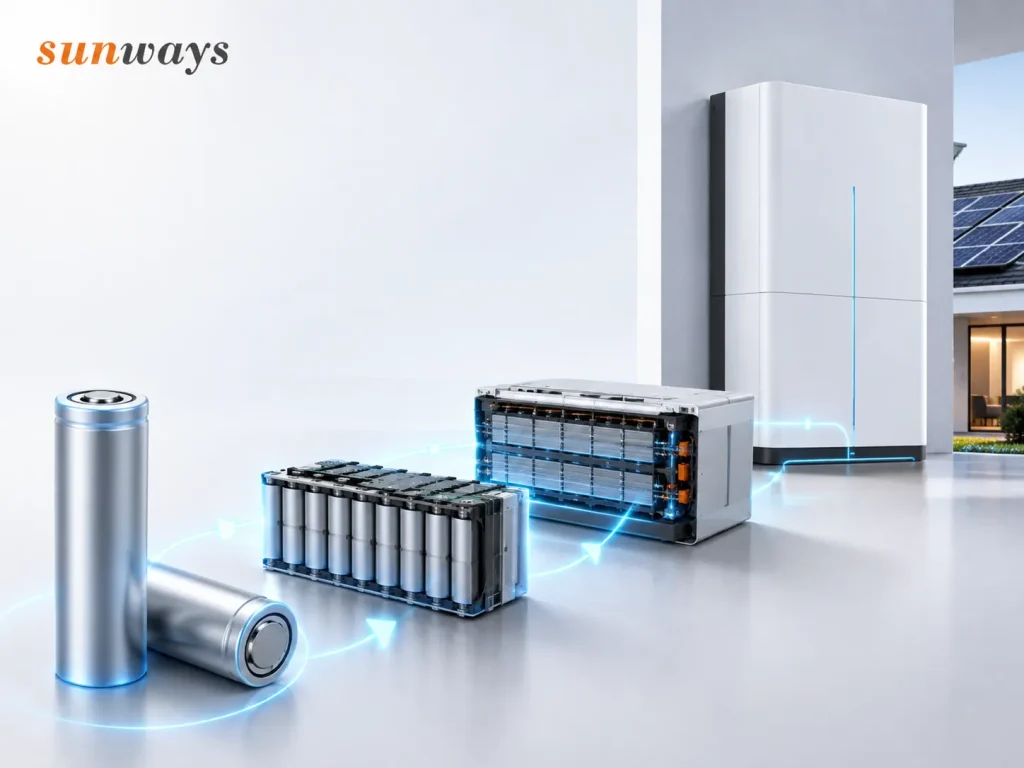
No. A battery cell is a single energy storage unit, whereas the ‘battery’ you see in solar energy storage systems is usually composed of multiple battery cells.
You can think of the entire energy storage battery as a system composed of hierarchical levels. The most basic unit is the battery cell; multiple battery cells are combined to form a battery module; one or more modules, together with a BMS, protective devices and structural components, form a Battery Pack. These Battery Packs are further combined to form a Energy Storage Battery ready for practical use, which is then connected to a Hybrid Inverter, Solar PV, the Grid and Loads to form a complete ESS (Energy Storage System).
| Term | Simple explanation |
|---|---|
| Battery Cell | The most basic electrochemical energy storage unit |
| Battery Module | A unit formed by combining multiple battery cells |
| Battery Pack | Cells / Modules + BMS + Protection + Structure |
| Energy Storage Battery | A complete battery that can be connected to an energy storage system |
| ESS | An Energy Storage System comprising batteries, inverters, PV, the grid, loads, etc. |
Main Types of Battery Cells Used in Solar Storage
Battery cells can generally be classified according to three criteria: whether they are rechargeable, their chemical composition, and their physical shape. Based on rechargeability, they can be divided into primary cells and secondary cells; based on chemistry, they can be categorised into different chemical systems such as LiFePO₄ and NMC; by form factor, the most common types are pouch cells, cylindrical cells and prismatic cells. For solar energy storage, the focus is on rechargeable secondary battery cells, particularly those based on the lithium-ion system.
Battery Cell Types by Chemistry
Currently, the types most relevant to solar energy storage are primarily LiFePO₄ / LFP, NMC and traditional lead-acid.
| Chemistry | Key Features | Suitability for Solar Storage |
|---|---|---|
| LiFePO₄ / LFP | Good thermal stability, long cycle life, moderate energy density | Highly suitable for stationary storage |
| NMC | Higher energy density, significant advantages in terms of volume and weight | More commonly used in applications requiring high energy density |
| Lead-acid | Mature technology, lower initial cost, but heavy and typically short cycle life | Still used in traditional solar backup systems |
LFP and NMC are both common lithium-ion battery chemistries. The advantages of lithium iron phosphate (LFP) batteries lie in their higher safety, relatively lower cost, and a cycle life that typically exceeds 3,000 cycles. NMC batteries, on the other hand, excel in their higher energy density, allowing them to store more energy in smaller, lighter battery packs.
For residential solar storage, batteries are usually installed in a fixed position within the home, so weight and volume are not as critical as they are for EV batteries. Consequently, users typically prioritise safety, cycle life, temperature performance and long-term running costs. This is why LiFePO₄ battery cells are so common in residential energy storage.
Battery Cell Types by Form Factor
The same chemistry can be manufactured in different form factors. There are three main types commonly used in solar storage:
- Prismatic Cell: A square structure offering high space utilisation and relatively simple assembly; currently very common in home storage and ESS systems.
- Cylindrical Cell: A cylindrical structure with mature automated manufacturing processes; individual cells are small, and heat dissipation paths are short.
- Pouch Cell: Utilises a flexible aluminium-plastic film pouch; it is lightweight and offers flexible dimensional design, but places higher demands on pack structure and swelling management.
How Have Residential Battery Cells Evolved?
Early residential energy storage systems drew heavily on the power battery supply chain, with 30–60Ah pouch cells being common; subsequently, some products adopted small cylindrical cells such as 18650 and 21700; from around 2020 onwards, high-capacity prismatic cells such as 280Ah and 314Ah gradually entered the energy storage market. The primary drivers behind this trend were reducing the number of cells, simplifying integration and lowering the cost per Wh.
Larger battery cells can reduce the number of cells within a battery pack, as well as the number of connection points and assembly steps, thereby lowering system integration costs. However, bigger is not necessarily better when it comes to battery cells.
As cell capacity increases, a single cell stores more energy, making heat dissipation more challenging. In the event of an anomaly, the safety risk borne by a single cell is also higher. At the same time, larger cells increase the weight of the battery module, placing greater demands on the handling and installation of residential energy storage systems. Furthermore, as cell size increases, the battery pack’s structure, heat dissipation, BMS sampling and safety protection also require redesign.
Therefore, for residential solar storage, the appropriate cell size should strike a balance between capacity, cost, safety, thermal management and system integration, rather than simply selecting the cell with the highest capacity.
What Makes a Good Battery Cell for Solar Energy Storage
For residential solar energy storage, LiFePO₄ (LFP) is typically the preferred battery cell chemistry. Its advantages are clear: good thermal stability, long cycle life, relatively manageable costs, and it is particularly well-suited to energy storage scenarios involving repeated daily charging and discharging.
When evaluating a high-quality solar battery, it is advisable to focus on several key metrics: a Depth of Discharge (DoD) typically reaching 80–90 per cent or higher, a cycle life of 3,000–6,000 cycles or more, a round-trip efficiency generally above 90 per cent, and good thermal stability. These metrics directly influence how long the battery will last, how much energy it can deliver daily, and whether it will operate reliably over the long term.
In comparison, the main advantage of NMC is its higher energy density, which allows it to store more energy in a smaller, lighter space; however, for fixed-installation residential solar storage, weight and volume are not usually the top priorities. Safety, cycle life and long-term operating costs are more important, which is a key reason why LFP has become the mainstream choice for residential energy storage.
Six Factors That Matter
| Factor | What You Should Check | Specific Assessment Criteria |
|---|---|---|
| Chemistry | LFP or NMC? Is it suitable for stationary storage? | NMC excels in energy density, whilst LFP excels in safety characteristics. For stationary solar storage, LFP generally better meets safety, lifespan and cost considerations. |
| Cycle Life | How many charge-discharge cycles can it withstand? What are the test conditions? | It is also necessary to confirm the DoD, temperature and C-rate under which the test was conducted, as well as whether EOL is defined as 80 per cent remaining capacity. The time taken for different cells and operating conditions to reach 80 per cent capacity can vary by several thousand cycles. |
| Safety | Is the cell itself stable? Are the BMS and pack protection mechanisms comprehensive? | Does it comply with applicable safety standards, such as IEC 62619:2022? |
| Temperature Performance | Can the battery still charge and discharge normally at high and low temperatures? | The ideal operating range is approximately 15–35°C; the general operating range extends to approximately −10–50°C, although the charging window is usually narrower. |
| Cell Consistency | Are the capacity, voltage and internal resistance of different cells similar? | For example, a 51.2V LFP pack typically consists of 16 cells of approximately 3.2V connected in series; if one cell reaches its voltage limit prematurely, it may limit the entire pack. |
| Power Capability | Are the maximum charge/discharge current and C-rate sufficient? | The C-rate must be considered alongside the Ah rating. For example, a 280 Ah cell delivers ≈140 A at 0.5C and ≈280 A at 1C. A high Ah rating does not necessarily mean the cell can sustain high-rate discharge. |
Battery Cell Voltage, Capacity and Cycle Life: What Do the Numbers Mean
To understand battery cells, you do not need to study complex electrochemistry first. You only need to understand the parameters of voltage, Ah, kWh, C-rate, DoD, SOC and cycle life to be able to assess most of a cell’s basic performance.
Taking LiFePO₄ as an example, the nominal voltage of a single cell is typically around 3.2–3.3 V. However, 3.2 V does not mean that the cell maintains a constant voltage of 3.2 V throughout the entire charge and discharge cycle; rather, it is used to describe the typical nominal operating voltage of this type of cell.
| Parameter | What does it tell you? | Simple example |
|---|---|---|
| Voltage (V) | The cell’s voltage rating | LFP cells are typically around 3.2 V nominal |
| Capacity (Ah) | How much electric charge it can store | 100 Ah, 280 Ah, 320 Ah |
| Energy (kWh) | How much energy can actually be stored | Voltage × Ah |
| C-rate | How fast the cell can be charged and discharged | 100Ah at 1C ≈ 100A |
| DoD | How much of the battery capacity has been used in a single charge | From 100% to 20% SOC ≈ 80% DoD |
| SOC | How much charge is left in the battery | 60% SOC ≈ 60% remaining |
| Cycle Life | How many charge and discharge cycles can it undergo | e.g. 3,000, 6,000 cycles |
a. From Ah to kWh
Ah represents capacity, whilst kWh represents the actual energy stored. Both must be combined with voltage to calculate: Energy (kWh) ≈ Voltage (V) × Capacity (Ah) ÷ 1,000
b. What Does C-rate Mean?
The C-rate indicates the speed at which a battery charges or discharges relative to its own capacity. 1C can be simply understood as a full charge or discharge being completed in approximately one hour, in theory.
For example, a 100Ah battery cell:
- 0.5C = 50A, theoretically approximately 2 hours
- 1C = 100A, theoretically approximately 1 hour
- 2C = 200A, theoretically approximately 0.5 hours
The calculation is as follows: Current = Capacity × C-rate
The C-rate is important because a battery’s high capacity does not necessarily mean it can deliver greater power. For example, if a 200Ah cell is only permitted to discharge continuously at 0.5C, its maximum current is still only approximately 100A.
c. DoD vs SOC: What Is the Difference?
SOC indicates how much charge remains, whilst DoD indicates how much charge has been used. For example, if a battery is discharged from 100 per cent SOC to 20 per cent SOC: DoD ≈ 80 per cent. Therefore, when a datasheet states: ‘6,000 cycles @ 80% DoD’, it means that this battery is designed and tested to withstand approximately 6,000 charge-discharge cycles, provided that 80 per cent of its capacity is utilised in each cycle. This 80 per cent DoD is also a key factor in determining cycle life.
d. What Does 6,000 Cycles Really Mean?
6,000 cycles generally means that the battery can complete approximately 6,000 full charge-discharge cycles whilst still maintaining its capacity at the specified end-of-life level. If the manufacturer defines 80 per cent of the original capacity as the end of life, then after 6,000 cycles, the battery is not unusable, but its storable energy has fallen to approximately 80 per cent of that of a new battery. If one full cycle is completed every day: 6,000 ÷ 365 ≈ 16.4 years. In other words, this theoretically equates to a 16-year cycle life.
How Battery Cells Become Low-Voltage and High-Voltage Battery Systems
Both low-voltage and high-voltage batteries are composed of multiple battery cells. By connecting cells in series and in parallel in varying configurations, it is possible to create energy storage batteries rated at 48V or several hundred volts. Taking the common LiFePO₄ cell as an example, the nominal voltage of a single cell is typically around 3.2V.
① Series and Parallel: What Is the Difference?
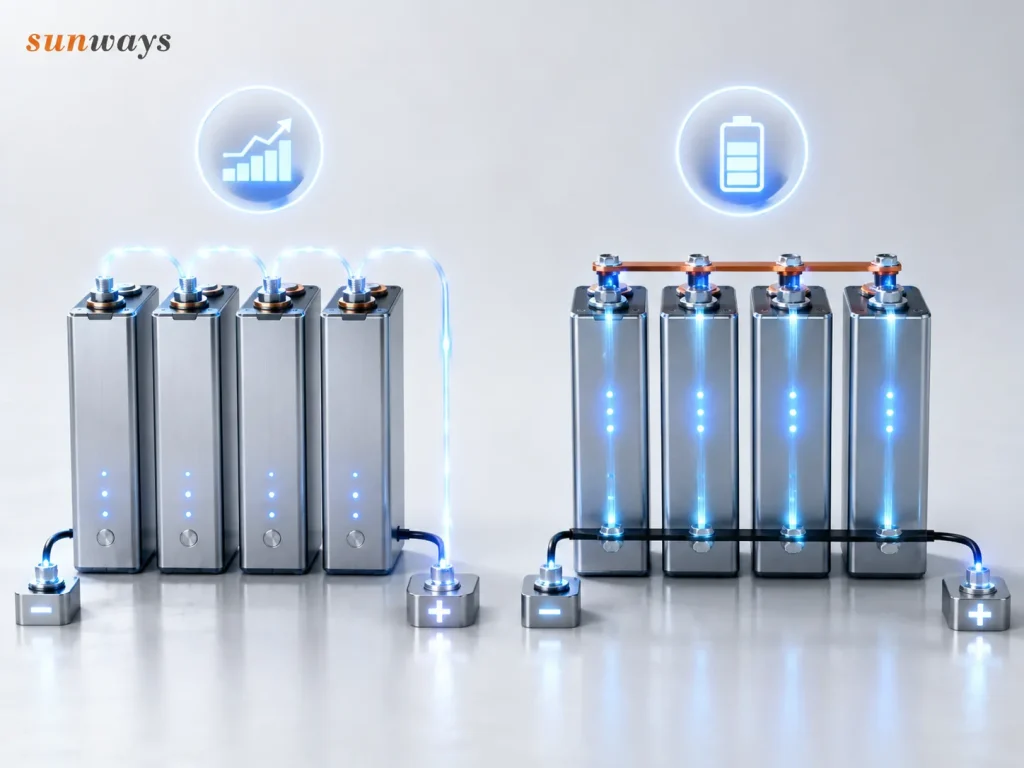
The purpose of a series connection is to increase the voltage. For example, 16 3.2V cells connected in series: 3.2V × 16 = 51.2V
Consequently, the 48V LiFePO₄ battery commonly referred to on the market often has an actual nominal voltage of 51.2V. This is because such batteries are typically composed of 16 3.2V LiFePO₄ cells connected in series. Here, 48V primarily indicates that it belongs to the 48V-class low-voltage battery platform, whilst 51.2V is the actual nominal voltage of this set of 16 LiFePO₄ cells connected in series.
If each cell has a capacity of 320Ah, connecting 16 of them in series still results in 51.2V / 320Ah. In other words, connecting cells in series primarily increases the voltage; it does not directly add the Ah values together.
The purpose of a parallel connection is to increase capacity. For example, when two sets of 51.2V / 320Ah batteries are connected in parallel, the voltage remains approximately 51.2V, but the total capacity can be increased to approximately 640Ah.
② What Is a Low-Voltage Battery?
In residential solar storage systems, low-voltage batteries are typically in the 48V / 51.2V range. As their voltage is relatively low, when the system needs to output a higher power, a greater current must be drawn to transfer the energy.
For example, to deliver the same 10 kW output: 10 kW ÷ 50 V ≈ 200 A. In other words, a battery operating at around 50 V requires a current of approximately 200 A to deliver 10 kW of power. Although LV systems have a lower voltage and offer flexible configuration, they place higher demands on the high-current carrying capacity of battery cables, connectors, busbars and the BMS.
Its advantages lie in the mature 48V ecosystem, wide range of battery options and flexible configuration, making it very common in residential and small-to-medium-power solar energy storage systems. For example, the Sunways low-voltage hybrid inverter platform utilises a 40–60V battery voltage range, which is a typical 48V-class energy storage architecture.
③ What Is a High-Voltage Battery?
A high-voltage battery achieves a battery stack voltage of several hundred volts by connecting more cells or battery modules in series. If the output remains at 10 kW but the battery voltage is increased to 500 V: 10 kW ÷ 500 V ≈ 20 A. Compared to the current of approximately 200 A in a 50 V system, a 500 V system requires only about 20 A.
Therefore, the most direct characteristic of a high-voltage battery is that: at the same power output, the higher the battery voltage, the lower the current required. This reduces the strain placed on cables, connectors and thermal management systems by high currents, making it more suitable for higher-power residential ESS and commercial energy storage systems.
Sunways’ various HV Hybrid series feature battery voltage ranges spanning from 85–500V to 200–950V across different platforms, reflecting this high-voltage battery architecture.
④ Low Voltage or High Voltage: Which Should You Choose?
LV is the preferred choice for small residential systems; HV is more suitable for higher-power and larger-capacity systems. For most households and small-to-medium-sized solar storage systems, a 48V low-voltage battery is typically chosen due to its simple configuration and better compatibility. However, if your system has a higher power rating, or if you prioritise lower current, simpler cabling and greater scalability, a high-voltage battery may be the better option.
Why Battery Cells Need a BMS
Battery cells are responsible for storing energy, whilst the BMS (Battery Management System) monitors and protects these cells, ensuring they always operate within safe limits. For solar batteries, the BMS is the core control system that ensures the battery pack functions correctly. It continuously monitors voltage, current and temperature, and promptly limits or cuts off charging and discharging in the event of overcharging, over-discharging, over-current or over-temperature, thereby reducing the risk of cell damage, reduced lifespan or even safety incidents.
What Does a BMS Actually Do?
- Cell Voltage Monitoring: Monitors the voltage of each cell. If the voltage is too high or too low, the BMS will limit or stop charging and discharging.
- Temperature Monitoring: Monitors the battery temperature. It limits charging when the battery is too cold and reduces power or stops operation when it is too hot.
- SOC Estimation: Estimates how much energy remains in the battery, enabling the hybrid inverter to determine when to charge, discharge or retain power for backup.
- Battery Protection: In the event of over-voltage, under-voltage, over-current or abnormal temperature, the BMS will limit or disconnect the battery.
- Cell Balancing: Minimises differences in voltage and SOC between individual cells, ensuring the entire battery pack operates more evenly.
Why Does Cell Consistency Matter?
Cell consistency ensures that every cell in the battery pack remains as consistent as possible in terms of key parameters such as voltage, capacity and internal resistance. It is crucial because the entire battery pack is often limited by its weakest cell.
During charging, as soon as a single cell reaches the maximum permitted voltage, the BMS may stop the entire battery pack from continuing to charge prematurely. The same applies during discharging: as soon as a single cell reaches the minimum permitted voltage, the system must cease discharging.
This means: stronger cells cannot compensate for weaker ones. If consistency is poor, some high-capacity cells will be unable to be fully utilised over the long term, and the actual capacity of the entire battery pack will also decrease.
How Does Temperature Affect Battery Cell Performance and Lifespan?
Temperature directly affects a battery’s charging capacity, power output and service life.
In markets with cold winters, such as Poland and Italy, the focus is on low-temperature charging. When temperatures are too low, the battery’s charging capacity decreases, and the BMS may limit the charging current or even temporarily halt charging to prevent cell damage. Low temperatures reduce the rate of ion conduction and increase the risk of abnormal reactions occurring during low-temperature charging.
In high-temperature markets such as India, Pakistan, Sri Lanka and Bangladesh, greater attention must be paid to high-temperature ageing and cooling. Prolonged exposure to high temperatures accelerates cell ageing and increases thermal risks; therefore, the battery requires temperature control through the BMS, cooling systems and power derating.
How to Match a Battery with a Hybrid Inverter
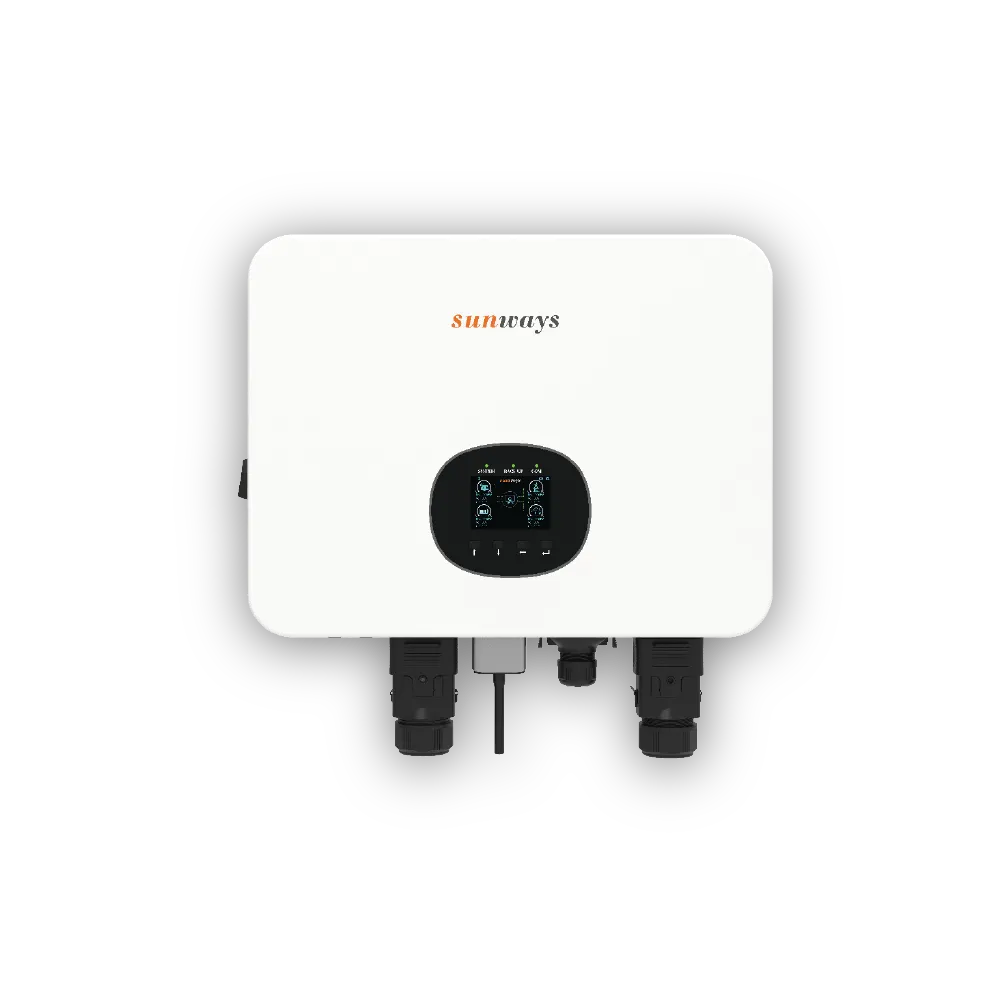
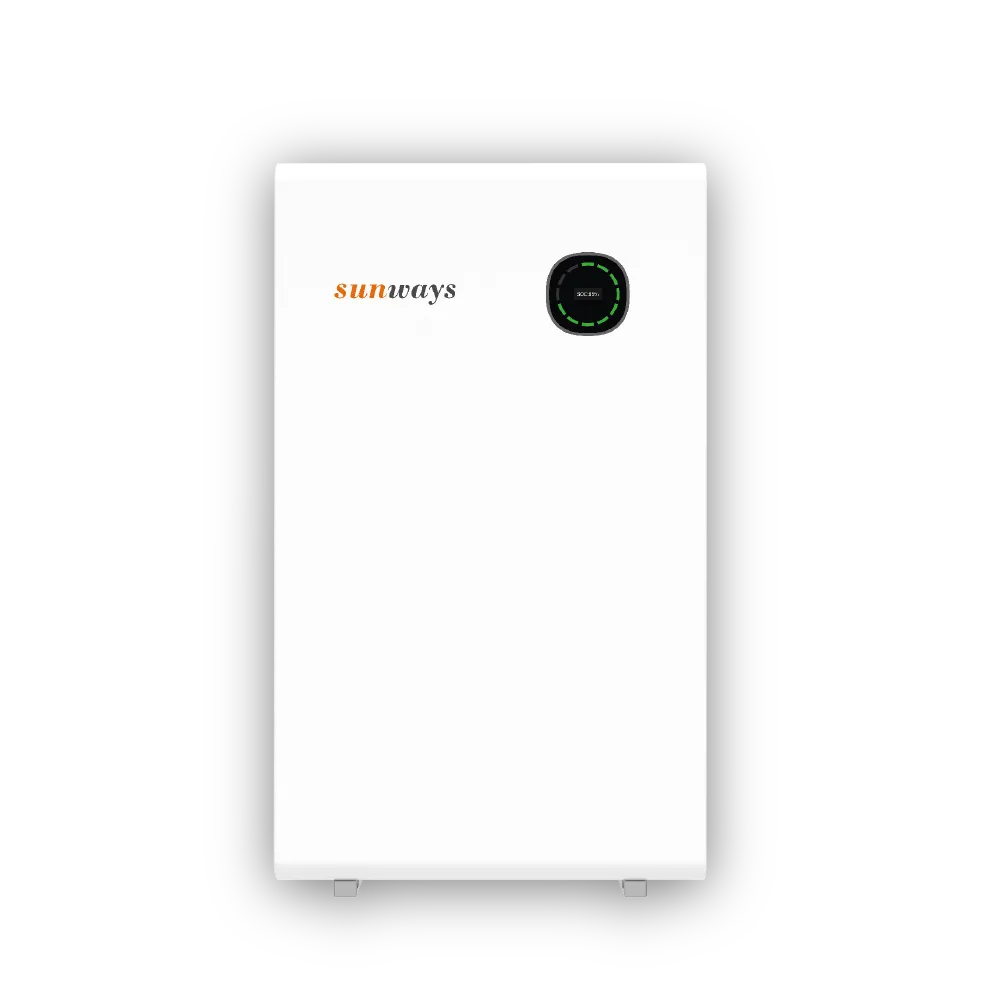
To ensure a battery is correctly matched with a hybrid inverter, at least three factors must be verified: voltage compatibility, power compatibility and communication compatibility. For example, a 48V battery should be paired with a hybrid inverter that supports 48V batteries; the battery’s maximum discharge power must be sufficient to meet the demands of both the inverter and the actual loads; furthermore, the battery BMS and the inverter must support compatible communication protocols such as CAN or RS485.
What Should You Check First?
| Check | What do you need to confirm? |
|---|---|
| Battery Voltage Range | The battery’s actual operating voltage must fall within the inverter’s permitted range |
| Charge Current | The inverter must not supply a current to the battery that exceeds its permitted range |
| Discharge Current | The battery must be able to provide the power required by the system |
| BMS Protocol | The battery and inverter must be able to exchange data correctly |
| CAN / RS485 | The communication interfaces of both devices must be compatible |
| Firmware | Different firmware versions may affect BMS protocol compatibility |
| Compatibility List | The most direct way to confirm whether the battery has been tested for compatibility |
① Battery Voltage Must Match the Inverter
The first step is to confirm the battery voltage. LV batteries must be matched primarily with the corresponding LV inverter architecture, whilst HV batteries likewise require a corresponding HV inverter.
For example, a common 51.2V LiFePO₄ battery should be paired with a low-voltage hybrid inverter that supports this voltage range, rather than being connected directly to a high-voltage inverter.
Taking Sunways as an example, the STH-3–8KTL-LS and STH-5–20KTL-LT low-voltage hybrid series both have a battery voltage range of 40–60V; the high-voltage series, on the other hand, covers voltage platforms of 85–500V, 140–750V, 200–800V and higher.
② Charge and Discharge Current Must Also Match
This is because the current level directly affects whether the battery can supply sufficient power to the inverter. For example, if a battery can only sustain an output of 100A at most, but a hybrid inverter requires 160A under high load, then that battery will be unable to fully power the inverter. The system will ultimately be limited by the battery. The same applies during charging. The inverter must not charge the battery at a current exceeding the battery’s permitted range; otherwise, the BMS will limit the current and, in severe cases, may even stop charging altogether.
Therefore, when selecting a battery, it is essential to verify both the Maximum Charge Current and the Maximum Discharge Current. For example, the Sunways STH-8KTL-LS has a battery voltage range of 40–60V, with maximum charge and discharge currents of 160A / 160A.
③ Why BMS Communication Matters
BMS communication is the key to ensuring the battery and hybrid inverter truly ‘understand’ each other. Even if both devices have CAN or RS485, this does not necessarily mean they can communicate. CAN and RS485 are merely communication interfaces; the data protocols, commands and firmware used by both parties must also be mutually recognisable.
Some of Sunways’ low-voltage hybrid series utilise CAN battery communication, whilst the high-voltage hybrid series support both CAN and RS485. The communication method varies depending on the specific product platform.
④ Why the Compatibility List Matters
The simplest way to determine whether a battery is compatible with a hybrid inverter is to first consult the manufacturer’s compatibility list. This is because even if a battery’s voltage, current and communication interface appear to match, this does not necessarily mean it will function correctly. For example, whilst both may use CAN communication, the BMS data formats between different brands may differ, meaning the inverter may be unable to read the SOC, alarm messages or charge/discharge limits.
Therefore, when selecting a battery, do not rely solely on the specifications; you must also confirm whether this battery has been verified and approved by the inverter manufacturer. The compatibility list can help you minimise the risk of commissioning failures and after-sales issues.
Choosing a Solar Battery System
When selecting a solar battery system, first assess your electricity requirements, then choose the battery, and finally confirm the compatibility of the hybrid inverter.
① Start with Your Application
First, clarify what problem you need the battery to solve. Is it for residential or commercial and industrial (C&I) use? Will it be used primarily for self-consumption, backup or off-grid applications? Then consider grid type, peak load, daily consumption, backup loads and backup time.
② Choose the Right Battery Architecture
For most residential and small-to-medium-sized solar storage systems, opt for a 48V / 51.2V low-voltage battery. If the system has a high power output and you wish to reduce current, simplify high-current cabling and enhance scalability, choose a high-voltage battery.
Once you have decided on LV or HV, compare chemistry, usable capacity, power, cycle life, temperature range and expansion capability.
③ Ensure Battery & Inverter Compatibility
To determine whether a battery is compatible with a hybrid inverter, consider four key factors: voltage, battery chemistry, power/current and communication. Firstly, the battery’s nominal voltage must match the range supported by the inverter. Secondly, confirm whether the inverter supports the relevant battery chemistry, such as LiFePO₄, other lithium batteries or lead-acid.
Next, check whether the battery’s sustained discharge power and current are sufficient to drive the actual load. Finally, if using a smart battery with a BMS, also verify that the CAN or RS485 communication protocols between the two are compatible.
④ Look Beyond the Battery Cell
When selecting a solar battery, you must also verify that the battery pack itself features a reliable BMS, overcharge and over-discharge protection, temperature protection and a suitable heat dissipation design. During installation, ensure that ventilation, cable specifications and protective devices meet the relevant requirements.
FAQs
Q1. What is the best battery type for energy storage?
For most solar energy storage projects, LiFePO4 batteries are generally the more suitable choice. They strike a good balance between safety, cycle life and long-term running costs.
Q2. How long do LiFePO₄ battery cells last?
LiFePO₄ battery cells typically have a cycle life of 3,000–6,000 cycles or more.
Q3. Can any lithium battery be used with a hybrid inverter?
No, not all lithium batteries can be connected directly to a hybrid inverter. You need to check whether the battery voltage, charge/discharge current and BMS communication are compatible. For smart batteries, you should also verify the CAN/RS485 protocol and the manufacturer’s battery compatibility list.
Q4. Is a low-voltage or high-voltage battery better for solar?
Low-voltage batteries are generally more suitable for residential and small-to-medium-sized systems, offering greater flexibility in configuration. High-voltage batteries can reduce battery current at higher power levels, making them more suitable for high-power residential and commercial and industrial (C&I) solar storage systems. Most importantly, they must match the battery voltage range of the hybrid inverter.
Q5. What are the main types of BMS?
BMS can primarily be categorised into centralised BMS, distributed BMS and modular BMS. A Centralised BMS manages the entire battery pack via a single control unit; it has a simple structure and is commonly used in smaller systems. A Distributed BMS distributes monitoring functions across different battery modules and is better suited to large-scale battery systems. A Modular BMS typically employs a master–slave architecture, facilitating expansion and maintenance. For solar energy storage, Modular / Master–Slave BMS systems are relatively common and are particularly suitable for systems requiring the combination of multiple battery modules.
Choosing a Battery for Your Hybrid Inverter?
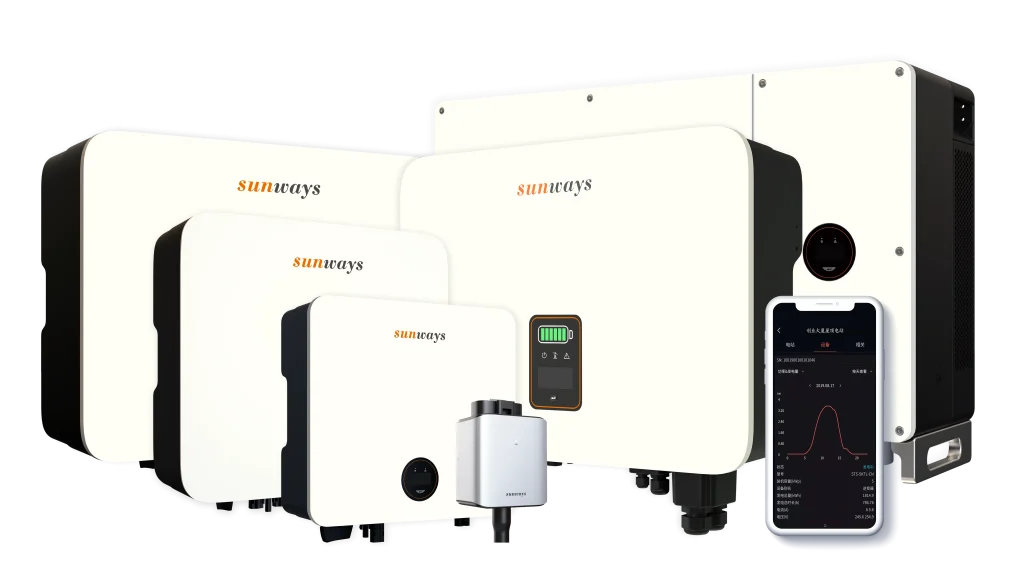
If you are planning a Solar + Battery System, you can provide Sunways with the basic requirements for your project, such as the type of electricity grid, inverter power, PV capacity, the desired battery size, and which appliances you wish to power during a power cut.
Based on this information, Sunways can help you select the most suitable battery solution and confirm whether the battery and hybrid inverter will work together reliably.
Reference
U.S. Department of Energy — DOE Explains…Batteries.
Source: U.S. Department of Energy, Office of Science.
U.S. Department of Energy — Technology Strategy Assessment: Lithium-ion Batteries.
Source: U.S. Department of Energy, Office of Electricity, Storage Innovations 2030.
Start Your Project