Three Phase Hybrid Inverter Guide: Is It the Right Choice for Your Solar & Battery System?
Table of Contents
If you’re selecting a hybrid inverter for a three-phase residential, commercial, or solar-storage project, this guide will directly address the most common questions regarding three-phase hybrid inverters, helping you quickly determine whether you need a three-phase hybrid, what power rating to choose, and which system architecture is best suited for your project.
Three-Phase Hybrid Inverter: Quick Answers
- What is a Three-Phase Hybrid Inverter: It simultaneously manages solar PV, batteries, the grid, and loads, and converts DC from the solar panels into three-phase AC.
- When is a Three-Phase Hybrid Inverter needed: If the project uses a three-phase grid, a three-phase hybrid inverter is typically the preferred choice.
- Is low voltage or high voltage better: LV systems commonly use 48V-class batteries, offering greater configuration flexibility; HV systems use higher battery voltages, resulting in lower current at the same power output, making them more suitable for higher-power systems.
- Does PV capacity have to match the inverter power 1:1: No. Many hybrid inverters allow for a certain degree of PV oversizing, but the maximum PV power, MPPT voltage, and input current requirements must be met.
- Can a 20 kWh battery output 20 kW: No. kWh determines how much energy can be stored, while kW determines how much load can be driven; it also depends on the battery’s maximum discharge power.
- Can a three-phase hybrid inverter still operate after a power outage: Yes, provided the product supports backup/EPS or off-grid operation and is configured with an appropriate battery.
- What is the difference between backup and off-grid: Backup primarily provides emergency power during a power outage; off-grid means the system can operate independently without the public grid.
- What are the disadvantages of a hybrid inverter: Compared to a standard grid-tied inverter, it is more expensive, and system integration between the PV array, battery, BMS, backup, and grid is more complex.
- What should you prioritize when selecting a three-phase hybrid inverter: First, consider the grid and load; next, evaluate the PV array and battery; finally, verify the backup, MPPT, monitoring, safety features, and certifications.
What Is a Three Phase Hybrid Inverter?
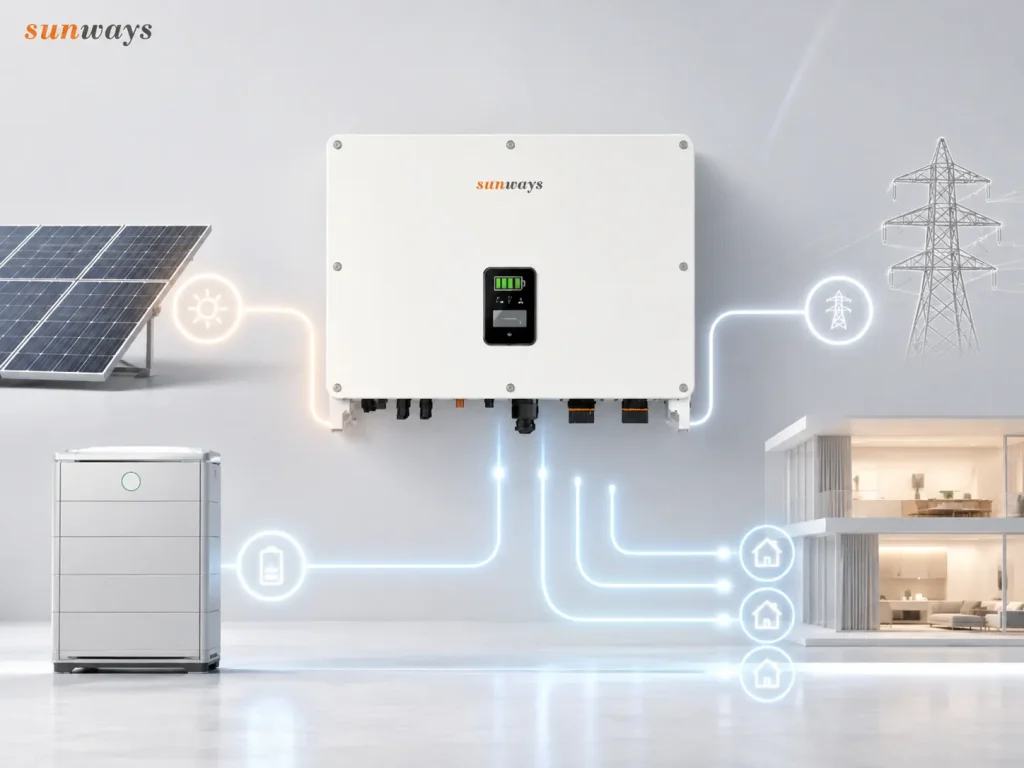
A three-phase hybrid inverter is an energy conversion and management device that connects photovoltaic systems, batteries, the utility grid, and loads simultaneously, and supplies alternating current (AC) to a three-phase electrical system. It not only converts the direct current (DC) generated by solar panels into alternating current (AC), but also coordinates battery charging and discharging, power draw from or feed-in to the grid, and power supply to the load. The basic function of an inverter is to convert DC generated by PV into AC for use on the grid; a hybrid inverter further integrates the capabilities of a PV inverter and a battery inverter into a single system.
If your residential or commercial project uses three-phase power and you wish to combine PV and battery storage, then a three-phase hybrid inverter is an option worth serious consideration. The standard three-phase voltage in Europe is 230/400V, so these inverters are commonly used in large residences, stores, office buildings, and small-scale commercial and industrial projects.
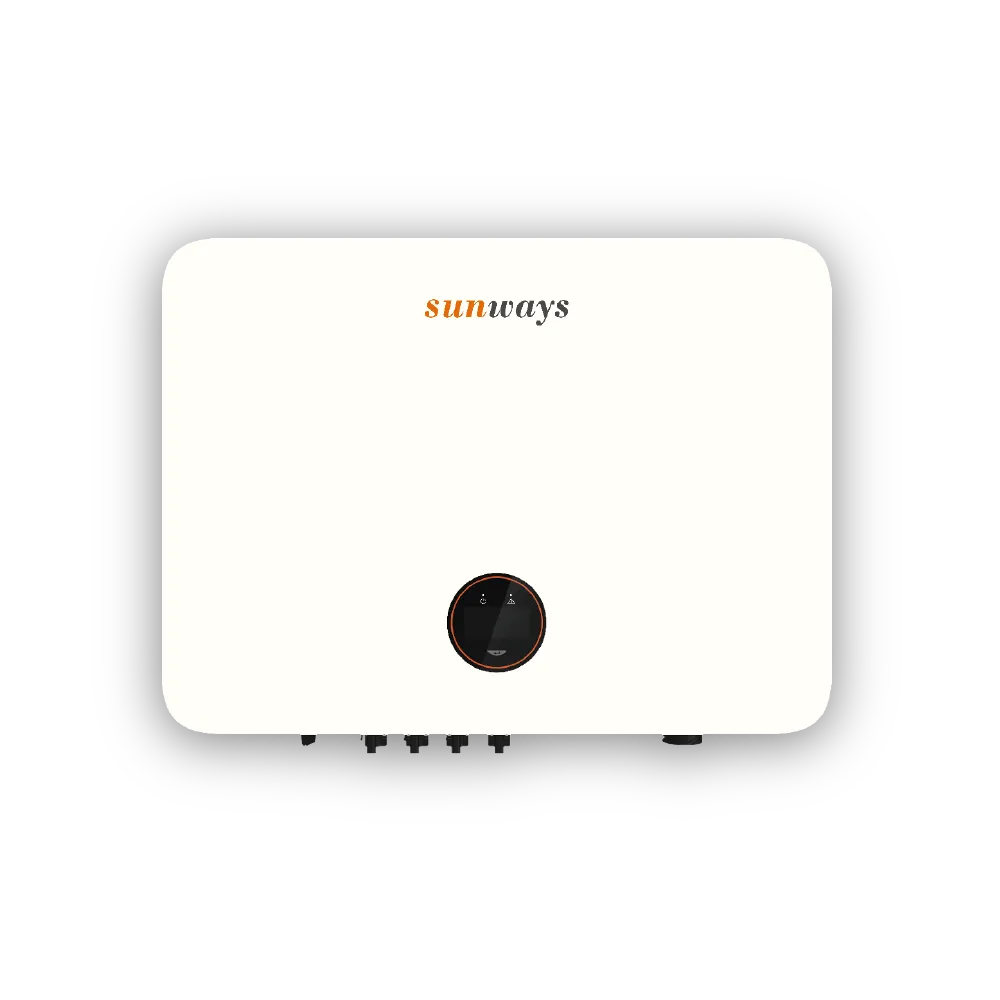
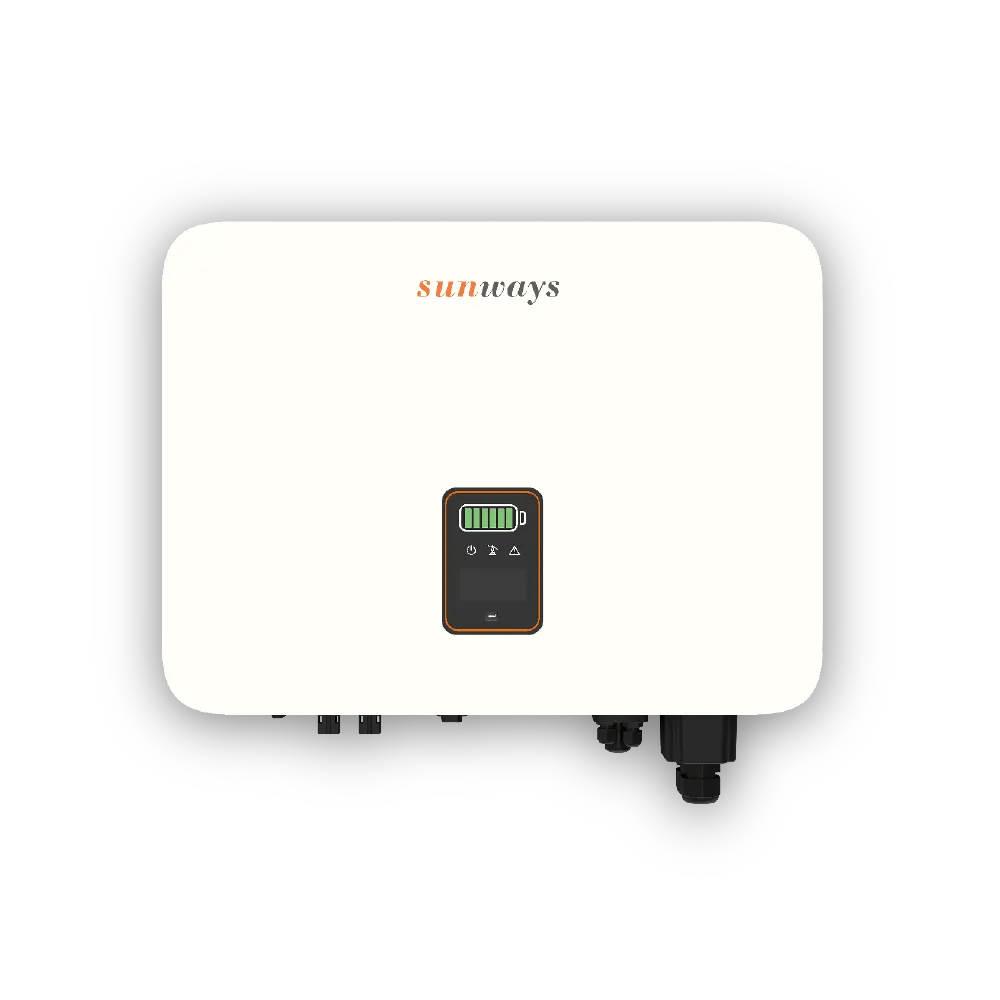
Some three-phase hybrid inverters can continue to supply power after a power outage. When the grid goes down, the system switches to backup power mode, with the PV system and battery providing electricity to backup loads. For example, Sunways’ STH-5~20KTL-LT low-voltage three-phase series features a dedicated backup output that can continue to power backup loads after a grid outage. The STH-15~33KTL-HT and STH-40~80KTL-HT high-voltage three-phase series also support UPS functionality, allowing them to switch to off-grid mode after a grid outage with a switchover time of less than 10 ms.
What Does a Three-Phase Hybrid Inverter Connect To?
You can think of a three-phase hybrid inverter as the energy management center for the entire solar PV and battery storage system. It connects solar panels, storage batteries, the utility grid, and electrical loads, and coordinates the flow of power among these devices based on actual electricity consumption.
During the day when sunlight is abundant, the electricity generated by the solar PV system is prioritized to power residential or commercial loads, with any excess electricity stored in the battery. If solar generation is insufficient, the battery or the grid can supplement the power supply; when the battery is fully charged, it can also supply power to loads at night or during peak-rate periods. If the local regulations allow for feeding surplus electricity back into the grid, excess solar power can also be fed into the grid.
In addition to these basic components, the system may also be connected to backup loads, a smart meter, and an EMS. Backup loads power critical equipment that must continue operating during power outages; the smart meter monitors electricity consumption and feed-in from the grid; and the EMS further optimizes energy usage based on information such as solar generation, battery status, loads, and electricity rates.
Grid-Tied Solar Inverter vs. Hybrid Inverter
| Grid-Tied Solar Inverter | Hybrid Solar Inverter |
|---|---|
| Converts DC power generated by solar PV into AC power, prioritizing supply to loads; excess power can be fed into the grid. | In addition to solar PV and loads, it can also connect to batteries and the grid, coordinating power supply relationships among different energy sources. |
| Primarily performs power conversion from PV DC to AC. | Manages energy flow between solar, batteries, the grid, and loads simultaneously. |
| Typically does not directly connect to or manage energy storage batteries. | Supports battery charging and discharging. |
| Normally stops normal grid-tied output during a power outage. | Some models can continue to supply power to specified loads after a power outage via Backup / EPS. |
How Does a Three Phase Hybrid Inverter Work?
A 3-phase hybrid solar inverter first receives the direct current (DC) generated by the solar PV system, then converts the DC into alternating current (AC) compatible with the three-phase grid via its internal power conversion circuitry, and outputs it to the three phases—L1, L2, and L3—to power residential or commercial loads. At the same time, it determines when to charge and discharge the battery based on solar power generation, current electricity demand, and the battery’s state of charge (SOC). This is also a key difference between hybrid inverters and standard grid-tied inverters.
During the Day: Solar Powers the Loads First
In the common Self-Consumption Mode, when there is ample sunlight during the day, the electricity generated by the solar PV system is prioritized to supply current loads.
If solar generation exceeds current electricity demand, the excess power can first be used to charge the battery. Once the battery reaches its set charge limit, if local grid-connection policies and system settings allow, the remaining solar energy can be fed into the grid.
This is also one of the core benefits of battery storage: storing solar energy that cannot be fully consumed during the day in the battery, then using it at night or whenever electricity is needed, thereby increasing the PV self-consumption rate and reducing the amount of electricity purchased from the grid.
Here’s a very simple example: Your PV system generates 20 kWh of electricity per day. Of that, 12 kWh is used directly by residential or commercial loads, and the remaining 8 kWh is fed into the grid. Therefore, the PV self-consumption rate for that day is: 12 ÷ 20 = 60%
With battery storage, a portion of the 8 kWh that would otherwise be fed back into the grid can be stored in the battery first and used to power your own loads at night. For example, if a total of 18 kWh of PV electricity is ultimately used—either directly or via the battery—the self-consumption rate increases to 90%.
At Night: The Battery Supports the Loads
After the sun sets, the PV system stops generating electricity. If the battery still has sufficient SOC, the system can allow the battery to discharge through the hybrid inverter to power your residential or commercial loads.
When the battery’s SOC drops below a preset threshold, the system can stop discharging and switch to the grid to supply the required power.
The Hybrid Inverter does not always follow the “battery first, grid second” principle. Taking the Sunways STH series as an example, in General Mode, when solar PV output is insufficient, the battery will prioritize supplying power to the loads; only when the battery cannot meet demand will the grid take over. In UPS Mode, as long as the grid is operational, the battery will typically conserve its charge and not discharge proactively. Different operating modes can be selected based on needs such as self-generation and self-consumption, electricity cost optimization, or backup power during outages.
With Time-of-Use Electricity Pricing
If your area uses Time-of-Use (TOU) pricing, electricity rates vary depending on the time of day. Typically, electricity rates are lower during off-peak hours and higher during peak hours. In this case, you can configure the Hybrid Inverter to charge the battery from the grid when rates are low and have the battery supply power to the loads when rates are high, thereby reducing the amount of electricity purchased from the grid during high-rate periods. This approach is commonly referred to as Load Shifting.
Therefore, in a TOU market, the battery’s role extends beyond simply storing excess solar energy generated during the day. It can also store cheap electricity for use when rates are higher, allowing the Hybrid Inverter to help manage electricity costs for residential or commercial projects.
During a Grid Outage
If your Three-Phase Hybrid Inverter supports Backup / Off-grid Operation, when a grid outage occurs, the system can first disconnect from the public grid and then continue to supply power to designated loads using the battery and available solar PV.
Specifically, Backup Operation is primarily used for emergency power supply after a power outage, ensuring that critical loads continue to operate; whereas Off-grid Operation means the system can operate independently using solar PV and the battery, even without the public grid. In Off-grid Mode, solar PV typically takes priority to meet current load demands, with excess power used to charge the battery; when solar generation is insufficient, the battery provides supplemental power.
Sunways three-phase hybrid inverters support both Backup and Off-grid Operation. When the grid is interrupted, they can continue to supply power to designated backup loads. Several Sunways three-phase hybrid series also support switching to Off-grid Mode within 10 ms, helping to minimize the impact of power outages on critical loads.
It is important to note that support for Backup or Off-grid operation does not mean the inverter can power an entire residential or commercial project without limitation. The actual load capacity depends on Backup Output, Battery Power, Peak Load, and the specific system configuration.
Do You Need Three Phase? Where It Makes the Most Sense
If your project uses a three-phase power supply, you should generally prioritize evaluating a Three-Phase Solar Inverter. Next, consider whether you have three-phase equipment, significant power loads, and the power capacity required for your Solar + Battery system. Simply put, when choosing between Single-Phase and Three-Phase, first consider the grid connection, then the load type and power demand.
a. If You Already Have a Three-Phase Grid
If your residential or commercial project is already connected to a three-phase grid, you should generally prioritize evaluating a three-phase hybrid inverter. This is especially true if you plan to install a battery or backup system, or if you want your solar-plus-storage system to cover the entire three-phase system—in such cases, a three-phase hybrid inverter typically aligns better with your existing power infrastructure.
b. If You Have a Three-Phase Grid but No Large Three-Phase Loads
Even if you do not have large motors, pumps, or other obvious three-phase loads, a three-phase hybrid inverter may still be a reasonable choice as long as the building itself is powered by a three-phase grid.
c. If You Only Have a Single-Phase Grid but Your Power Demand Is High
If the site has only a single-phase grid but the power load is high, you should not automatically choose a three-phase hybrid inverter simply because of the “high power” requirement. You first need to confirm the maximum allowable connection capacity of the existing single-phase power supply and determine whether a single-phase hybrid inverter can already meet your needs. If the single-phase capacity is insufficient, then evaluate whether an upgrade to a three-phase grid is necessary.
d. If You Have a Single-Phase Grid but Need to Power Three-Phase Equipment
If your site has only a Single-Phase Grid but you need to operate a three-phase motor, pump, or other three-phase equipment, you must first determine how the project will obtain three-phase power. If the entire residential or commercial project requires three-phase power, you’ll typically need to evaluate upgrading to a Three-Phase Grid; if it’s just a single compatible three-phase motor, a professional can assess whether to use a VFD. For projects without grid access but requiring three-phase loads, you’ll need to redesign a Three-Phase Off-Grid System.
e. If You Have a Large Solar and Battery System but Only a Single-Phase Grid
A large PV and battery system does not necessarily mean you must use a three-phase hybrid inverter. You should still first confirm the local grid’s requirements for single-phase grid-connected power, export limits, and phase imbalance. If the project’s scale exceeds the single-phase connection capacity, then consider upgrading to three-phase power and a three-phase hybrid system.
f. If There Is No Grid but You Need Three-Phase Power
If a project is located in an area without a public grid but the load itself requires three-phase power, a standalone three-phase off-grid system can be designed. In this case, a three-phase AC system is established using PV, a battery, and a three-phase hybrid inverter that supports off-grid operation to power the three-phase load.
Typical Applications
Therefore, three-phase hybrid inverters are not limited to industrial equipment. They are equally suitable for large residences and villas that already use three-phase power, especially projects that incorporate solar, batteries, heat pumps, or EV charging. In addition, small stores, offices, clinics, farms, as well as small factories and warehouses, are common application areas. Sunways’ current product application categories also cover Three-phase Homes, Small Commercial, and C&I Energy Storage.
Single-Phase Hybrid Inverter vs. Three-Phase Hybrid Inverter
| Single-Phase Hybrid Inverter | Three-Phase Hybrid Inverter |
|---|---|
| Better suited for single-phase grids | Better suited for three-phase grids |
| Commonly used in standard residential homes and for smaller loads | Better suited for higher-power residential and commercial loads |
| Primarily handles single-phase loads | Compatible with three-phase power distribution and three-phase equipment |
| Relatively simple system design | Requires consideration of three-phase load distribution and imbalance |
| Commonly found in smaller solar + battery systems | Better suited for large PV, battery, and high-power loads |
Low Voltage vs High Voltage Three Phase Hybrid Inverter: Which Architecture Fits Your Project?
LV (low voltage) and HV (high voltage) refer to the voltage levels at the battery terminals, not the three-phase AC voltage output by the inverter. For example, the Sunways STH-5~20KTL-LT uses a 40–60V low-voltage battery; the STH-15~33KTL-HT uses a 200–800V high-voltage battery; and the STH-40~80KTL-HT has an even higher battery voltage range, covering 200–950V.
In other words, determining whether a three-phase hybrid inverter is LV or HV primarily depends on the voltage rating of the battery it is connected to. The three-phase AC output is still designed for standard three-phase electrical systems.
What Is a Low-Voltage Three-Phase Hybrid Inverter?
3-phase low-voltage hybrid inverters use batteries with lower voltages, typically 48V or 51.2V. The term “low voltage” here refers to the battery terminal voltage, not the three-phase AC output voltage.
Low-voltage systems have one very intuitive characteristic: at the same power output, the lower the battery voltage, the higher the current required. For example, when outputting 10 kW, a 50V battery requires approximately 200A, while a 500V battery requires only about 20A.
Therefore, LV systems typically require higher charge and discharge currents, as well as batteries, cables, and connection designs capable of handling high currents.
Take the Sunways STH-5~20KTL-LT as an example. This series uses a 40–60V low-voltage battery platform and is suitable for residential, retrofit, and some small commercial energy storage projects. Its advantages include a wider selection of 48V-class batteries and greater flexibility in system configuration.
What Is a High-Voltage Three-Phase Hybrid Inverter?
A high-voltage three-phase hybrid inverter uses a higher battery DC voltage, typically consisting of multiple battery modules arranged in a battery stack to achieve a higher voltage.
At the same power output, energy can be transmitted using a lower current. With a lower current, the high-current stress on cables and connectors is reduced, making it easier to scale up to higher power levels.
For example, the Sunways STH-15~33KTL-HT uses a 200–800V battery platform with a maximum charge/discharge current of 80A; the higher-power STH-40~80KTL-HT, on the other hand, employs a high-voltage battery architecture with a battery voltage range of up to 200–950V. As a result, you’ll more commonly see HV architectures in larger residential, commercial, and higher-power energy storage projects.
Low Voltage vs. High Voltage: Which Should You Choose?
| Low Voltage Three-Phase Hybrid | High Voltage Three-Phase Hybrid |
|---|---|
| Lower battery voltage; 48V/51.2V platforms are more common | Battery voltage typically reaches several hundred volts |
| Requires higher battery current for the same power | Requires lower current for the same power |
| Wider selection of 48V-class batteries | Typically uses a high-voltage battery stack |
| Places higher demands on high-current cabling and connection design | Better suited for reducing current in high-power transmission |
| Commonly used in residential, retrofit, and small commercial applications | Commonly used in larger residential, commercial, and higher-power projects |
| Capacity expansion depends on battery parallel configuration and system design | Capacity expansion depends on the battery stack and voltage range |
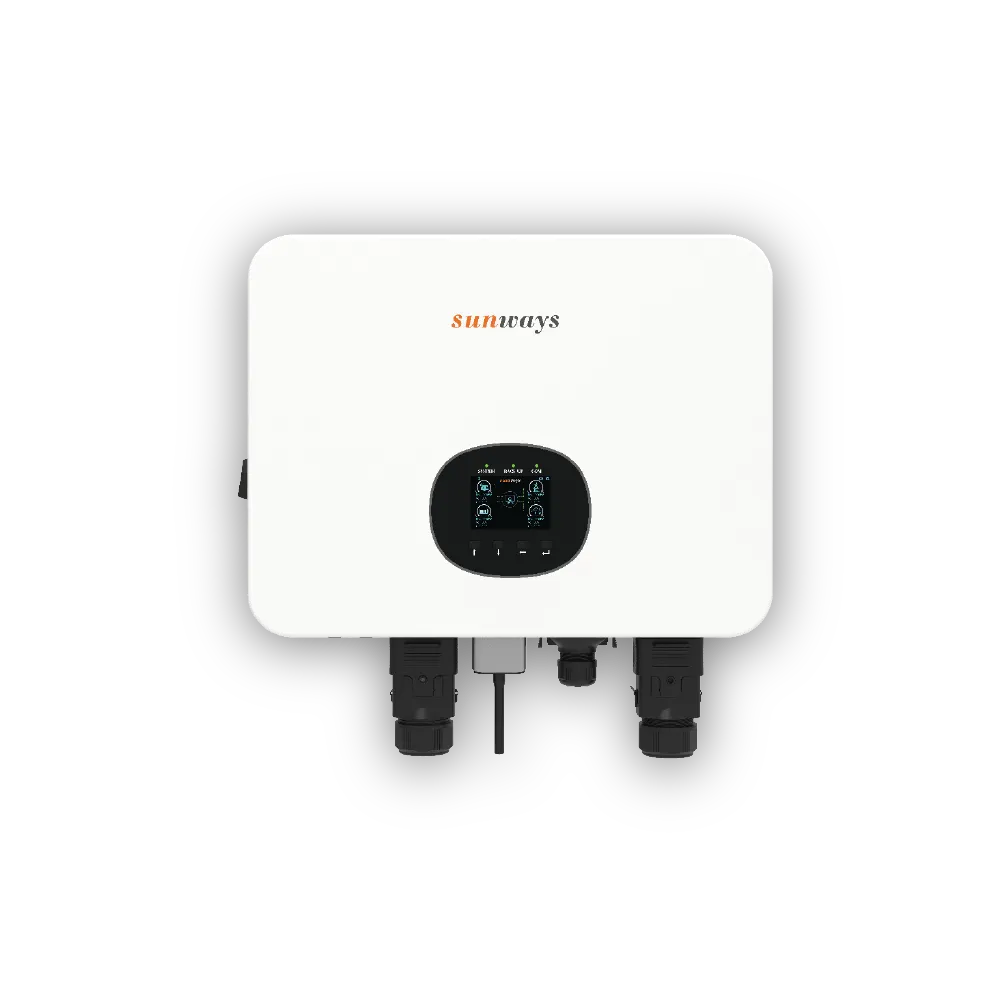
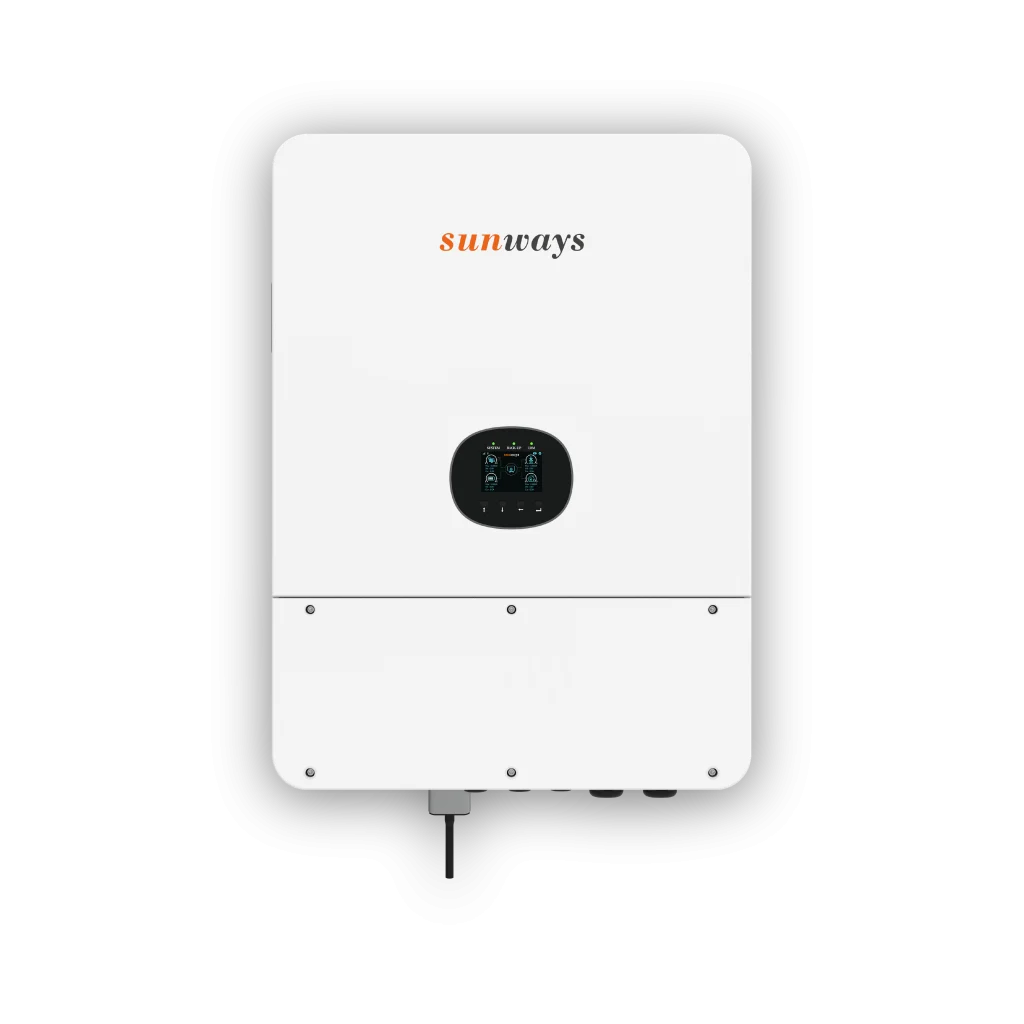
Sunways offers both LV and HV three-phase hybrid inverter platforms. The STH-5~20KTL-LT covers low-voltage three-phase applications, while the STH-4~12KTL-HT, STH-15~33KTL-HT, and STH-40~80KTL-HT cover high-voltage three-phase applications across different power ratings. This allows installers and system designers to select the appropriate model based on battery architecture and project requirements, rather than forcing all projects to use the same battery voltage solution.
What Size Three Phase Hybrid Inverter Do You Need?
When choosing a three-phase hybrid inverter, you shouldn’t just look at the size of your PV system or how much electricity you use each day. A more practical approach is to consider: grid, load, PV, battery, and backup requirements.
Simply put:
- Inverter kW determines how much load you can power simultaneously.
- Battery kWh primarily determines how long those loads can run.
- Battery kW determines how much power the battery can deliver at any given time.
Step 1 — Check the Grid
First, confirm whether the project is connected to a three-phase grid, as well as the on-site voltage, grid connection capacity, and local grid requirements. If the grid itself imposes a limit on the maximum connected power, then the inverter cannot be selected based solely on the size of the load.
Step 2 — Check Your Loads
First, calculate two types of loads:
Continuous Load: The total power of equipment that runs continuously under normal conditions.
Peak / Surge Load: Short-term high power consumption that occurs when multiple pieces of equipment run simultaneously, or when motors, pumps, heat pumps, or compressors start up.
For example, if you typically only need 6 kW but may approach 9 kW when several high-power devices start up simultaneously, a 5 kW inverter would clearly be insufficient. Therefore, do not focus solely on average power consumption; instead, consider the maximum simultaneous power draw.
Step 3 — Match the Solar PV
PV capacity and inverter power do not necessarily need to be exactly the same. For example, installing 12 kWp of solar PV does not mean you must pair it with a 12 kW inverter. Many inverters allow for a certain degree of PV oversizing, meaning the PV capacity can exceed the inverter’s rated AC power. This is because solar PV does not generate power at its rated output all day long. During the morning, evening, on cloudy days, or in high temperatures, the actual output is typically lower than the peak value. Therefore, installing a slightly larger PV system allows the inverter to operate closer to its higher power output for a greater portion of the time.
For example, if a 10 kW three-phase hybrid inverter’s datasheet allows connection to a 15 kWp PV system, then both a 12 kWp and a 14 kWp solar array would likely be compatible; however, connecting a 20 kWp system directly might exceed the product’s permitted range.
Step 4 — Check Battery Power
kWh determines how much energy a battery can store, while kW determines how much power it can deliver at any given moment. For a 20kWh battery with a maximum discharge power of only 5kW, even if it is connected to a 15kW hybrid inverter, the battery can only provide approximately 5kW of power during a power outage and cannot directly drive a 15kW load.
Therefore, when selecting equipment, you must verify the battery’s Max Discharge Power, Charge/Discharge Current, and BMS limits. If these parameters limit the battery’s maximum output power, no matter how high the inverter’s power rating is, it cannot exceed the battery’s inherent output limit.
Step 5 — Decide What You Need to Back Up
Which devices do you want to keep running during a power outage? If you only need to maintain lighting, the refrigerator, internet, and a few critical devices, the backup load may be only a few kW. However, if high-power devices such as heat pumps, water pumps, and air conditioners also need to continue operating, you’ll need a larger inverter and battery capacity.
A Simple Sizing Example
Suppose a three-phase villa has:
- 12 kWp PV
- 9 kW peak load
- 20 kWh battery
- Heat pump
- EV charger
- 5 kW essential backup load
In this case, you cannot simply choose a 12 kW inverter just because the PV system is 12 kWp.
You must first determine whether the 9 kW peak load occurs frequently, then confirm whether the battery can provide sufficient power, and finally decide whether only the 5 kW essential loads will be supported during a power outage, or if high-power equipment such as the heat pump will also need to continue operating.
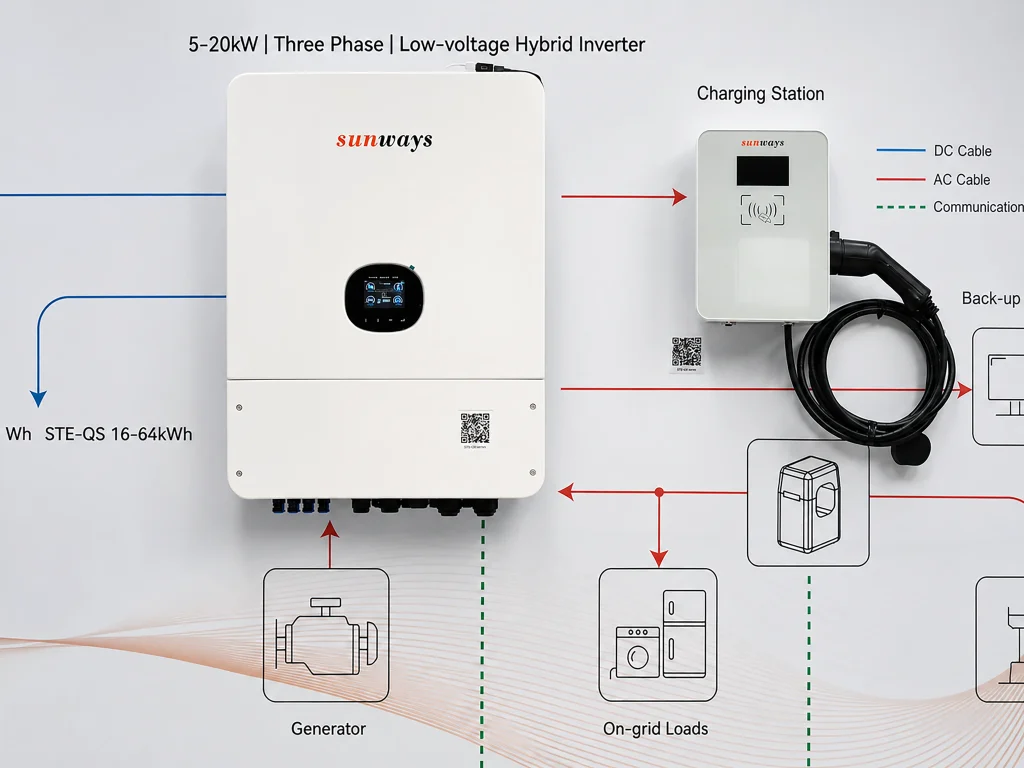
Sunways’ STH-5~20KTL-LT series covers a power range of 5–20 kW for three-phase low-voltage (LV) hybrid systems, allowing selection based on the actual load requirements of residential and small commercial projects.
Can a Three Phase Hybrid Inverter Work Off Grid or During a Power Outage?
Yes, but only if the three-phase hybrid inverter itself supports backup/EPS or off-grid operation and is configured with an appropriate battery. Standard grid-tied inverters typically stop outputting power after a grid outage, whereas hybrid inverters with backup capabilities can disconnect from the public grid and continue to power designated loads using the battery and available solar PV.
Backup and off-grid are not the same thing. Backup primarily addresses temporary power outages. When the grid goes down, the system switches to backup power to continue supplying electricity to refrigerators, lighting, network equipment, freezers, or other critical loads. Off-grid, on the other hand, means the system can operate independently using solar PV and a battery, even without the public grid.
However, supporting backup power does not mean that an entire residential or commercial project can continue to operate as usual after a power outage. The actual number of devices that can be powered depends primarily on the inverter’s backup output, the battery’s available power, and the peak load. For example, a 15 kW hybrid inverter paired with a battery that can deliver a maximum of only 8 kW cannot sustain a 15 kW load when powered solely by the battery.
For projects experiencing frequent power outages or an unstable grid, a generator may also be considered. However, generator compatibility depends on the specific inverter model and system design; it is necessary to verify the generator interface, input power, and control methods, as support cannot be assumed simply because the product is a hybrid inverter.
What Are the Disadvantages of a Three Phase Hybrid Inverter?
Three-phase hybrid inverters offer more comprehensive functionality, but at the cost of higher expenses and more complex system design. If your project does not require a battery, backup power, or three-phase loads, a three-phase hybrid inverter may not be a better choice than a standard grid-tied inverter.
Higher Initial Cost
Compared to a standard grid-tied inverter, a hybrid inverter must also handle batteries, backup systems, and energy management, so equipment and system costs are typically higher.
More Complex System Design
You must not only match the PV system to the grid but also verify battery voltage, BMS communication, backup loads, and system protection. Design and commissioning requirements are more demanding.
Battery Compatibility Must Be Verified
Having the same battery voltage does not necessarily mean compatibility. You must also verify the battery voltage range, charge/discharge current, BMS protocol, and the manufacturer’s compatibility list.
Backup Power Has Limits
Supporting backup power does not mean the system can power the entire building during a power outage. The actual load capacity depends on the backup output, battery power, and peak/surge load.
Oversizing Can Waste Money
If the project is single-phase with low loads and has no need for a battery or backup power, choosing a high-power three-phase hybrid inverter may only increase costs and system complexity.
When Are These Trade-offs Worth It?
The additional features provided by a three-phase hybrid inverter are typically only truly valuable when your project is already connected to a three-phase grid and also requires battery storage, backup power, an EV charger, a heat pump, high-power loads, or more flexible energy management.
How to Choose the Right Three Phase Hybrid Inverter: A Practical Checklist
1. Check the Grid
First, confirm the project’s three-phase voltage, frequency, and local grid code. The inverter must be compatible with the on-site grid and meet local grid connection and certification requirements.
2. Match Rated and Backup Power
Select the Rated Power based on Continuous Load and Peak Load; do not determine the inverter size based solely on PV capacity.
If the project requires backup power during outages, you must also review the Backup Output and Peak/Surge Power separately. Especially when motors, pumps, heat pumps, or compressors are involved, the startup power may be significantly higher than the normal operating power.
3. Check PV and MPPT Design
Confirm that the mppt solar inverter is compatible with your solar array, including Max PV Power, MPPT Voltage Range, Number of MPPT Channels, Max DC Voltage, and PV Input Current. If the project involves multiple rooftops facing east, west, or south, or PV strings oriented in different directions, having more independent MPPT channels typically provides greater design flexibility.
4. Choose the Right Battery Architecture
First, determine whether the project is better suited for LV or HV batteries, then check the battery voltage range, charge/discharge current, battery power, and BMS communication.
5. Check Three-Phase Load Capability
In three-phase buildings, the L1, L2, and L3 loads are typically not exactly the same; therefore, pay attention to the inverter’s unbalanced output capability. If the project also includes three-phase equipment such as motors, pumps, or heat pumps, you need to further verify the output per phase, peak power, and actual load capacity, rather than simply looking at the inverter’s total power.
6. Review Backup and Expansion Functions
If your customer prioritizes backup power during outages, verify the backup/EPS, transfer time, and off-grid capability.
7. Check Energy Management and Monitoring
Remote O&M can significantly reduce on-site troubleshooting efforts. The Sunways Portal supports equipment diagnostics, multidimensional data visualization, and real-time as well as daily, monthly, and annual data analysis, and enables power plant management via web and mobile apps.
8. Check Safety and Certification
This includes IP rating, SPD, anti-islanding, AFCI, and local grid certification, among others. For example, in outdoor installation projects, the IP rating directly affects the equipment’s ability to withstand dust, rain, and environmental conditions.
9. Evaluate the Manufacturer, Not Just the Datasheet
Finally, don’t just compare parameters on two datasheets. For installers, EPCs, and distributors, you’re truly partnering with a solar inverter manufacturer, not just a piece of equipment.
Sunways’ current hybrid product line covers both LV three-phase hybrid and multiple HV three-phase hybrid power ranges, allowing you to select different battery architectures and power levels for residential, small commercial, and higher-power projects. Product certifications cover over 150 countries and regions.
If you’re still unsure which three-phase hybrid inverter is right for your project, provide Sunways with grid voltage, load profile, PV capacity, battery requirements, and backup loads, and we’ll determine the appropriate system configuration based on your project’s actual conditions.
Three-Phase Hybrid Inverter FAQs
Q1. What is a three-phase hybrid inverter?
A three-phase hybrid inverter is a three-phase energy storage inverter that simultaneously manages solar PV, batteries, the utility grid, and loads. It converts the direct current (DC) generated by solar PV into three-phase alternating current (AC) while controlling battery charging and discharging. Some models also support backup and off-grid operation, allowing them to continue supplying power to designated loads during power outages.
Q2. Can a three-phase hybrid inverter operate off-grid?
Yes, but the inverter itself must support off-grid operation and be configured with a suitable battery.
Q3. Is a low-voltage or high-voltage three-phase hybrid inverter better?
For higher-power solar-storage systems, choose a high-voltage three-phase hybrid inverter; the advantage of the low-voltage solution lies in its compatibility with 48V batteries and flexible configuration.
Low-voltage systems typically use 48V-class batteries, offering a wider selection of batteries and flexible configuration, but require higher charge and discharge currents for the same power output. High-voltage systems typically use battery stacks ranging from 150V to 600V or higher, requiring lower currents for the same power output, and therefore generally offer advantages in terms of conversion efficiency, high-power transmission, and system scalability.
Q4. Can I use a three-phase hybrid inverter at home?
Yes, it is particularly suitable for homes already connected to a three-phase grid. If your home also has a large solar PV system, battery storage, a heat pump, an EV charger, or other high-power loads, a three-phase hybrid inverter is an excellent choice. However, if you only have a single-phase grid and small loads, a single-phase hybrid inverter is usually the preferred option.
Need Help Choosing a Three-Phase Hybrid Inverter?
If you’re unsure which three-phase hybrid inverter to choose for your project, provide Sunways with your grid voltage, load profile, PV capacity, battery requirements, and backup needs. We can help you evaluate the appropriate inverter and system configuration based on your specific project conditions.
Reference
U.S. Department of Energy — Solar Integration: Inverters and Grid Services Basics
U.S. Department of Energy — Solar Integration: Solar Energy and Storage Basics
Start Your Project